 Impact
 Initiatives
 Dashboard
 Alliances


 Impact
 Initiatives
 Dashboard
 Alliances


 Technological
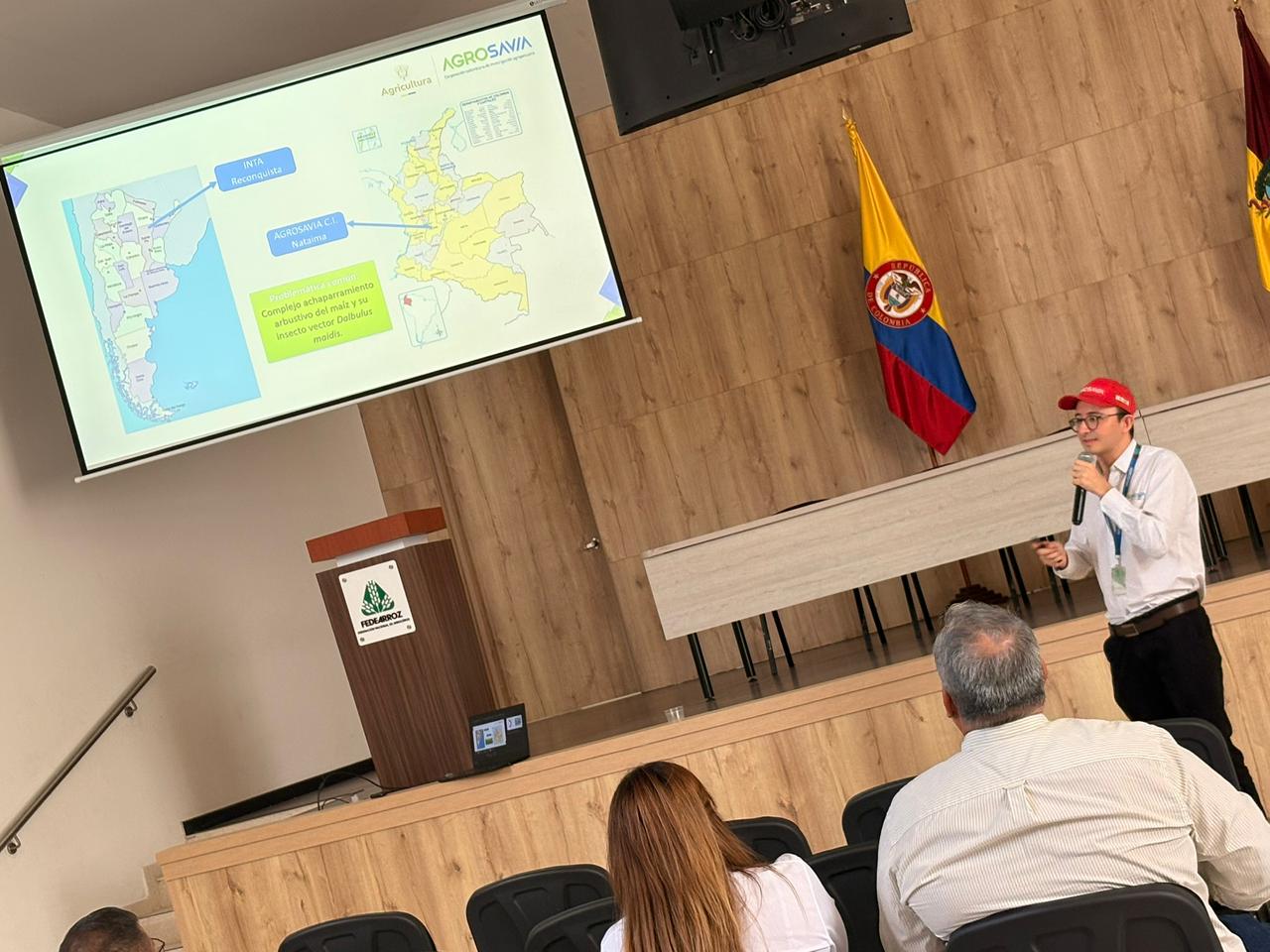
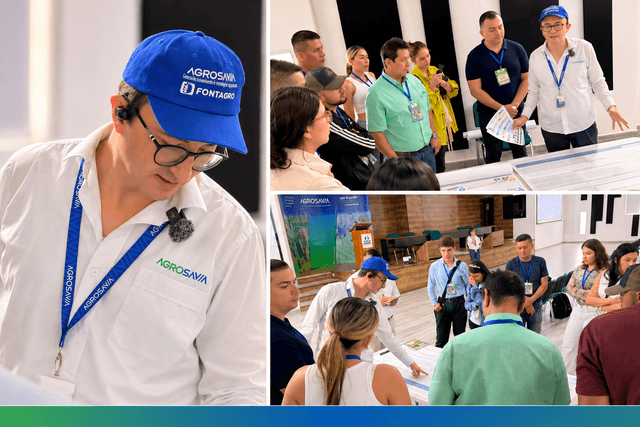
As part of the Seminar-Workshop on Species Niche and Distribution Modeling, held at the University of Cundinamarca on October 21, 2026, the potential of agricultural pest distribution modeling was presented as a tool to anticipate phytosanitary risks and strengthen decision-making in response to climate variability and climate change.
The conference addressed methodologies that integrate species occurrence records with climatic and environmental variables to estimate potential distributions and identify areas that may offer favorable conditions for pest establishment. Economically important agricultural pests were highlighted, including Dalbulus maidis, an insect vector associated with the maize stunting complex, whose distribution poses a challenge to the health and sustainability of maize production.
This topic was linked to the work being carried out under Component I of the Maíz Resiliente (Resilient Maize): Innovation and Sustainable Management of Maize Stunting project, supported by FONTAGRO. This component investigates the distribution of Dalbulus maidis in Colombia and Argentina by collecting and analyzing occurrence records and applying potential distribution models, such as MaxEnt and Random Forest. It also includes assessing potential changes in the insect's distribution under future climate change scenarios.
These tools aim to identify areas with environmental conditions favorable to the presence of the insect and generate information to help anticipate phytosanitary risks, guide surveillance efforts, and strengthen prevention and management strategies for maize stunting.
Participation in this academic event provided an opportunity to share methodological advances and highlight the importance of integrating ecological modeling, climate information, and agricultural research to develop production systems that are more resilient to the challenges of climate change. The conference can be viewed at the following link (YouTube), from 3:14:00 to 4:14:00.