.jpg&w=3840&q=100)
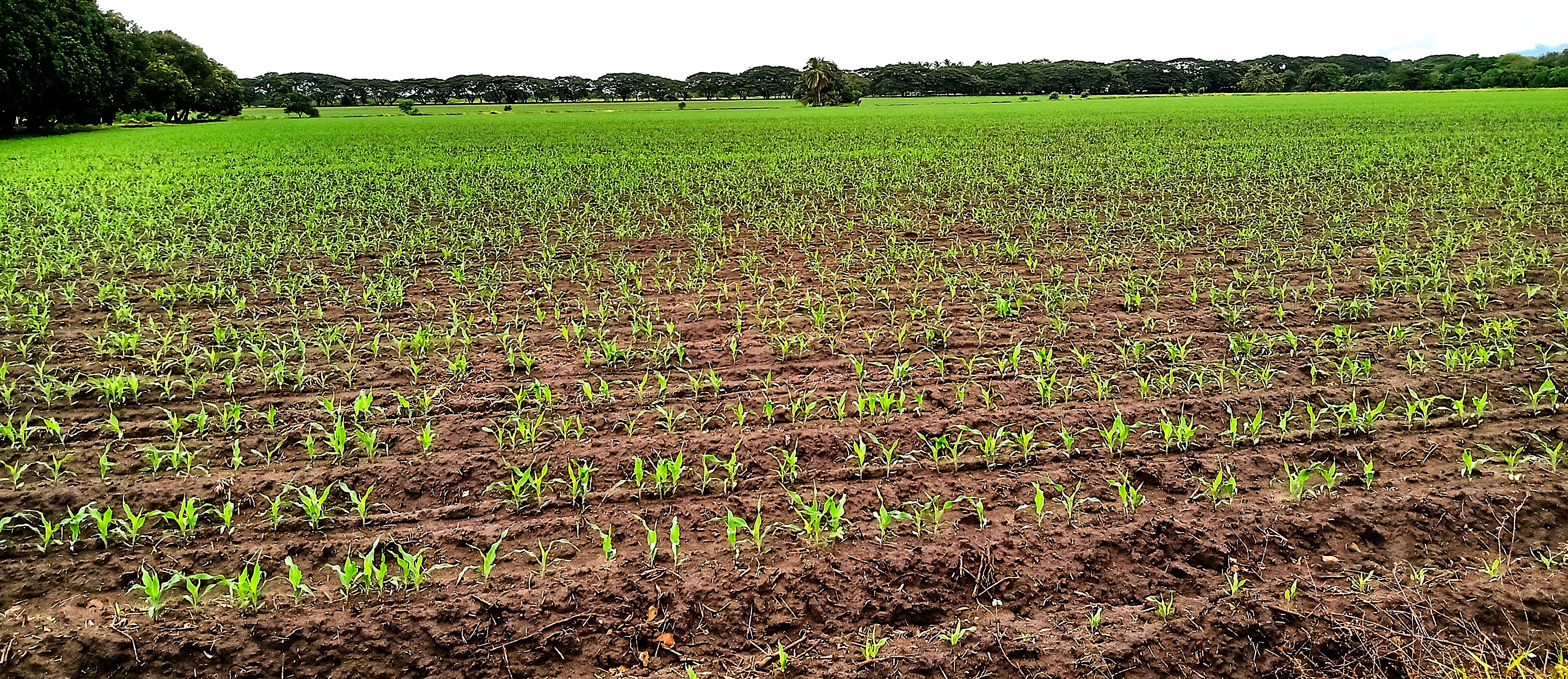
This project combats the maize stunting complex in Latin America by mapping its vector under climate change and validating sustainable management practices. This initiative aims to protect crop yields and ensure regional food security.

Corn stunting is caused by mollicutes and/or viruses transmitted by Dalbulus maidis, whose range extends from the southern United States to central Argentina. Climate variability and inadequate agricultural practices favor its spread to new regions, exacerbating devastating losses in tropical and subtropical climates and jeopardizing global food security and the agricultural economy. There is a need to validate and strengthen integrated management approaches that prevent yield losses and reduce the environmental footprint, in conjunction with technology transfer, farmer networks, and an understanding of climate variability, in order to respond promptly to this serious and growing threat.
Validating and strengthening sustainable technological alternatives for managing Dalbulus maidis and associated pathogens will help reduce losses due to stunting and safeguard food security in Latin America and the Caribbean.
The increase of the corn stunt disease complex and its vector poses a risk to maize production in Latin America and the Caribbean. In this context, the project aims to reduce its incidence in Colombia and Argentina, with regional impact. To achieve this, it comprises three components: 1) To assess the potential distribution of Dalbulus maidis under climate change scenarios, 2) To validate and promote integrated management practices (bioinputs, precision irrigation, epidemiological monitoring, among others) that help reduce yield losses and environmental footprint, 3)
To manage and transfer the generated knowledge in order to strengthen farmer networks and technical capacities for the prevention, containment, and management of the disease and its insect vector.

This initiative aims to reduce the incidence of the maize bushy stunt complex in maize-producing regions of Latin America by assessing the potential distribution of the vector Dalbulus maidis under climate change scenarios, validating and promoting sustainable technologies for the management of the maize bushy stunt complex and its vector, strengthening the adoption of innovations and maize farmer networks for knowledge management, and implementing technology transfer to small- and medium-scale maize producers.
"Healthy plants are the foundation of food security yet up to 40 percent of global crops can be lost due to pests and diseases every year"— FAO and IPPC, 2025
 Agronomic PracticesStrategy 1. Resilient farmsResilient Crops and Carbon Neutrality (“PI-1”)AppliedTechnologicalCrops
The proposal introduces improvements by integrating predictive, technological, and participatory approaches for managing corn stunt disease. It will incorporate distribution models of the vector Dalbulus maidis under climate change scenarios, enabling risk anticipation and targeted interventions. Additionally, it will validate and promote a sustainable technological package that reduces dependence on agrochemicals and improves production efficiency. The initiative will also strengthen adoption through farmer networks and knowledge management, overcoming gaps in technology transfer. Overall, it contributes to more resilient, profitable, and environmentally sustainable production systems.







Sede Central
Colombia

Argentina
Paraguay

Estados Unidos


 Impact
 Initiatives
 Dashboard
 Alliances
 Impact
 Initiatives
 Dashboard
 Alliances