
 Impact
 Initiatives
 Dashboard
 Alliances
 Impact
 Initiatives
 Dashboard
 Alliances


Learn more about this story
Project Webstory
Go to webstory




 Agronomic PracticesStrategy 1. Resilient farmsResilient Crops and Carbon Neutrality (“PI-1”)AppliedTechnological
 2025
2025 Active
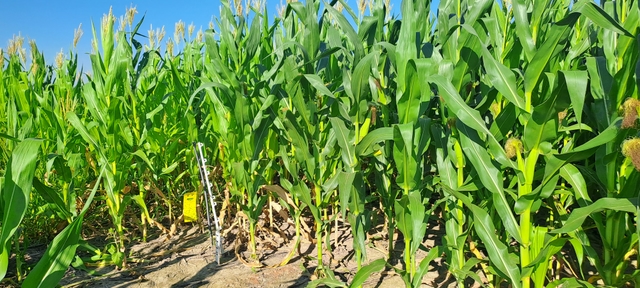
Corn is the most widely produced cereal crop worldwide and is essential for global food security. This cereal represents a vital source of calories and nutrients for millions of people. Stunted growth disease or dwarfism in corn, caused by the spiroplasm Spiroplasma kunkelii (CSS), the phytoplasma Candidatus Phytoplasma asteris (MBSP), the maize fine streak virus (MRFV), and the maize stripe mosaic virus (MSMV), can reduce yields by 30% to 90% in endemic areas of the Americas. Its vector, Dalbulus maidis, is an American species currently distributed from the southern United States to central Argentina. Economic losses in Argentina have been recorded at up to US$2.5 billion, while in Colombia losses of up to 90% of yield have been reported. To date, molecular detection protocols and management strategies for both the vector and the disease are available; however, technological alternatives that reduce the environmental footprint and prevent the proliferation of the vector and its associated pathogens need to be validated and strengthened, in addition to strengthening the adoption of innovations, farmer networks, and technology transfer, integrating these efforts with an understanding of climate variability phenomena that favor the development of emerging biotic constraints. The project aims to reduce the incidence of corn stunting complex in producing regions of Colombia and Argentina, as well as its impact on other countries in Latin America and the Caribbean, through: 1) assessing the distribution of D. maidis under climate change scenarios in corn-producing regions; 2) validating and promoting integrated management practices that reduce the environmental footprint and impact of the stunting complex; and 3) transferring the knowledge and technologies generated. This regional collaboration will contribute to food security and sustainable development in corn-producing areas in Colombia and Argentina, combining local knowledge with science and technology.
This initiative seeks to reduce the incidence of the corn stunt disease in producing regions of Latin America. To this end, it will assess the potential distribution of the Dalbulus maidis vector under various climate change scenarios, validate and promote sustainable technologies for managing the corn stunt disease and its vector, and encourage the adoption of innovations. In addition, it promotes the formation of networks of corn farmers to facilitate knowledge management and the transfer of technology to small and medium-sized corn producers.
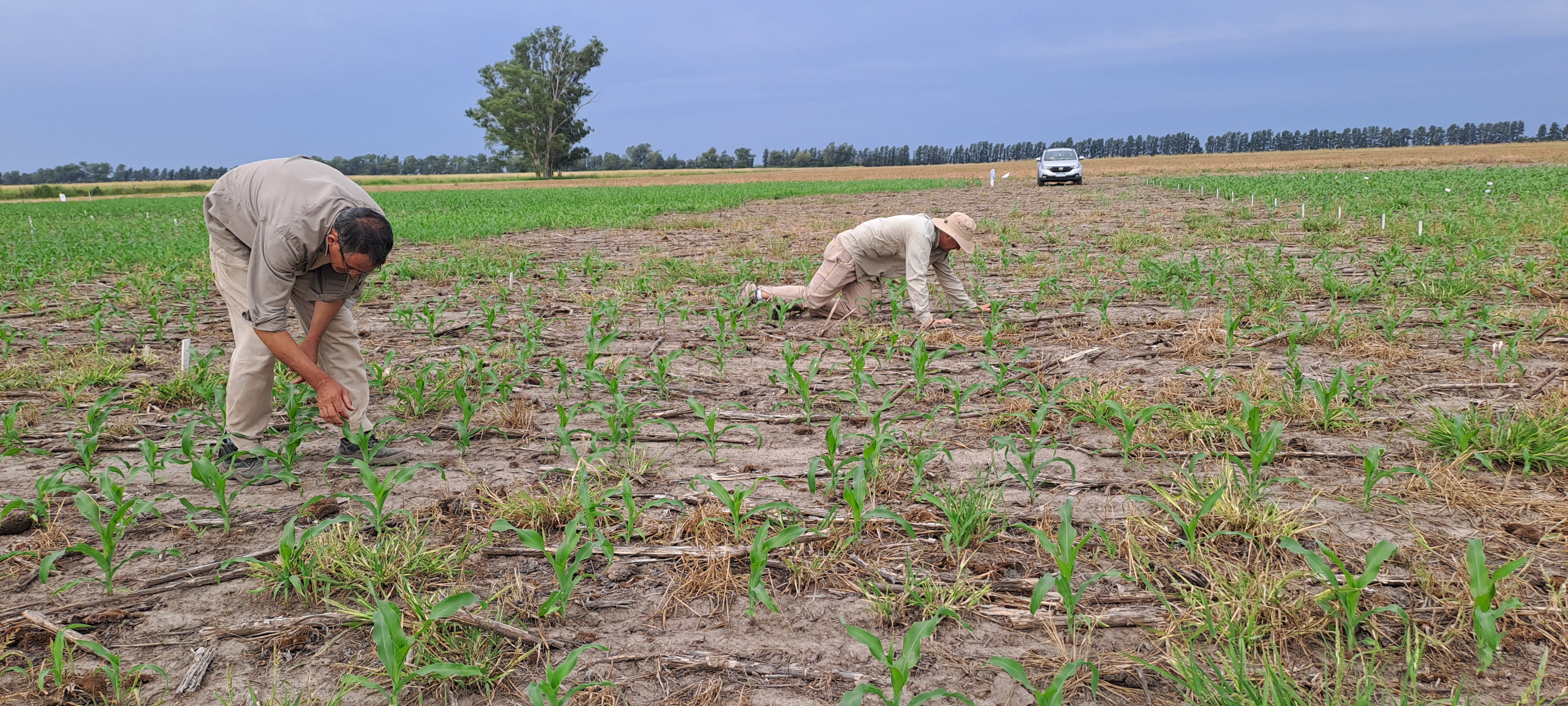
It is expected to generate technical-scientific evidence on the presence, current distribution, and future risk of Dalbulus maidis in maize-producing regions of Argentina and Colombia through georeferenced data, laboratory taxonomic identification, and distribution modeling under climate change scenarios. The project will produce a database of insect occurrence records, current and future distribution maps, and a characterization of spatial and temporal patterns. In addition, future climate scenarios will be evaluated using environmental, topographic, and edaphic predictors, applying tools such as QGIS, R, MaxEnt, and Random Forest to identify areas of expansion, contraction, and population stability of D. maidis. The project is also expected to validate sustainable integrated management practices to reduce the environmental footprint and impact of the maize stunt complex and its vector. For this purpose, conventional practices will be compared with integrated sustainable practices such as irrigation, biofertilizers, bioinsecticides, and monitoring. In addition, yield components, vector population dynamics, and disease incidence will be determined using molecular biology techniques. Likewise, an economic and environmental assessment of the practices will be conducted, including fixed and variable costs, benefit-cost ratio, and life cycle assessment. Finally, the project is expected to strengthen the adoption of innovations for sustainable maize crop management through knowledge network analysis and social learning strategies among farmers. Furthermore, technical exchange networks and training-of-trainers schemes will be consolidated to promote technology adoption and knowledge management in Colombia and Argentina.
The direct beneficiaries are at least 2,500 people, comprising (i) small- and medium-scale corn farmers and livestock farmers, (ii) technical assistants from the department of Tolima in Colombia and the departments of 9 de Julio, General Obligado, San Javier, and Vera in the province of Santa Fe in Argentina; they will participate in the activities proposed under Component 3 and will have access to the publicly available knowledge generated, (iii) the scientific and academic community, including the universities and institutions with which AGROSAVIA and INTA have direct or indirect ties, in Colombia and Argentina, respectively. Indirect beneficiaries include those in the Linkata Network of Extension Workers and Technical Assistants, which has a community of more than 11,600 members, mainly extension workers, as well as producers, researchers, and academics in the agricultural sector. Of this total, 145 people reside in the department of Tolima (Colombia), while 680 carry out activities related to agricultural extension there. Likewise, 2,600 members of the network have expressed interest in the corn production system, of which 190 work in the Tolima region.
This project actively contributes to achieving the Sustainable Development Goals, promoting more equitable, resilient, and sustainable regional development.

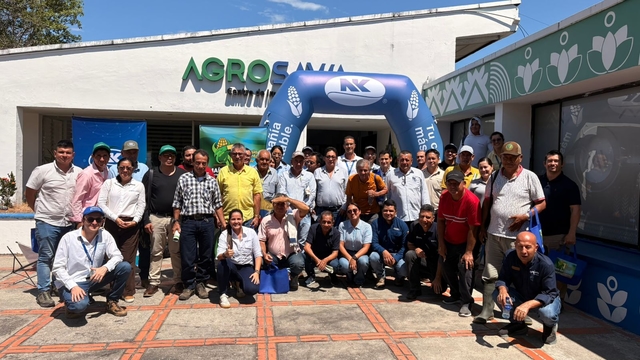
September 4, 2026
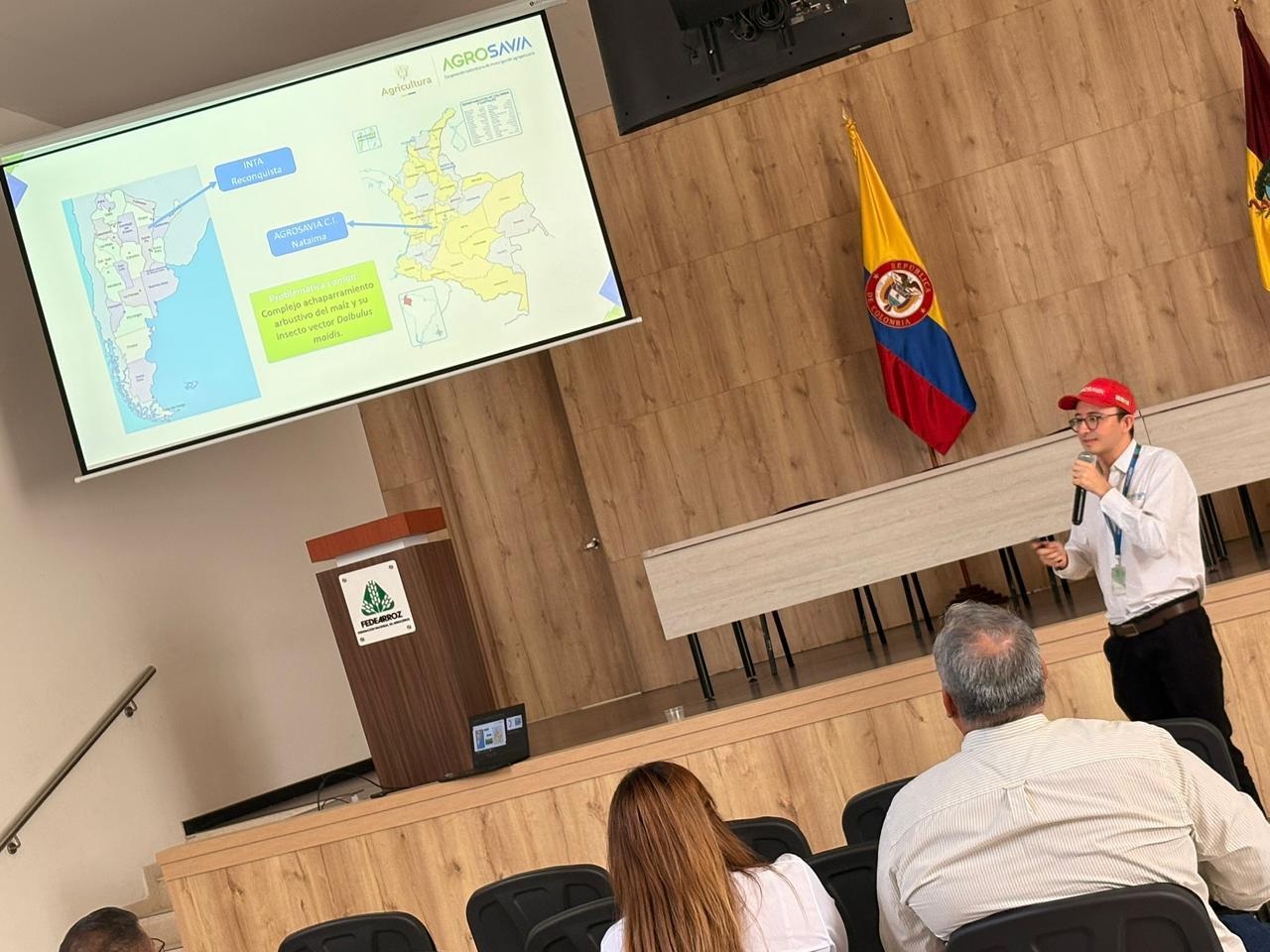
June 22, 2026
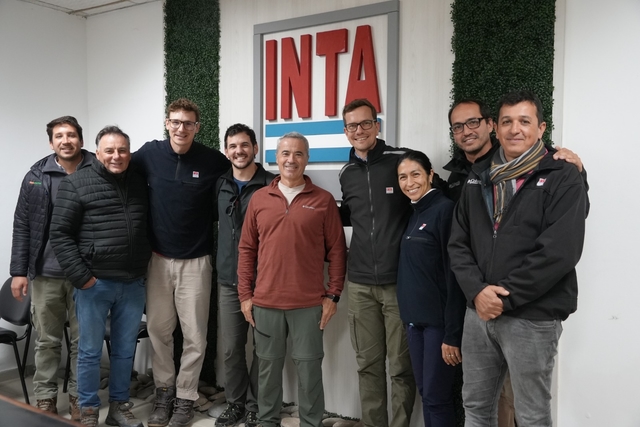
June 18, 2026
.jpg&w=3840&q=100)
Camilo Ignacio Jaramillo Barrios
Jose Isidro Beltrán Medina
Angela María Vargas Berdugo
Sofiane Ouazaa
Nesrine Chaali
Alefsi David Sánchez Reinoso
Edgar Herney Varón Devia
Diego Alberto Navarro Niño
Gloria Patricia Barrera Cubillos
Carlos Espinel Correal
Juliana Andrea Gómez Valderrama
Cesar Augusto Vargas García
Luis Felipe López Hernández
Felipe Montealegre Bustos
Paula Andrea Bermeo Fuquene
Leidy Ramírez Duque
John Edinson Calderón Carvajal
Juan Camilo Ovalle Masmela
Ginna Natalia Cruz Castiblanco
Diego Fernando Sánchez Vivas
Lilia Constanza Molano Bernal
Óscar Eduardo Orjuela Franco
Christian Thomas Carvajal Bazurto
Kelly Johana Pedroza Berrío
Claudia Milena Flórez Cárdenas
Luis Ernesto Ortegón Herrera
José Álvaro Hoyos Cartagena
Edinson Bayardo Parra Alferez
Melina Soledad Almada
Romina Gisela Ybran
Gonzalo Scarpin
Robertino José Muchut
Roxana Andrea Roeschlin
Luciano Nicolas Mieres
Cintia Carolina Palavecino
Julieta Haydee Scarel
Arturo José Regonat
Luciana Margherit
Antonela Estefania Cereijo
Claudia Mabel Vidal
Marcelo Javier Paytas
Marino Federico Cracogna
Maria Inés Parodi
Diego Ernesto Szwarc
Doriana Feuillade
Daniela Elizabeth Vitti
Carlos Saul Navarro
Espindola Carlos
Horacio Martin Winkler
Acosta Mileva
María Virginia Ramoa
Rocío Ailín Passini
Fernando Javier Solis
Walter Guillot Giraudo
Sponsors


With the support of



