 Impact
 Initiatives
 Dashboard
 Alliances

 Impact
 Initiatives
 Dashboard
 Alliances

 Technological
Maize (Zea mays L.) represents a fundamental pillar in Costa Rica's Chorotega Region, not only for its productive importance but also for its cultural, social, and economic value. However, production faces major challenges due to pests such as Spodoptera spp., which are capable of causing significant yield losses.
To address this, the INTA-FONTAGRO alliance is driving the evaluation of sustainable management alternatives through the use of entomopathogenic microorganisms like Beauveria bassiana and Bacillus thuringiensis. These are based on experimental strains developed and preserved at INTA. These biological agents act naturally on insects, offering an environmentally friendly option compared to the intensive use of chemical insecticides.
The initiative stands out for its integration of quality control and high-tech application:
Scientific Verification: Quality checks have been conducted in both laboratory and field settings, confirming the microorganisms' viability and their capacity to infect the pest under real conditions.
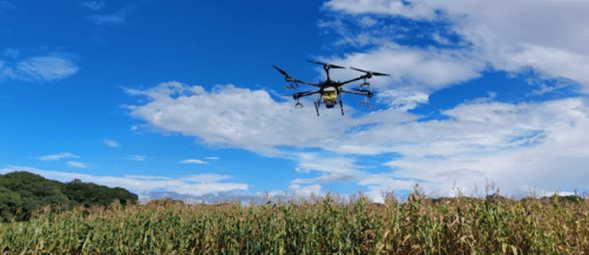
Drone Integration: Innovative technologies, such as drone application, have been incorporated to improve field coverage and uniformity, thereby optimizing the efficiency of biological control.
Preliminary results demonstrate the potential of these tools as part of integrated pest management strategies. INTA will continue to strengthen this research line to consolidate the generated data and validate results under different conditions, moving toward sustainable solutions that reduce agrochemical use in the Dry Tropics.
.jpg&w=640&q=100)