 Impact
 Initiatives
 Dashboard
 Alliances

 Impact
 Initiatives
 Dashboard
 Alliances
.jpg&w=3840&q=100)

 Technological
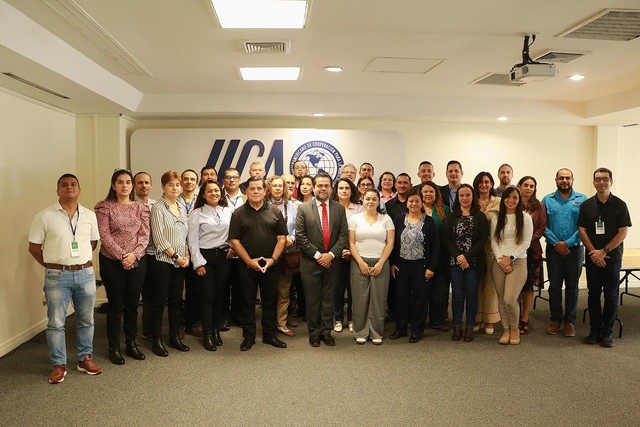
The academic session took place at the administrative headquarters of INIA, located in the Aragua state, and was presided over by Dr. Margaret Gutiérrez, president of INIA, alongside the research manager Belkys Vásquez and workshop coordinators Raúl Jiménez and Heidi Vilera. The course was attended by researchers from INIA's executing units in the states of Apure, Aragua, Lara, Mérida, Portuguesa, and Yaracuy, specializing in areas such as biotechnology, plant protection, mycology, bananas, oilseeds, legumes, soil biology, biofertilizers, phytopathology, disease management, agroecology, and bioinputs.
Representatives from the National Institute of Comprehensive Agricultural Health (INSAI), as well as from the University of Carabobo (UC), the Central University of Venezuela (UCV), and the Lisandro Alvarado Central-Western University (UCLA) also participated.
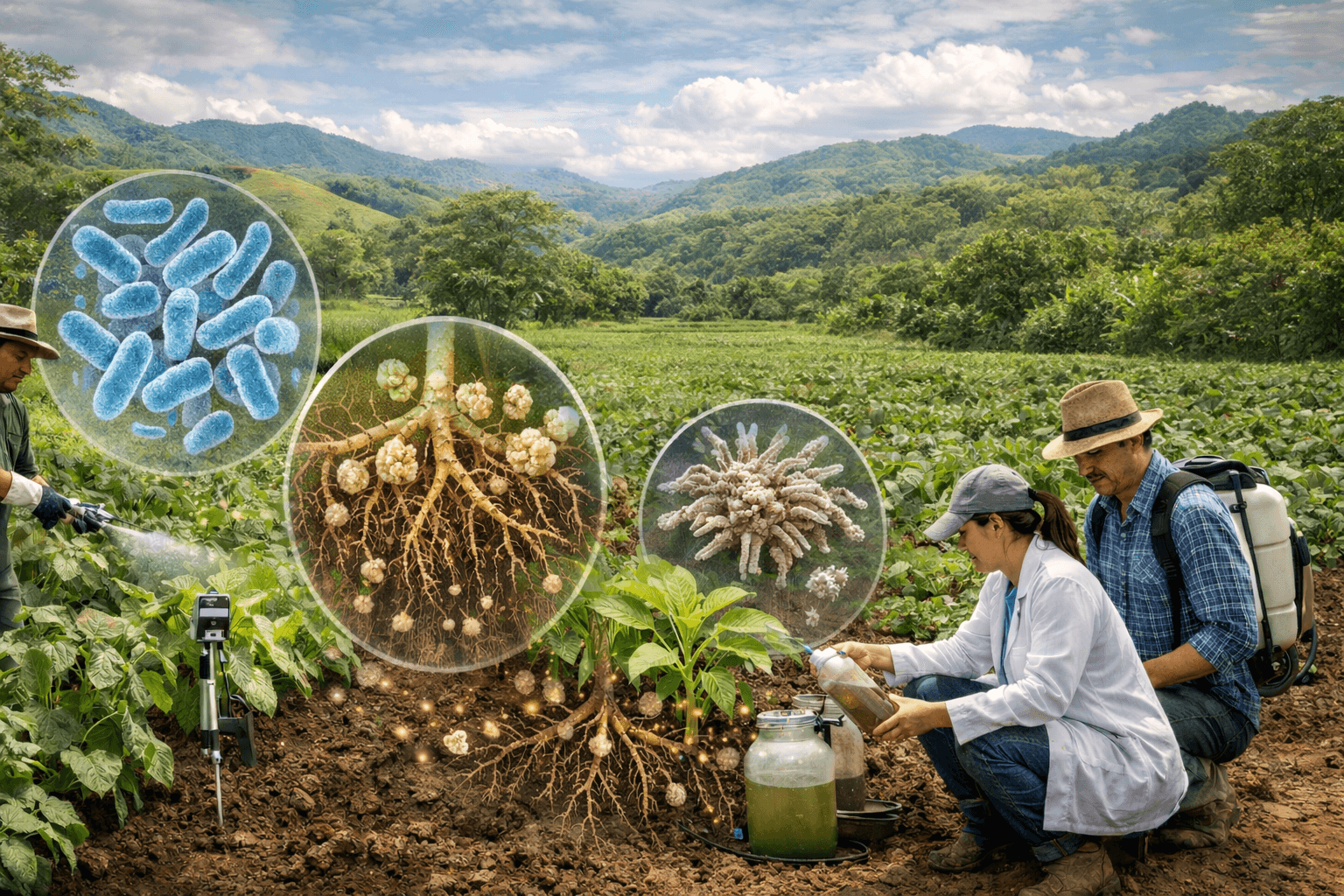
In this context, the president of INIA, Margaret Gutiérrez, stated: “The meeting focused on training through the exchange of experiences regarding the use of bioinputs and biocontrol agents, which are fundamental tools for consolidating a profitable, high-quality, and environmentally friendly agriculture.” She also emphasized that INIA has a long history of research on bioinputs, reaffirming its commitment to advancing towards a sustainable system that guarantees innovative solutions and contributes to the country’s food sovereignty.
The workshop was conducted in a hybrid format and covered various topics. Among them were plant extracts, their preparation techniques, phytochemical aspects, and application methods, presented by María Elena Sanabria (UCLA). Experiences in using plant extracts for controlling phytophagous insects, mites, and diseases in crops were shared by Horci Escalante (UCLA), along with the fundamentals and physiology of bioinputs developed by Arnaldo Armado from the Experimental Faculty of Sciences and Technology at UC.
Additionally, presentations on agricultural microbiology and biocontrol agents were given by Doménico Pavone from the biotechnology company Tecnovita. Basic control programs and technological tools for managing pest insects were discussed by Oona Delgado from the Agricultural Zoology Institute at UCV. Jesús Morillo from the Ecotechnological Farm El Chuchube presented on remote monitoring techniques and the use of artificial intelligence in integrated pest management. Finally, Raúl Jiménez from INIA CENIAP presented content related to composting and efficient vermiculture.
The course concluded with a practical session at the Experimental Field of the National Center for Agricultural Research (CENIAP) and the Plant Biotechnology Laboratory. During this activity, participants received a talk on evaluating the four phases of compost piles through measurements of temperature, pH, and the fist test.
.jpg&w=640&q=100)