Impact
 Initiatives
 Dashboard
 Alliances

 Impact
 Initiatives
 Dashboard
 Alliances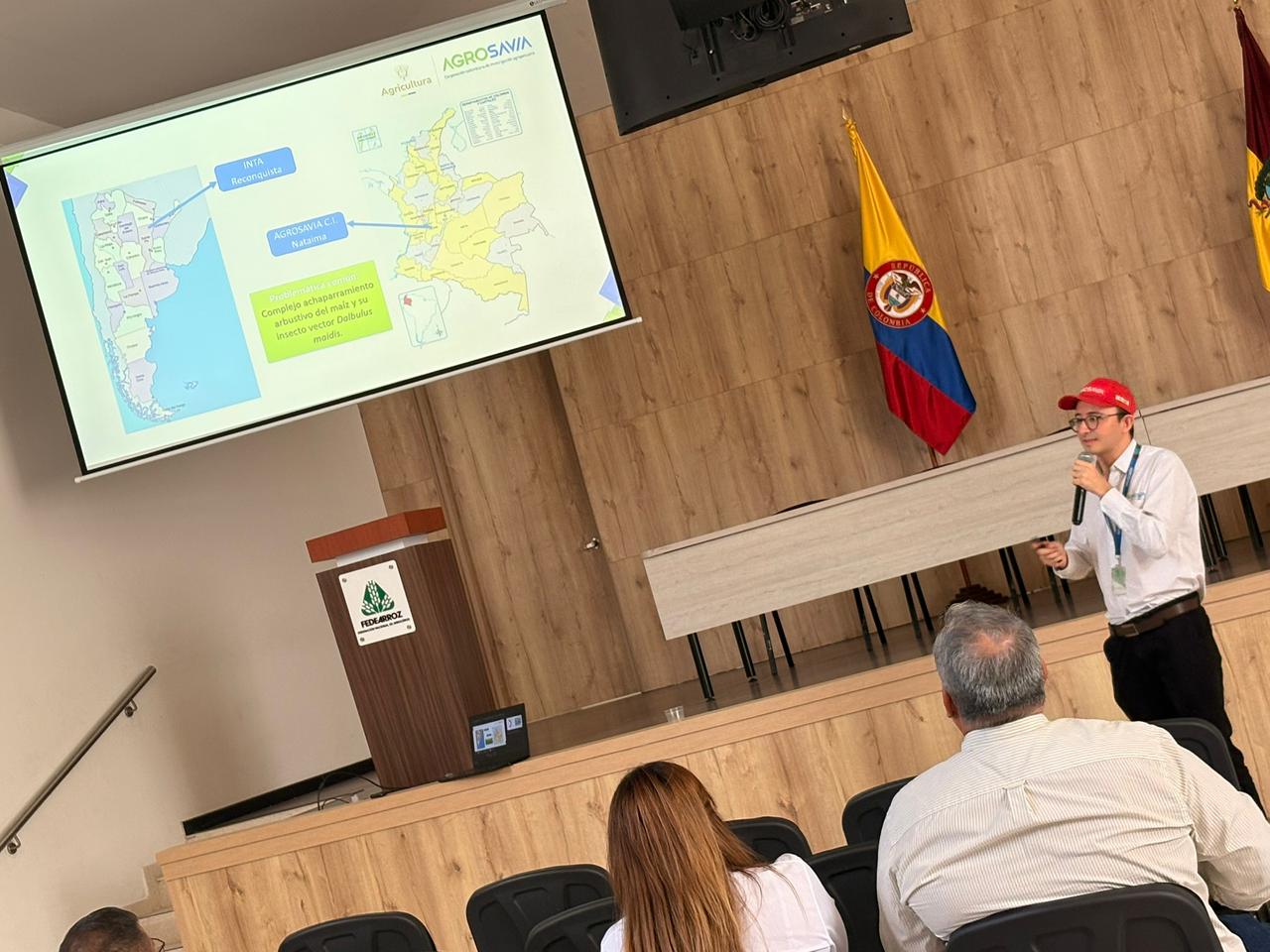

 Technological
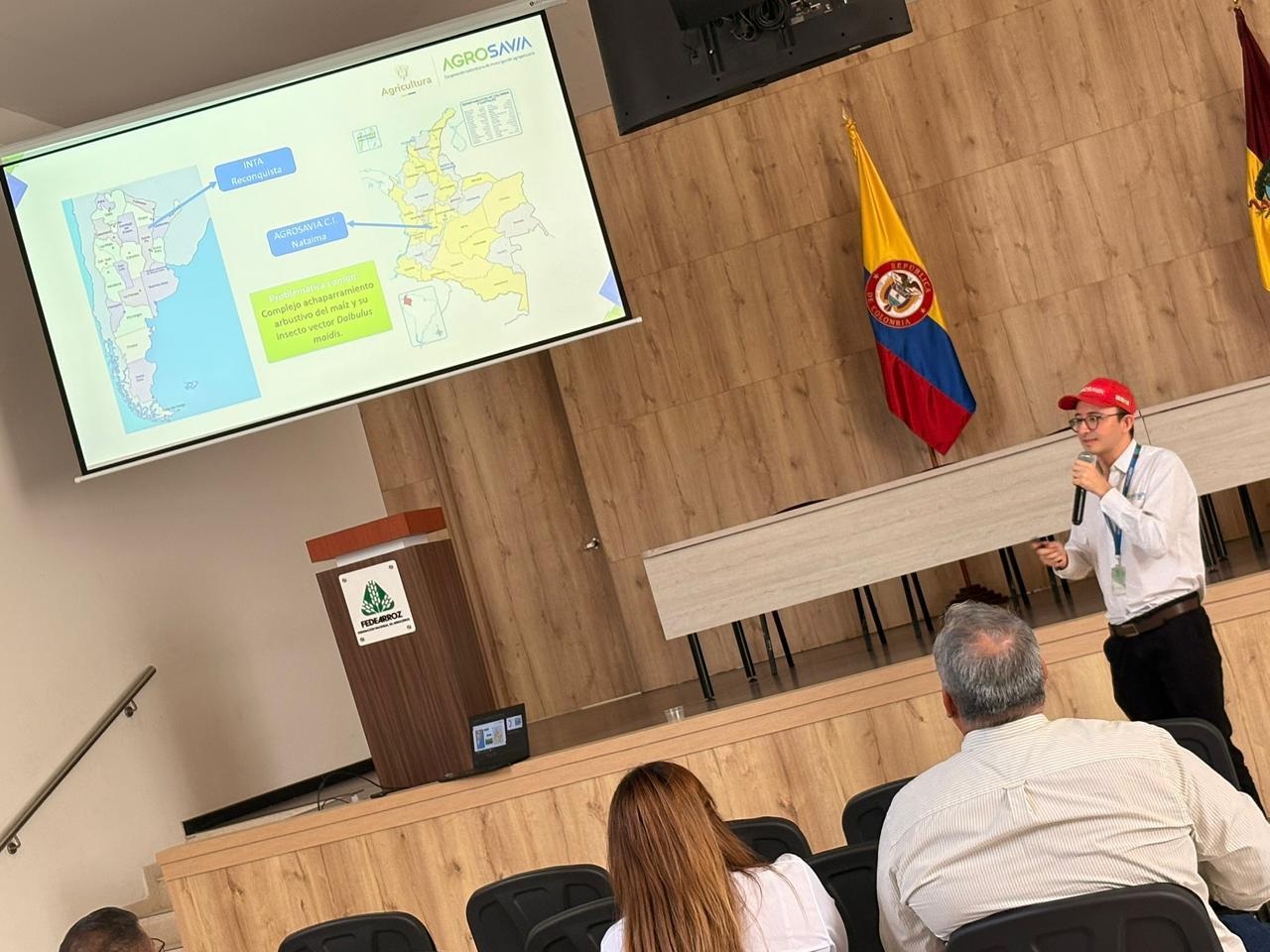
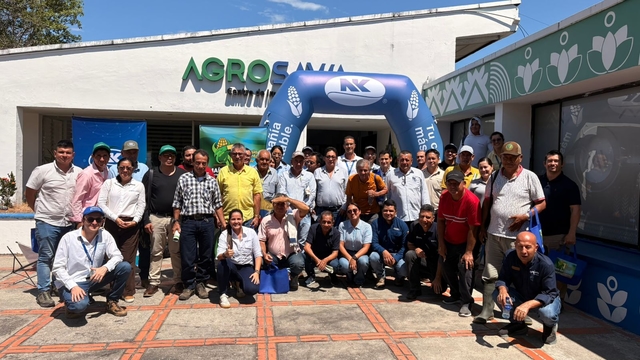
With the aim of strengthening institutional coordination in response to the challenges faced by the agricultural sector due to climate variability, the project “Resilient Maize: Innovation and Sustainable Management of Stunting Disease” was presented during the June Agroclimatic Technical Roundtable of Tolima, held at the Water Resource Center in El Espinal (Tolima).
The event brought together 40 participants, including representatives from key regional institutions such as AGROSAVIA, Fedearroz, the Government of Tolima, CORTOLIMA, the Colombian Agricultural Institute (ICA), and the Secretariat of Environment and Risk Management, as well as farmers, commercial representatives from the agricultural sector, rural extension and technical assistance professionals, producers, technicians, and other stakeholders involved in strengthening the department’s production systems. This diversity of participants made it possible to create a space for dialogue and knowledge exchange around climate risk management and the development of adaptation strategies for the agricultural sector.
During the meeting, agroclimatic outlooks for the coming months were presented, with special attention to projections associated with the El Niño phenomenon. These forecasts indicate conditions that could favor scenarios of high temperatures, reduced rainfall, and increased water stress across different production systems in the region. This outlook reinforces the need to strengthen local capacities to anticipate risks and promote adaptation strategies that reduce the vulnerability of the agricultural sector.
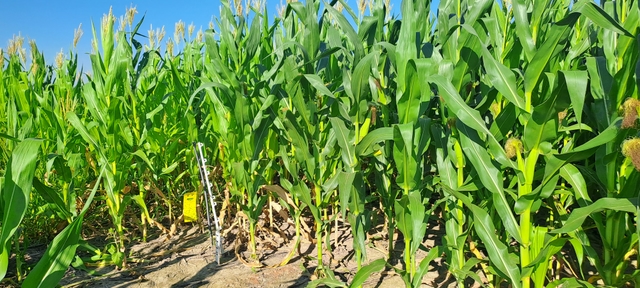
In this context, the presentation of the “Resilient Maize” project allowed for the sharing of progress and scope of a regional initiative aimed at addressing one of the main phytosanitary threats to maize production in Latin America: maize stunting disease complex, a condition associated with the insect vector Dalbulus maidis, whose incidence may be exacerbated by climate variability and change scenarios.
The project proposes a comprehensive approach that integrates risk monitoring and modeling, evaluation and implementation of sustainable management practices, analysis of future climate scenarios, and strengthening of technology transfer and adoption processes, aiming to contribute to the development of more resilient and sustainable production systems.
Among the aspects presented during the event were actions aimed at generating knowledge on the presence and behavior of the vector and the disease, modeling scenarios under climate change conditions, evaluating locally adapted management alternatives, and strengthening networks of producers and territorial stakeholders to support evidence-based decision-making.
The participation of the project in these types of spaces directly aligns with its contribution to the Sustainable Development Goals (SDGs), particularly SDG 13: Climate Action, by promoting measures aimed at strengthening the adaptation and resilience of agricultural systems in the face of changing climate scenarios. From this perspective, the project recognizes that addressing climate change challenges requires integrating research, knowledge management, public institutions, the productive sector, and rural communities to transform scientific information into concrete territorial actions.
Agroclimatic Technical Roundtables represent precisely one of those strategic spaces where technical knowledge, climate information, and local experience converge to guide timely decision-making in the territory. The participation of the “Resilient Maize” project in these spaces contributes to strengthening regional capacities, facilitating processes of social appropriation of knowledge, and promoting agriculture that is better prepared for extreme events and climatic uncertainty.
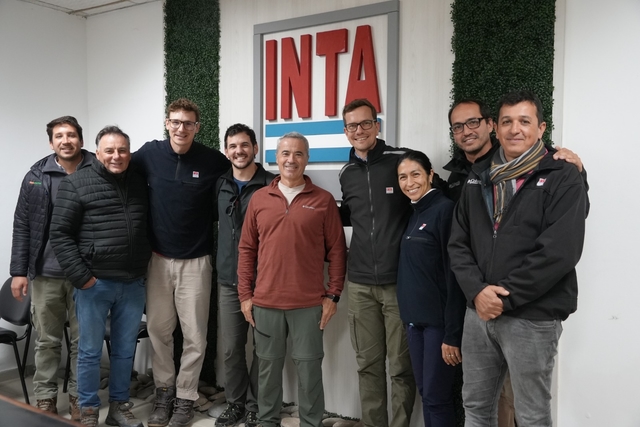
Through the “Resilient Maize” initiative, continued participation in regional coordination and collective construction spaces will be strengthened, promoting innovative and sustainable solutions that contribute to protecting maize productivity, reducing the impact of stunting disease, and advancing toward more resilient agri-food systems in Colombia and Latin America.
.jpg&w=3840&q=100)