 Impact
 Initiatives
 Dashboard
 Alliances

 Impact
 Initiatives
 Dashboard
 Alliances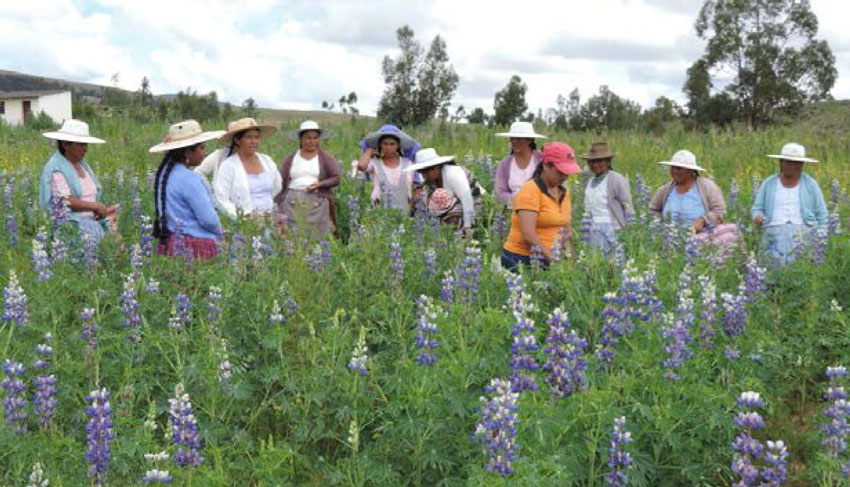

 Technological-Organizational-Institutional
Context and Objectives:
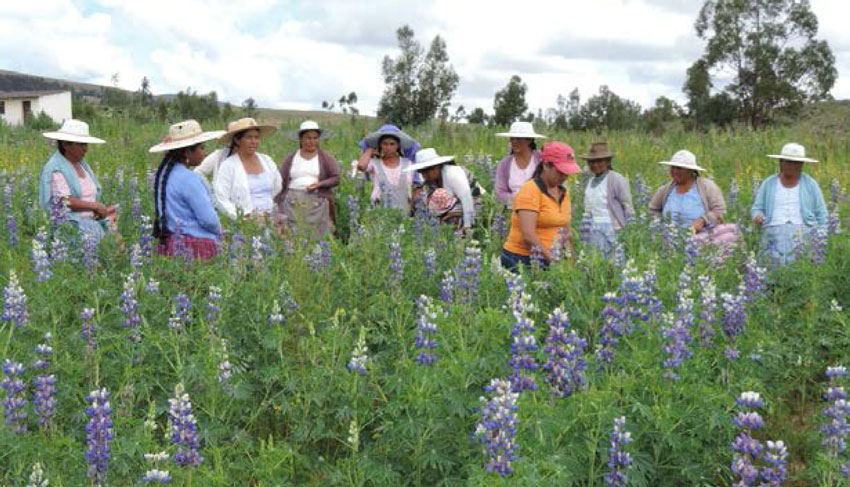
The High Andean region of Bolivia and Ecuador, as well as Araucanía in southern Chile, are highly vulnerable to climate change. Agricultural producers have few options to improve their production systems. The genus Lupinus, due to its resilience to adverse climate and soil conditions, offers an alternative. In Bolivia and Ecuador, approximately 1,500 hectares and 5,997 hectares of bitter lupin are cultivated, respectively. Meanwhile, in Chile, over the last five years, the area planted with bitter lupins for human consumption has fluctuated between 4,600 and 12,300 hectares, while sweet lupins for animal feed have ranged from 5,900 to 12,700 hectares. Bitter lupin has a high nutritional value but contains alkaloids that must be removed for human consumption through a labor-intensive process that requires a considerable amount of water.
The project’s objective is to promote the development of technological innovations to strengthen the resilience of production systems through the incorporation of lupin and to contribute to improving the livelihoods of farmers.
Proposed Solution:
The project consists of the following components: 1) Increasing the productivity of the production system, 2) Promoting the local use and consumption of lupin for a balanced diet, 3) Developing post-harvest practices and access to new local and national markets, and 4) Project management through the Innovation Platform.
Main Results:
In Bolivia:
- There was a significant variability in yields between a dry year (270 mm) versus a normal year (450 mm).
- The weevil Apion sp and Anthracnose (Colletotrichum spp) can impact productivity by up to 80% and 40%, respectively.
- A mechanical thresher was introduced to reduce labor and optimize production.
- A de-bittering technology was validated that reduced water consumption from 80 to 40 liters per kg of grain.
- A recipe book for nine lupin dishes based on local knowledge was created and promoted to more families.
- A private company was integrated, developing a new brand and three processed products sold in the two main supermarket chains in Cochabamba. In 2017, 1,500 units/month were marketed.
In Ecuador:
- Fertilization with NPK (27-69-0) significantly increased yields (from 515 in the control to 909 kg/ha with fertilization).
- Local varieties showed good yields, but being late-maturing, they cannot compete with the new "INIAP 450 Andino" variety in a less humid year.
- A new de-bittering technique was tested that reduced processing time from 84 to 58 hours and water consumption from 96 to 66 liters per kg of grain.
- De-bittered and fresh lupin is consumed by 71% of families in the Sierra region, 20% in the Coast, and 87% in the East, with annual per capita consumption of 4 kg in the Sierra and East, and 2 kg in the Coast.
- Collaborations were established with private companies to evaluate acceptability and preference for different products (flour, crunchy grains with and without coating, freeze-dried, frozen, canned, flavored milk, and lupin yogurt).
- In 2017, the first sale of lupin flour (300 kg) was made to the Czech Republic. A lupin spreadable paste was also developed.
In Chile:
- Lupinus albus showed a higher yield potential compared to the other two species. The "Alboroto INIA" variety achieved an average yield of 4.7 t/ha in the first season and 5.7 t/ha in the second. L. angustifolius had intermediate yields, while L. luteus had the lowest yields.
- L. luteus contains the highest percentage of protein in the grain, followed by L. albus and then L. angustifolius. However, L. albus is more efficient in protein production per hectare, exceeding 1,500 to 2,000 kg/ha.
- BYMV (Bean Yellow Mosaic Virus) is a potential problem for lupin production in southern Chile. Having a rye barrier around the crop contained the arrival of aphid vectors and significantly reduced the incidence of BYMV.
- A meeting was held at INIA with a company that supplies inputs to the salmon feed industry. As a result, the company decided to get involved in the purchase and processing of lupin, opening a significant market potential.