Climate change is exacerbating the problems of poor and vulnerable people in the High Andes of Bolivia and Ecuador, and Southern Chile. Legumes of the Lupinus genera have a great capacity to adapt to adverse weather and soil conditions. They also have high nutritive value due to their protein, calcium, iron and zinc content. In Bolivia and Ecuador the main species is bitter Lupinus (Lupinus mutabilis), while in Chile both bitter and sweet (L. albus, L. angustifolius and L. luteum) varieties are cultivated. It is estimated that the area of cultivated Lupinus is around 1,500 ha in Bolivia, and 5,974 ha in Ecuador. In Chile during the last 5 years, bitter Lupinus area has fluctuated between 4,600 and 12,300 ha, while sweet Lupinus has fluctuated between 5,900 and 12,700 ha.
The great variability within Lupinus species and varieties require the measurement of their production performance under a wide range of agroecological and management conditions. In addition, given the degree of soil degradation, Lupinus nitrogen fixation capacity and the use of its aerial biomass are beneficial for soil fertility.
Lupinus post-harvest is burdensome due to threshing and venting.
Bitter varieties are high in alkaloids which need to be removed to allow their consumption. The traditional process requires high water quantities and it takes several days, thus processes developed and validated in the Project are more efficient and result in economic and environmental benefits.
To promote lupine consumption its image needs to be changed. Also its value needs to be increased through the introduction in more dynamic markets.
In Bolivia, L. mutabilis and L. albus yield was superior to that of L. angustifolius.
A technology to remove alkaloids was validated reducing water use from 80 to 40 l/kg of grain.
Three products based on Lupinus were developed. Now they are sold in supermarket chains. In 2017, 1,500 units/month were sold.
In Ecuador yields increased from 515 to 909 kg/ha due to fertilization.
A new technology to remove alkaloids reduced processing time from 84 to 58 hours and water consumption from 96 to 66 l/kg of grain.
Acceptability and preference for products (meal, crunchy grains, lyophilized, and others) was evaluated and lupine meal was exported for the first time.
In Chile L. albus surprassed the other two species in yield and is more efficient in producing protein, yielding over 1,500 to 2,000 kg/ha.
A collaboration with a salmon feed company was established. Now, it is purchasing and processing lupine.



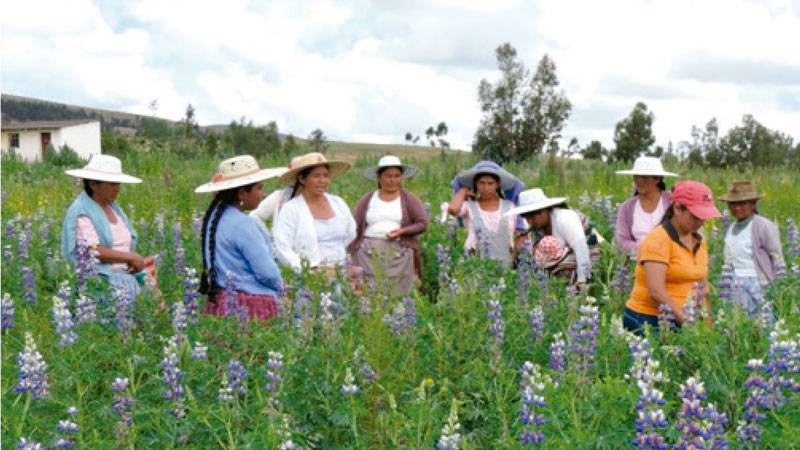

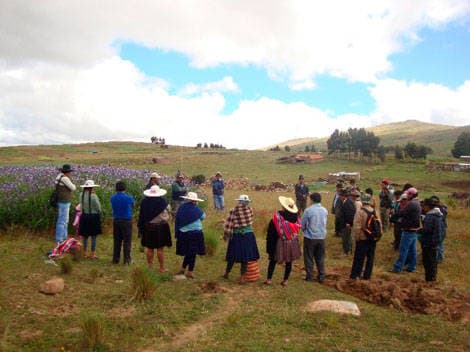

 Agronomic Practices


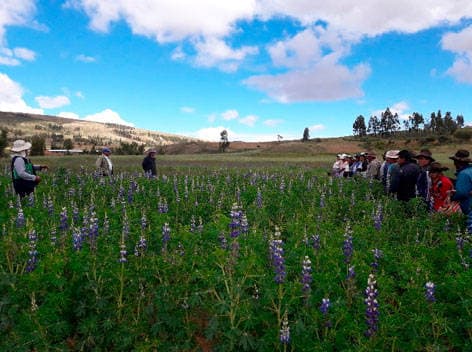





 Impact
 Initiatives
 Dashboard
 Alliances
 Impact
 Initiatives
 Dashboard
 Alliances









.png&w=750&q=75)