 Impact
 Initiatives
 Dashboard
 Alliances

 Impact
 Initiatives
 Dashboard
 Alliances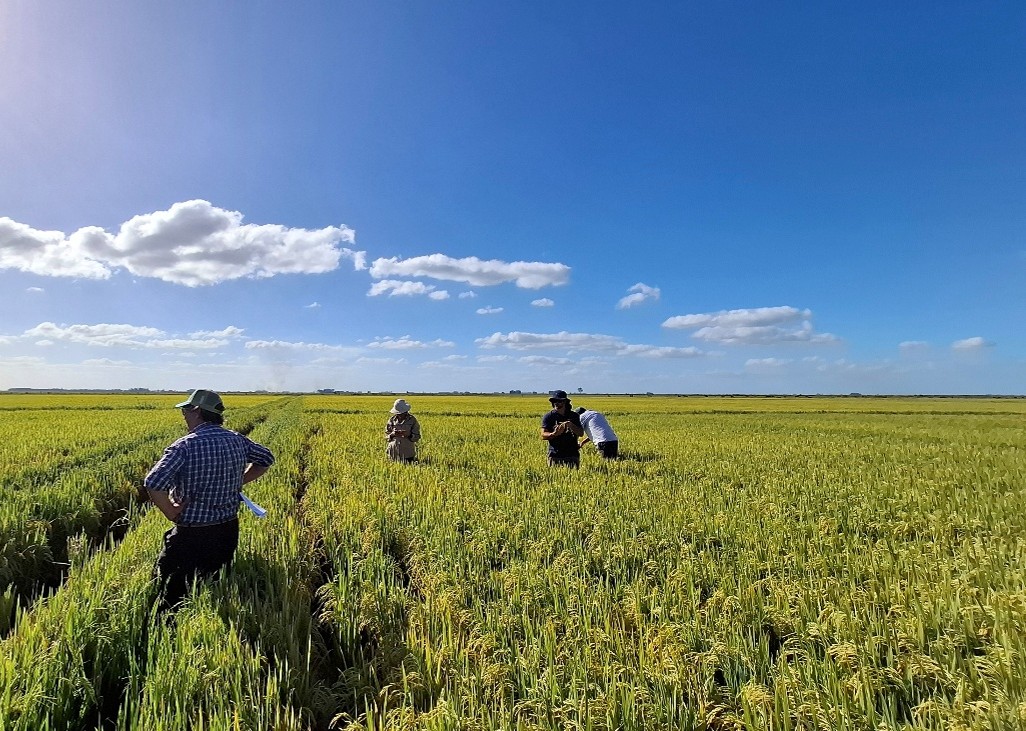

 Technological
A First Experience with Two Pioneering Producers: For decades, a rice farmer's primary concern when managing water was ensuring yield. Water is synonymous with stability, control, and, to some extent, peace of mind. Therefore, proposing to remove water from a field in the middle of the growing cycle might have seemed, until recently, like a difficult idea to accept.
However, the challenges facing rice production today are different from those of thirty years ago. In addition to the need to maintain high levels of productivity with recognized quality, there are new demands related to sustainability, environmental footprint, and product differentiation in increasingly demanding markets.
With this perspective, a line of work began a few years ago through the coordination of a series of projects with international institutions such as IICA, Fontagro, and the Global Methane Hub, along with national institutions such as INIA, the Rice Growers Association, and the Association of Associated Mills. This allowed us to acquire equipment, connect with similar initiatives, and fund research projects.
The objective was clear from the outset: to evaluate alternative irrigation management practices capable of reducing methane emissions without affecting yield and, at the same time, to generate local data that would position Uruguayan rice for new value-added opportunities, such as carbon markets.
The initial results obtained in experimental plot trials were very promising. It was confirmed that strategic drainage during the crop cycle reduced methane emissions—a gas generated under flooded conditions due to the absence of oxygen in the soil. However, the major question remained whether these results could be replicated under commercial conditions, where management decisions are conditioned by the specific production realities of each farm.
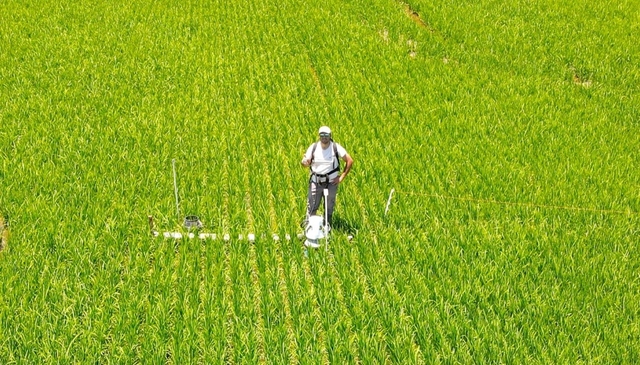
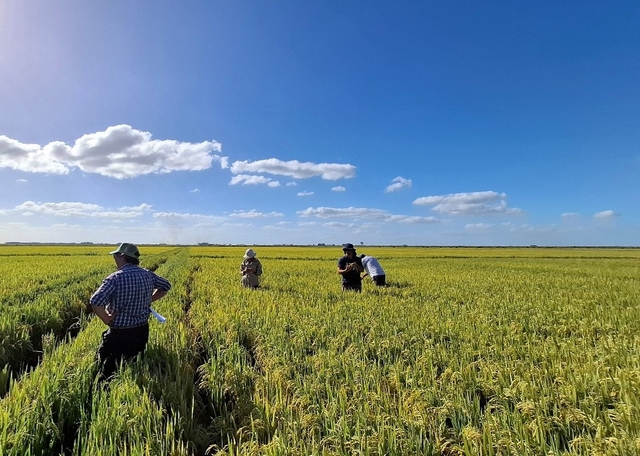
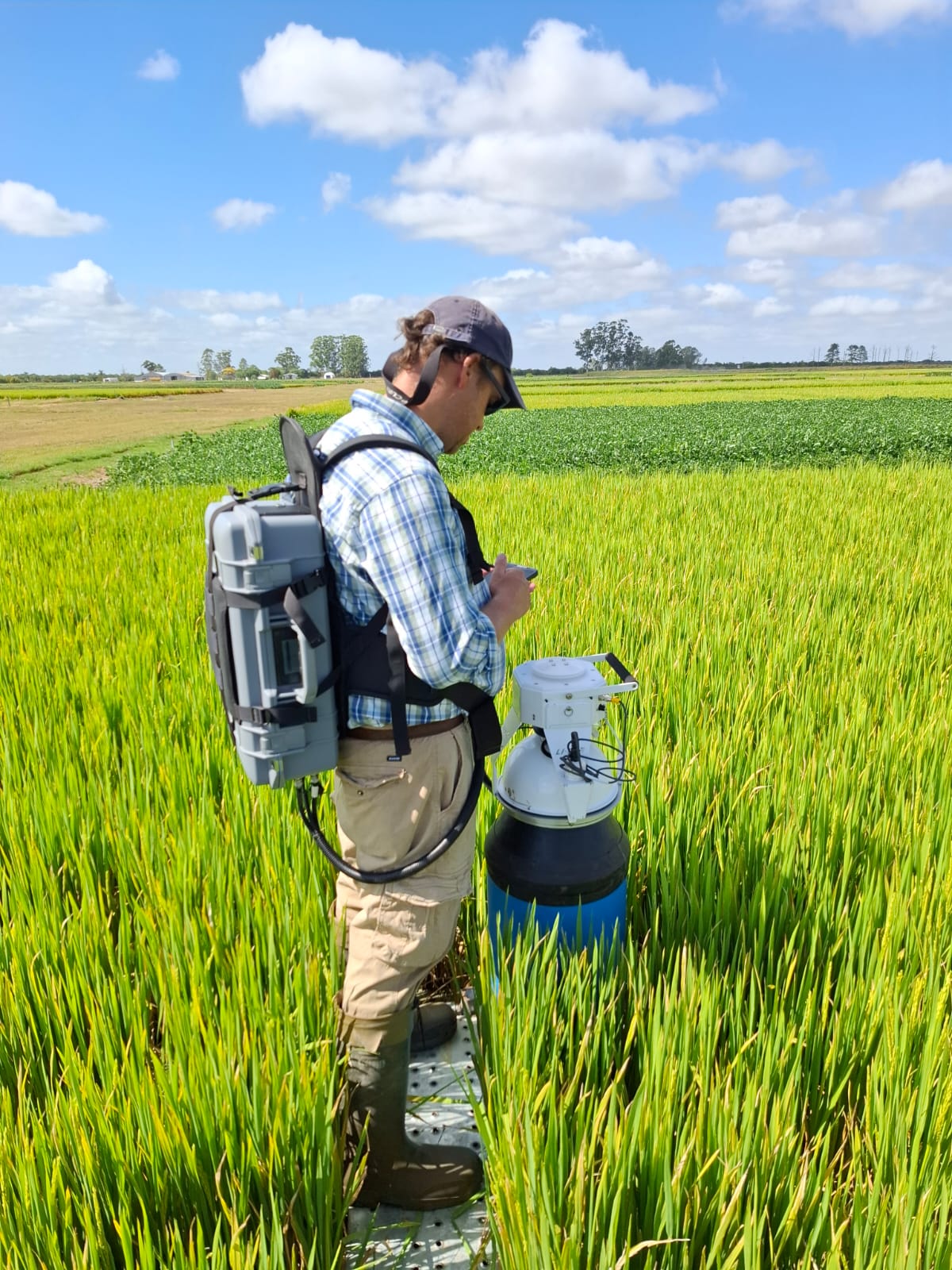
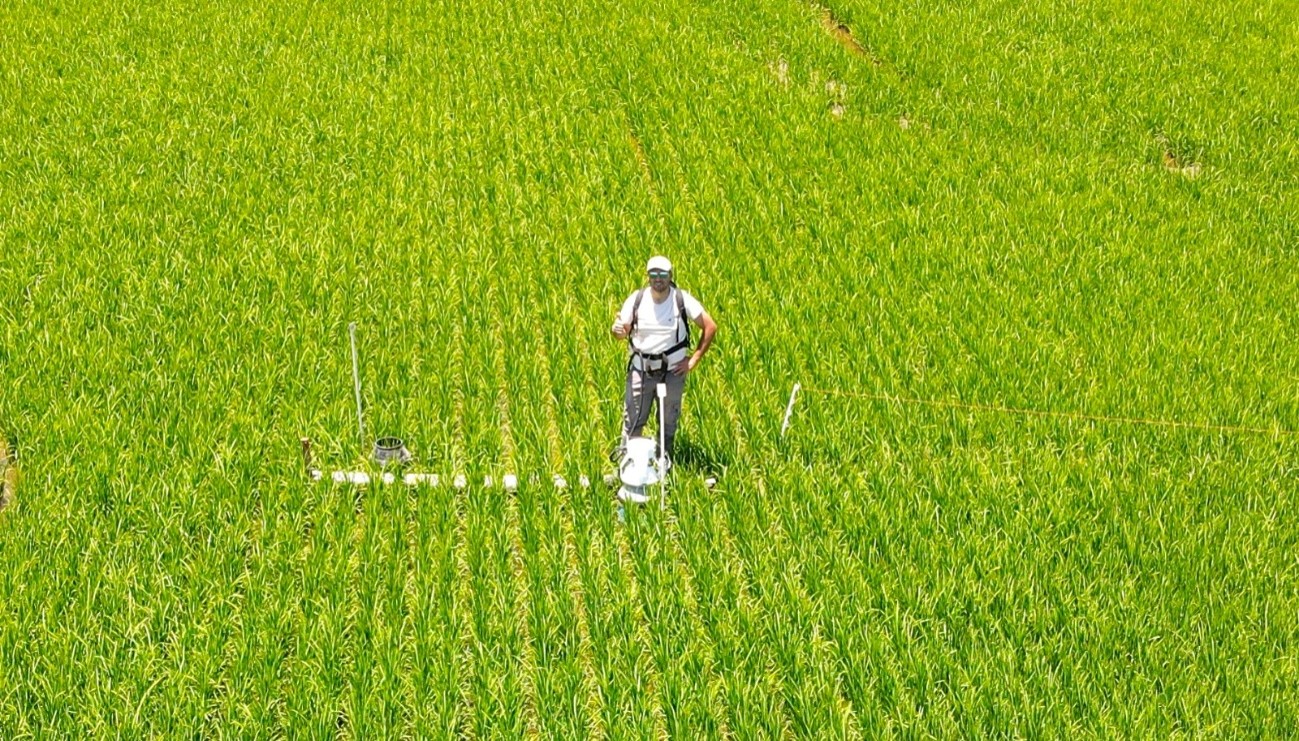
In this context, during the last harvest season (2025-2026), an experiment was conducted to evaluate the effect of temporary drying on methane emissions in rice under commercial conditions. On the farms of producers Hernán Zorrilla and Hugo Favero, the traditional continuous flooding management system was compared with a strategy that included temporary water withdrawals at specific times during the crop cycle.
Preliminary results showed a significant reduction in methane emissions, without any yield losses. But behind these numbers lies a much more interesting story: that of two producers who decided to try something that, until recently, seemed to contradict everything they had learned.
An idea that had been circulating for years
For Hernán Zorrilla, the proposal wasn't entirely new. "I've been curious about it for over 20 years," he recalls. And he immediately brings up conversations with Nicolás Chebataroff, when problems at Straighthead forced them to consider temporary drying during the primordium period. Back then, no one was talking about methane or carbon markets, but there was already an intuition that these management practices could generate positive effects within the system; however, they were never implemented. That's why, when the opportunity to participate in this experiment arose, the response was immediate. "The first thing I thought was that I was ready," he says.
In Hugo Favero's case, the motivation was different. What prevailed was uncertainty. "The truth is, if there's one thing we hadn't thought of until this year, it was removing water from the fields, especially during flowering," he admits. And that's precisely why the interest arose: to understand what would happen when one of the historical pillars of crop management was modified. "The uncertainty of seeing what would happen was what sparked my curiosity the most," he summarizes.
When the numbers begin to challenge the ideas
The experiment carried out on Hernán Zorrilla's farm evaluated a ten-day water withdrawal prior to the start of primordia (S10IP). The results were conclusive. The drying treatment emitted approximately 64% of the methane recorded under continuous flooding (IC), which is equivalent to a 36% reduction in emissions. But what really caught everyone's attention was that the yield not only remained the same, but showed a slight numerical advantage. While the traditional continuous flooding treatment reached 12,124 kg/ha, the water removal treatment yielded 12,266 kg/ha.
Zorrilla acknowledges that this was one of the aspects that impressed him most. "Just the fact that you manage the crop in a way that goes against what you think you have to do to make it work, and that it ends up yielding a few more kilos, is impressive," he says.
Beyond the statistical considerations, he emphasizes the confidence he has in the data obtained, the product of measurements taken in large plots and with a weighing system.