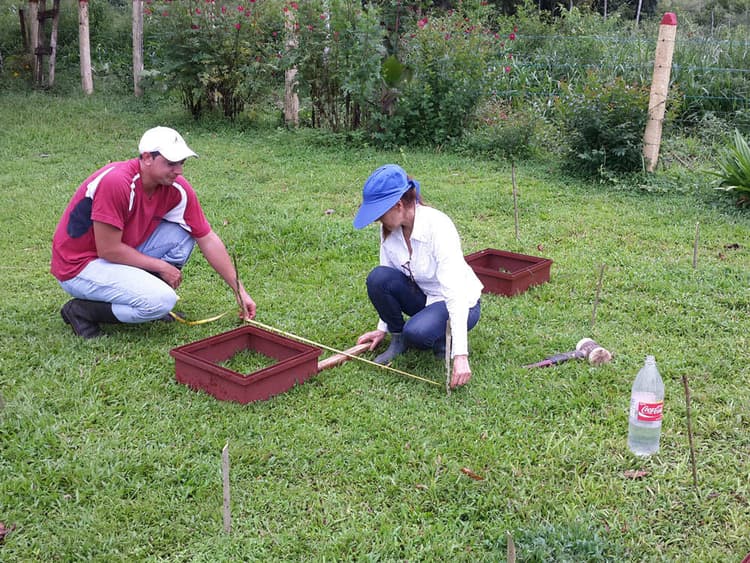
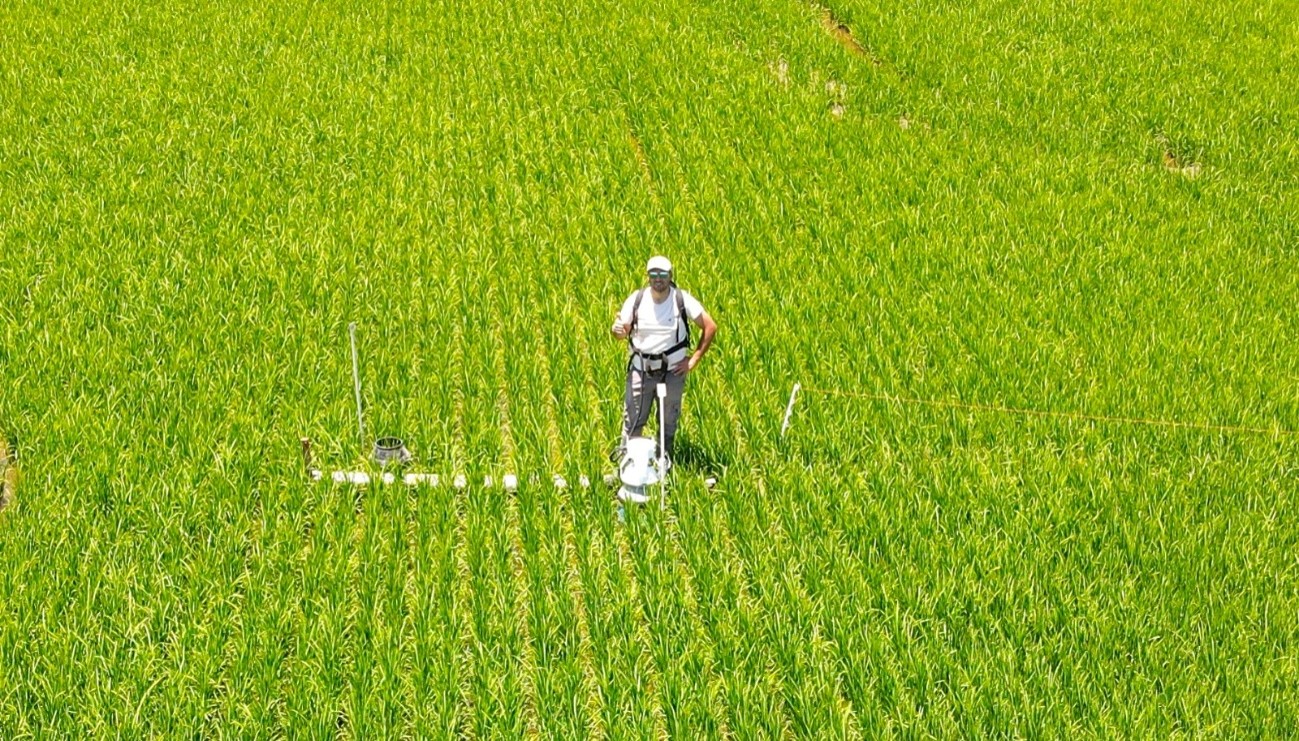
In an innovative development for monitoring greenhouse gases in agriculture, the project is testing two technologies that will transform GHG measurement in rice cultivation.

From a closed chamber in one plot to a satellite watching a whole region
The main objective of the project is to strengthen regional capacities for monitoring, reporting, and verification of methane emissions in rice ecosystems through a satellite tool that provides frequent, reliable, and free estimates to the rice community and governments. This project, in turn, has three specific objectives: i) to design AI models based on satellite information to estimate methane emissions in rice ecosystems, ii) to validate the models using field samples acquired in rice regions with contrasting ecosystems and iii) to develop a web platform with open access to the data and knowledge generated within the framework of this project.


"What is not measured, cannot be improved"— William Thomson Kelvin
 Information SystemStrategy 1. Resilient farmsStrategy 2. Sustainables territoriesAppliedTechnologicalFamily agriculturePoliciesGas emissionEvaluation of Results and ImpactCapacity buildingProductive systems
Data collection reached 100 % of its target, with more than 6,000 records, and these were used to train an artificial intelligence model that achieved an accuracy of 0.93. Of the 3,000 records committed to the global database, 2,300 have been uploaded, and a further research paper was drafted beyond the one planned. All six scheduled workshops were held, with 80 people trained against an annual target of 100, and the project now reaches some 2,000 beneficiaries among scientists and producers. Three of the four technical and financial reports committed to the donor were delivered on time. Outstanding for the closing phase are the formal data collection protocol, the final technological solution, and the platform rollout to reach 100 monthly active users.






Uruguay

Perú

Panamá

Colombia

Nueva Zelanda
The Tangible Impact of Science and Technology in the Field

 Impact
 Initiatives
 Dashboard
 Alliances
 Impact
 Initiatives
 Dashboard
 Alliances