 Impact
 Initiatives
 Dashboard
 Partnerships

 Impact
 Initiatives
 Dashboard
 Partnerships

 Technological-Organizational-Institutional
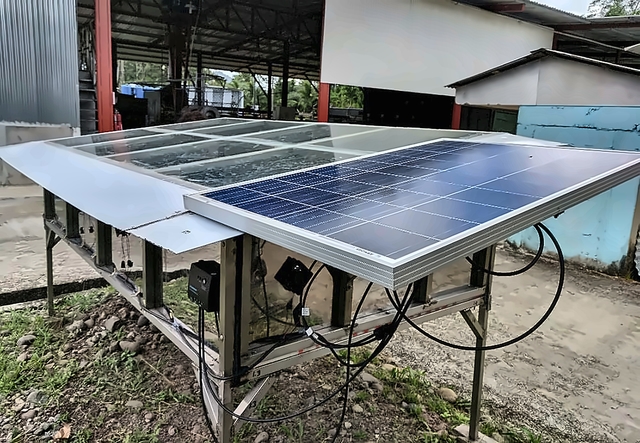
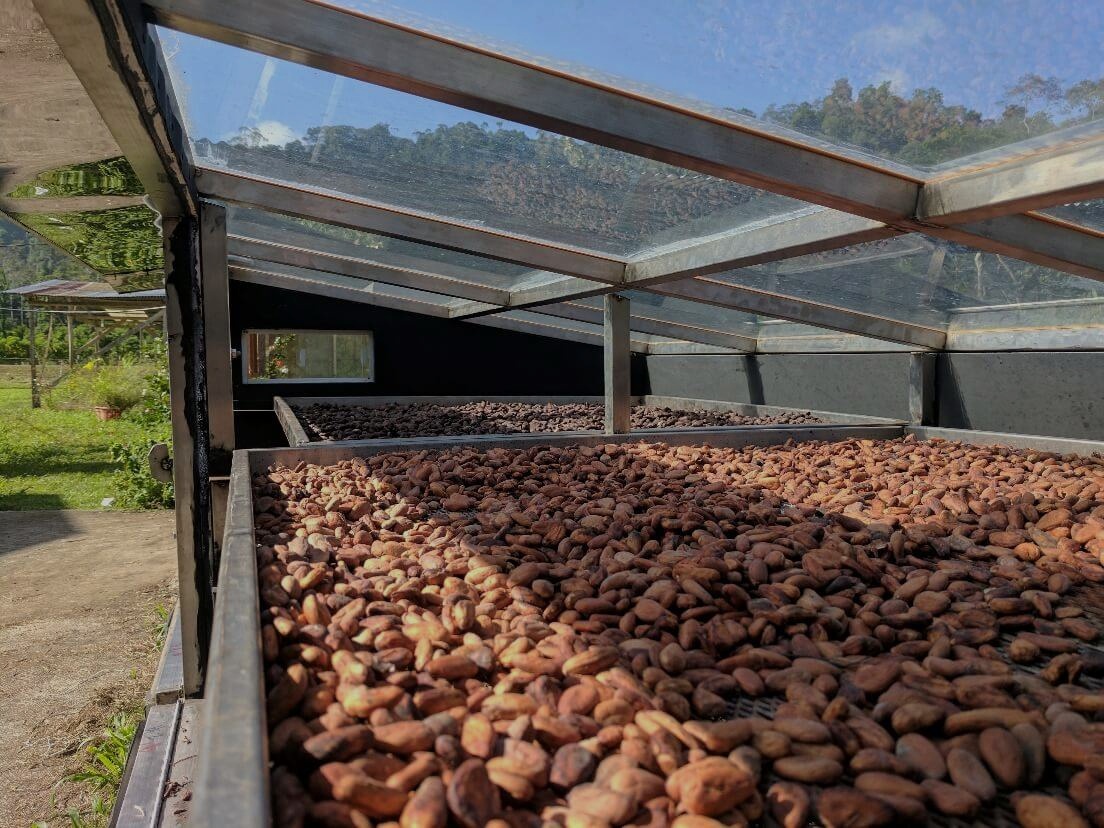
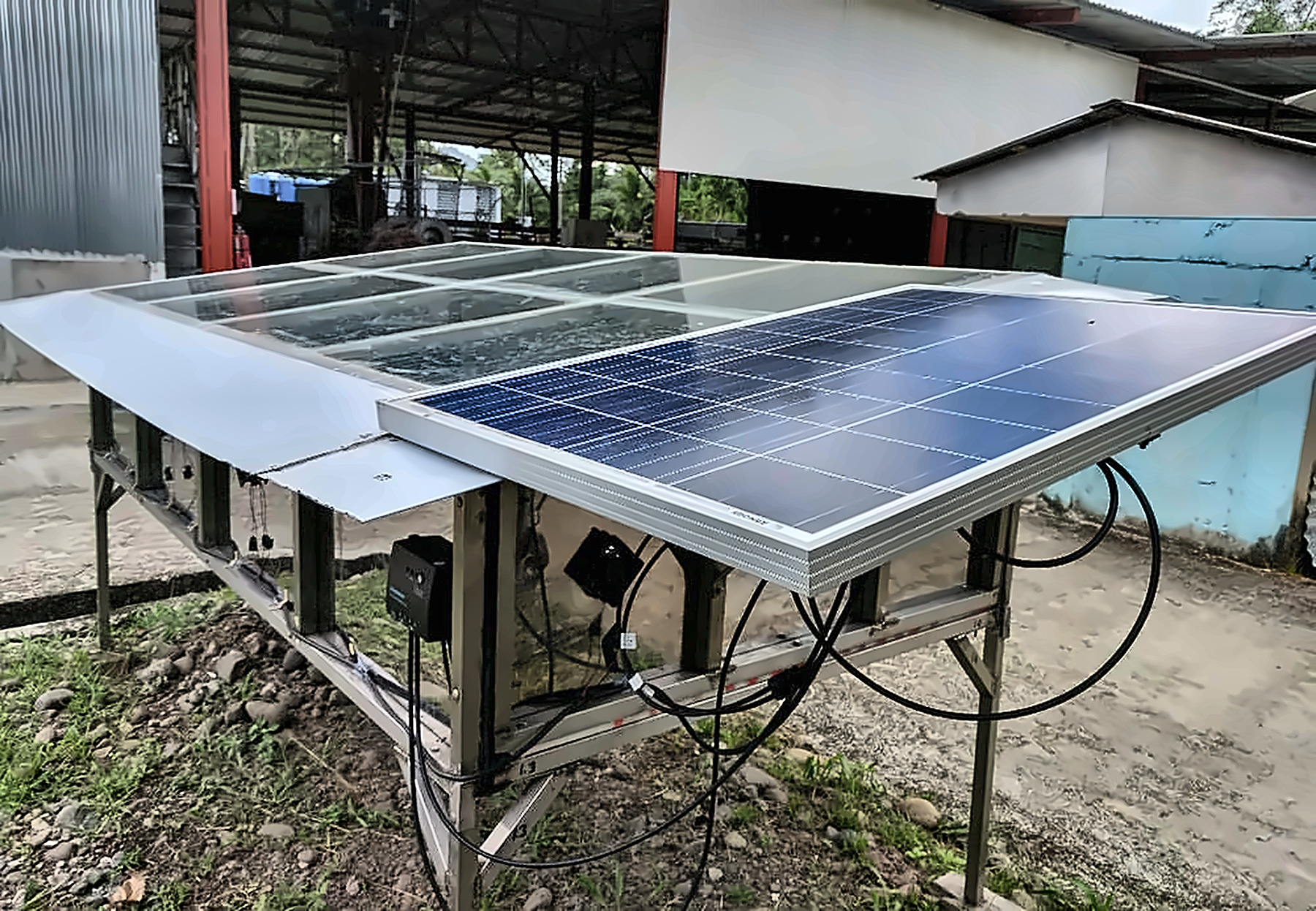
The project “Community Micro-Processing: Social Construction of Cocoa Quality” concludes with an innovation designed for the most remote communities. It is supported by FONTAGRO and was executed by FUNDAUNA and the National University of Costa Rica together with APPTA and COCABO. In three participatory workshops, two model hybrid solar drying systems integrated with photovoltaic panels were designed and built. With them, cocoa can be processed on site, without long trips for the freshly harvested beans. The design combines the best of solar and conventional drying:
- fans powered by a solar panel, with a charge regulator and a battery for low-light days;
- a heat storage system with river stones, insulation and black metal lining, and windows to regulate temperature;
- four trays of 30 to 45 kg each, with capacity to process about 200 kg of cocoa per week;
- an estimated useful life of 15 to 20 years with proper maintenance.
The dryer seeks to reduce quality losses, which could reach 50%. It can also process other products and generates additional electricity, which facilitates access to energy and connectivity in isolated communities. The project also leaves important results:
- 1,500 family farming systems associated for the use of the dryers;
- a network of 30 representatives of institutions, cooperatives, associations and other value chain actors;
- two theses, one postgraduate and one undergraduate;
- cupping and good practice guides available to some 3,000 producers.
With these tools, families can build differentiation strategies based on their local resources, their cupping skills and a technology adapted to climate variability.
🔗 Project page (in Spanish) · 🔗 Impact story (in Spanish) · 📄 2018 poster (in Spanish)