 Impact
 Initiatives
 Dashboard
 Alliances

 Impact
 Initiatives
 Dashboard
 Alliances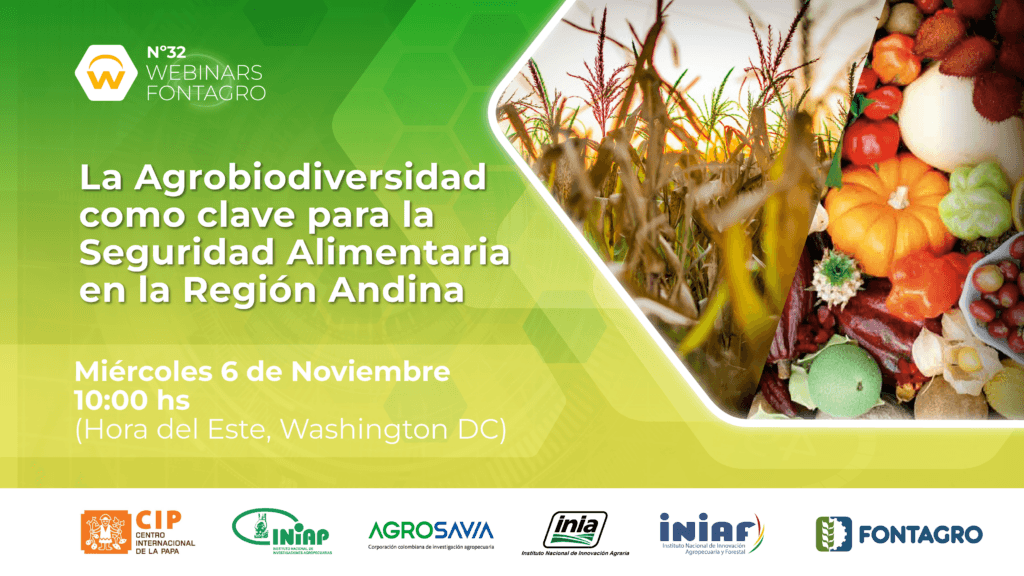

 Organizational
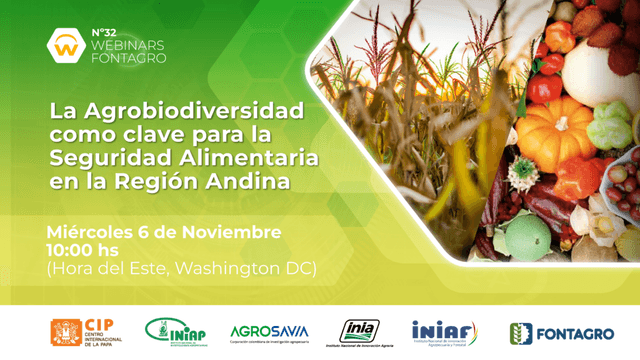
On November 6, a prominent webinar was held, led by FONTAGRO in collaboration with the National Institute of Agricultural Research of Ecuador (INIAP), the Colombian Corporation for Agricultural Research (AGROSAVIA), the National Institute of Agricultural Innovation of Peru (INIA), and the National Institute of Agricultural and Forestry Innovation of Bolivia (INIAF). The event aimed to highlight achievements in agrobiodiversity in the Andean Region and its application in improving nutrition and food security.
During the webinar, successful case studies in research, extension, and technology transfer were showcased, illustrating the valuable contributions of various countries in the region. Renowned researchers shared successful experiences underscoring the importance of cooperation and knowledge exchange in addressing current challenges in food and sustainability.
According to the experts’ presentations, agrobiodiversity is not only essential for current food resilience but also key to facing future challenges related to food production. In countries like Bolivia, Colombia, Ecuador, and Peru, the conservation and promotion of agrobiodiversity have proven vital for local food security.
Investing in conservation strategies, both in situ and ex situ, is crucial for strengthening food security. Communities actively participating in seed banks and the conservation of local varieties are better prepared to face climatic adversities. Moreover, traditional knowledge of indigenous communities is invaluable for the sustainable management of agrobiodiversity in the Andes.
International cooperation initiatives are essential for enhancing local efforts in agrobiodiversity conservation and improving food sovereignty. Biodiversity on farms has proven to be a key factor in strengthening ecosystem services and improving the quality of life for Andean communities.
In conclusion, promoting agrobiodiversity is not only a pathway to food security in the Andean region but also a step toward the well-being of indigenous communities and long-term sustainability. Communities, governments, and international organizations must come together to reinforce these efforts and ensure a safer and more sustainable food future.
The event also aligned with the objectives set forth at COP16 and other international forums dedicated to the protection of biodiversity and the promotion of sustainable food practices. These initiatives are expected to not only enhance the resilience of agri-food systems in the region but also improve the quality of life for local communities.
To watch the recording of this event, visit here.
.png&w=640&q=100)
.jpg&w=640&q=100)
%20(1).png&w=640&q=100)
%20(1).png&w=640&q=100)
%204.15.15%E2%80%AFp.m..png&w=640&q=100)
%204.26.57%E2%80%AFp.m..png&w=640&q=100)
.jpg&w=640&q=100)