Impact
 Initiatives
 Dashboard
 Alliances

 Impact
 Initiatives
 Dashboard
 Alliances

 Technological
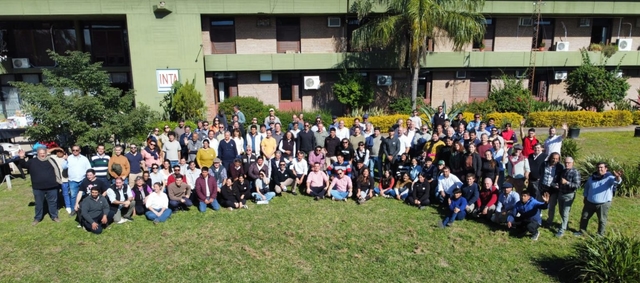
TUCUMÁN (September 30, 2026) — After twelve months of intense territorial work, the international project "Gran Chaco Ganadero: More Calves, Less Methane" presented its first annual progress report. The tri-national initiative covers more than 20,000 hectares distributed across 27 small-scale livestock establishments (13 in Argentina, 8 in Bolivia, and 6 in Paraguay), evaluating how the incorporation of low-cost, high-impact technologies can transform the region's productive and environmental indicators.
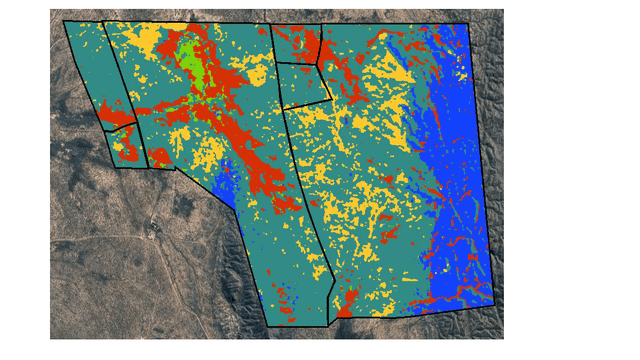
MAP: Innovation network in the territory: distribution of the 27 pilot sites of the project funded by Global Methane Hub and supported by FONTAGRO in Argentina, Bolivia, and Paraguay.
A revealing starting point
The productive baseline survey confirmed the diagnosis of the Gran Chaco's breeding systems:
• Dependence on native forest: 88% of the forage base of the analyzed farms corresponds to native vegetation (63% native forest and 25% natural grassland), demonstrating that regional livestock farming depends directly on the health of its ecosystems.
• Critical reproductive gaps: In the initial situation, no establishment (0 of 27) performed pregnancy diagnosis or venereal disease testing, and only 15% inspected bulls before breeding.
• Productivity with a broad margin: The average weaning index stood at 45.5% and meat production at 31.8 kg/ha/year, classifying 70% of the establishments in a low-performance range. However, the wide disparity found (with sites achieving more than 70% weaning under equal agroclimatic conditions) confirms that the improvement lies in management and not in insurmountable environmental limitations.
First results in the territory
Far from remaining a static diagnosis, during Year 1 the project launched forage and reproductive management plans at all sites.
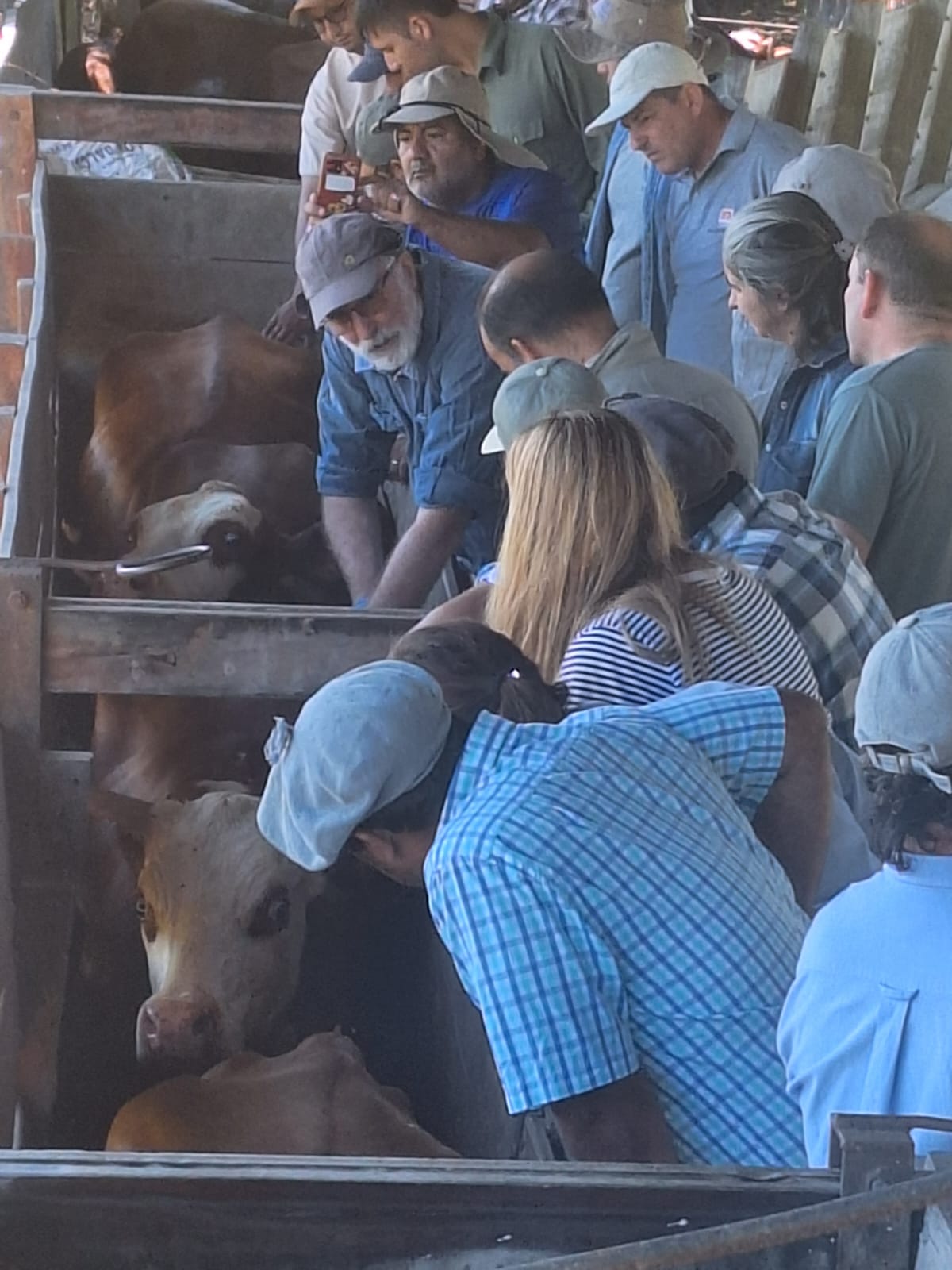
The most striking milestone of the period was the adoption of pregnancy diagnosis: the practice of rectal palpation went from 0% to being successfully implemented at 44% of the establishments (12 of 27 sites).
Likewise, 81% of producers have already implemented stocking rate adjustments in line with forage receptivity and body condition assessment.
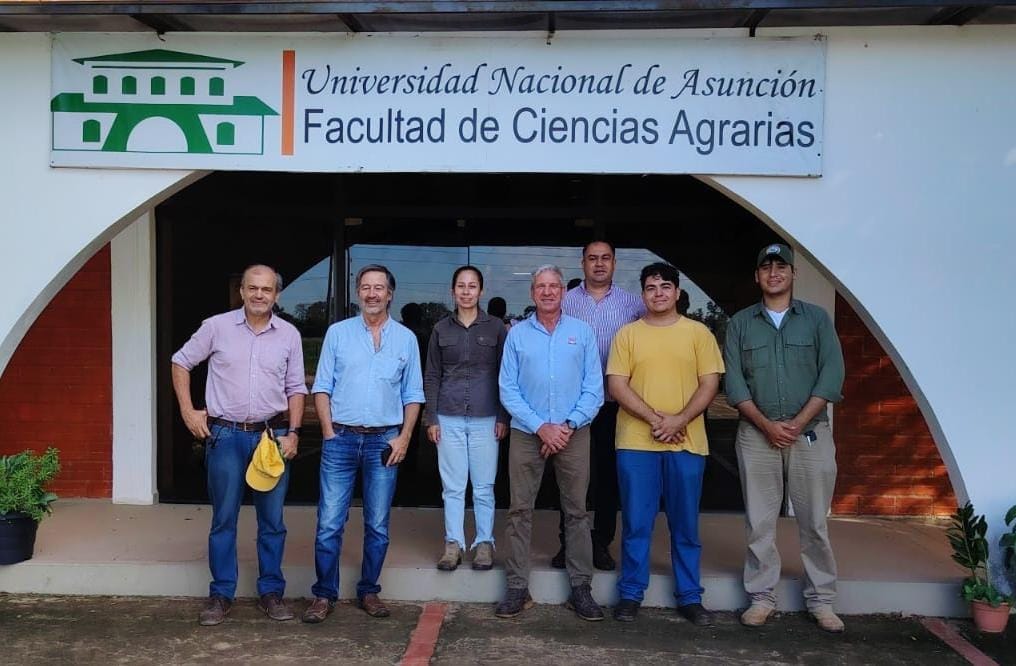
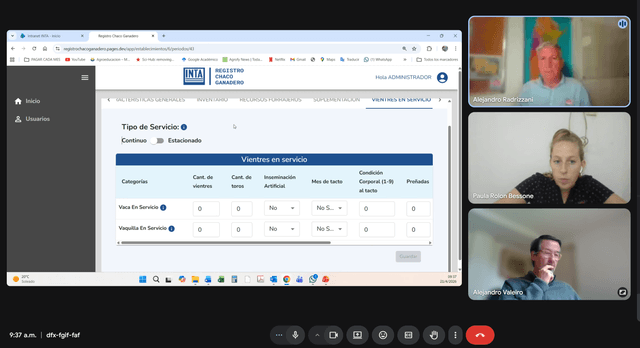
The project, technically coordinated by Dr. Alejandro Radrizzani (INTA-IIACS) and articulated with FEGASACRUZ (Bolivia), IPTA, and FCA-UNA (Paraguay), is advancing in parallel with methane emissions modeling under IPCC Tier 2 methodology, whose first methane intensity results will be consolidated at the end of 2026.