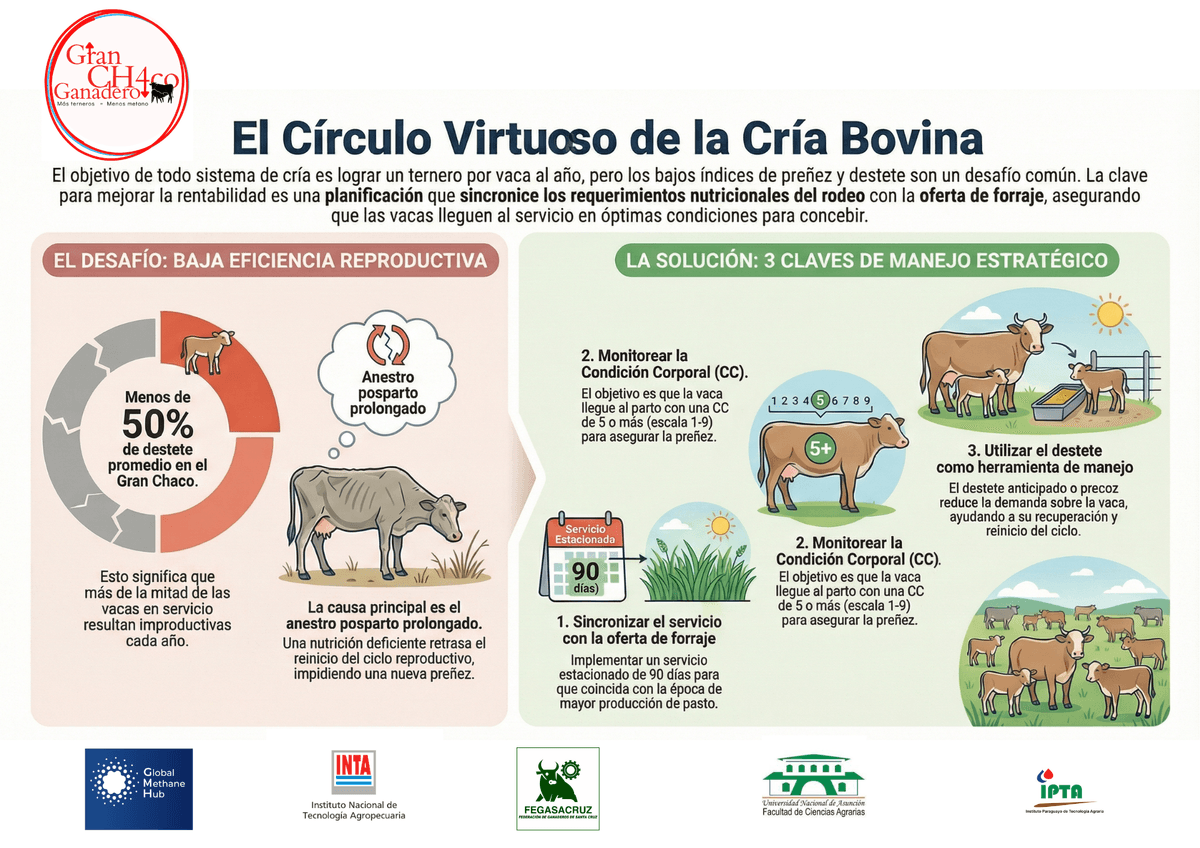
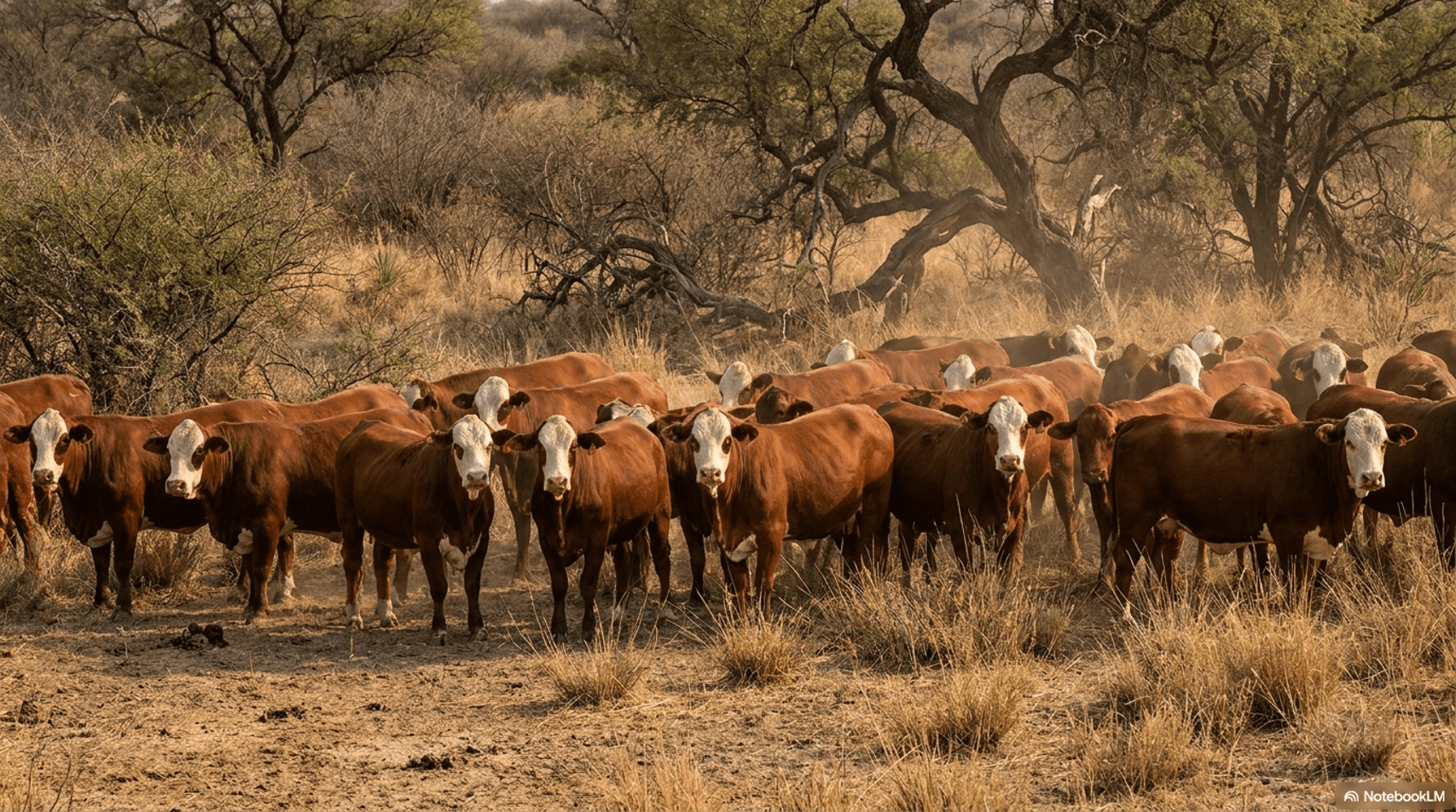
In the Gran Chaco, small and medium-sized cattle producers face extreme climate conditions, low productivity, and growing environmental pressure. Following advances led by FONTAGRO in reproductive efficiency, the challenge now is to produce more and better while reducing the climate impact.

In the Gran Chaco, one of the most biodiverse regions in South America, thousands of small and medium-scale cattle producers face the challenge of sustaining their livelihoods under conditions of extreme climate, low productivity, and increasing environmental pressure.
In recent years, an initial regional effort funded by FONTAGRO and coordinated by INTA, together with partners such as FEGASACRUZ, IPTA, INIAF, and IICA, identified simple and effective technologies that improved reproductive efficiency in cow–calf systems. We are now taking the next step: not only aiming to produce more, but to produce better and with a lower climate impact.
Producing more beef in the Gran Chaco with lower methane emissions… it’s possible!
The project “Gran Chaco Livestock: More Calves, Less Methane” promotes adapted technologies to increase productivity (more calves per cow), reduce methane emissions per kilogram of beef, and strengthen technical capacities. Across 26 pilot sites in Argentina, Bolivia, and Paraguay, the project implements farm plans, real-time monitoring, training, and impact measurement. The initiative will generate evidence to scale solutions and inform public policies and climate finance. More efficient livestock systems improve rural incomes while helping mitigate climate change and conserve Chaco ecosystems.
.png&w=1200&q=75)
La solución tecnológica consiste en la implementación de un modelo de gestión ganadera aplicado en 26 sitios piloto distribuidos entre Argentina, Bolivia y Paraguay, orientado a mejorar el desempeño productivo y ambiental de los sistemas ganaderos. En cada predio se diseñarán e implementarán planes ganaderos adaptados a sus condiciones específicas, considerando aspectos de gestión reproductiva, alimentación, sanidad y manejo.
El proceso será acompañado por una app de monitoreo en tiempo real, que permitirá registrar, dar seguimiento y analizar información clave de cada sitio piloto. Esta herramienta facilitará la toma de decisiones técnicas, el seguimiento de avances y la medicición de impactos productivos y ambientales.
Además, la solución incluye la capacitación de técnicos y productores, fortaleciendo capacidades locales para aplicar las prácticas recomendadas, interpretar la información generada y sostener las mejoras en el tiempo. Los resultados serán sistematizados y comunicados para facilitar el escalamiento de la experiencia hacia otros territorios ganaderos.
.jpg&w=3840&q=100)
"The livestock production cycle is unforgiving: growth, development, and conception must align with seasonal forage availability."— Dr. Vet. Rodolfo Stahringer (INTA Experimental Agricultural Station Colonia Benítez)
 Agronomic PracticesLivestock and Protein of the Future (“PI-2”)AppliedTechnologicalCattle raisingProductive systemsGas emissionAgriculture
≥30% increase in productivity (kg of calf per cow per year)
≥30% reduction in emissions intensity (kg CH₄ per kg of product)
100+ technicians and producers trained
Emissions calculator adapted to the Chaco context
Scaling strategy and scientific publication
Relevant data








Argentina

Bolivia

Paraguay
Paraguay


 Impact
 Initiatives
 Dashboard
 Alliances
 Impact
 Initiatives
 Dashboard
 Alliances