
Contribute to the resilience of livestock systems, with a focus on "One Welfare", by implementing good practices for cattle and sheep based on animal welfare principles.

Strengthening the co-participatory capacity of livestock-raising communities to implement the GLP-AW and disseminate the results of their adoption.
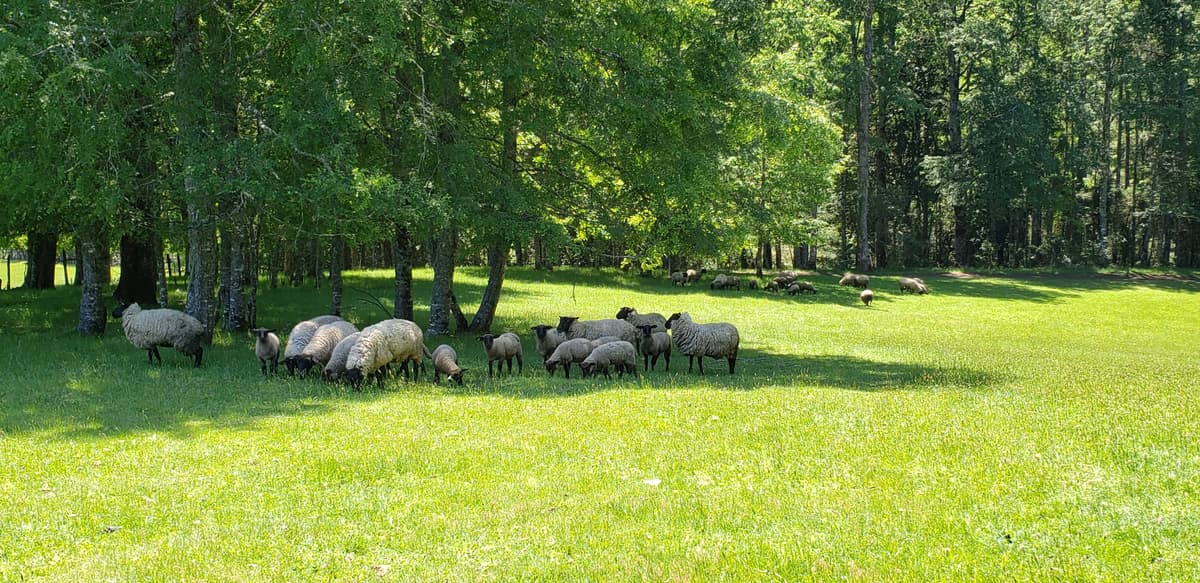
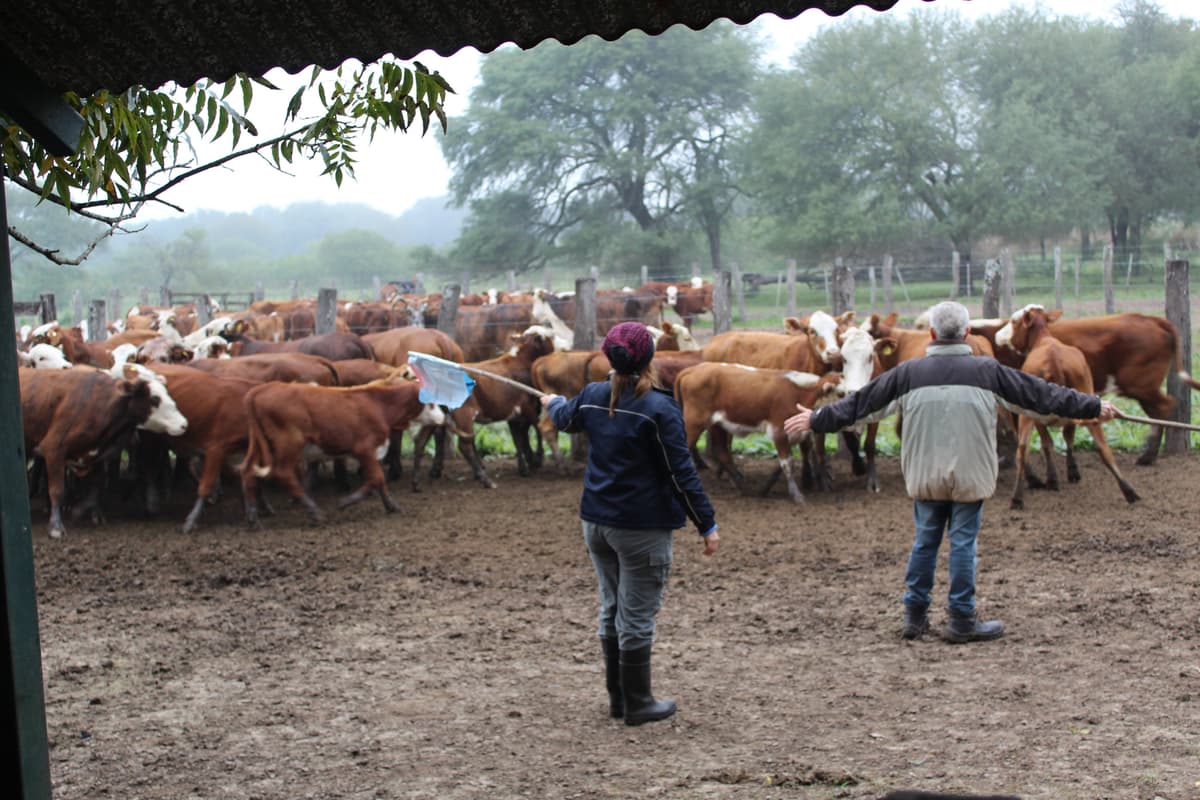
The consolidated regional co-innovation platform now covers six ecoregions: from the highlands and eastern plains of Colombia, through the of northeastern Argentina and Patagonia, to the valleys of central and southern Chile. Through co-participatory workshops, technicians, producers, Mapuche communities, cooperatives, universities, and institutions identified and prioritized Good Livestock Practices with a focus on Animal Welfare to adapt them to each reality. The goal is to weave local networks that generate sustainable solutions with territorial identity, cultural respect, and shared commitment.

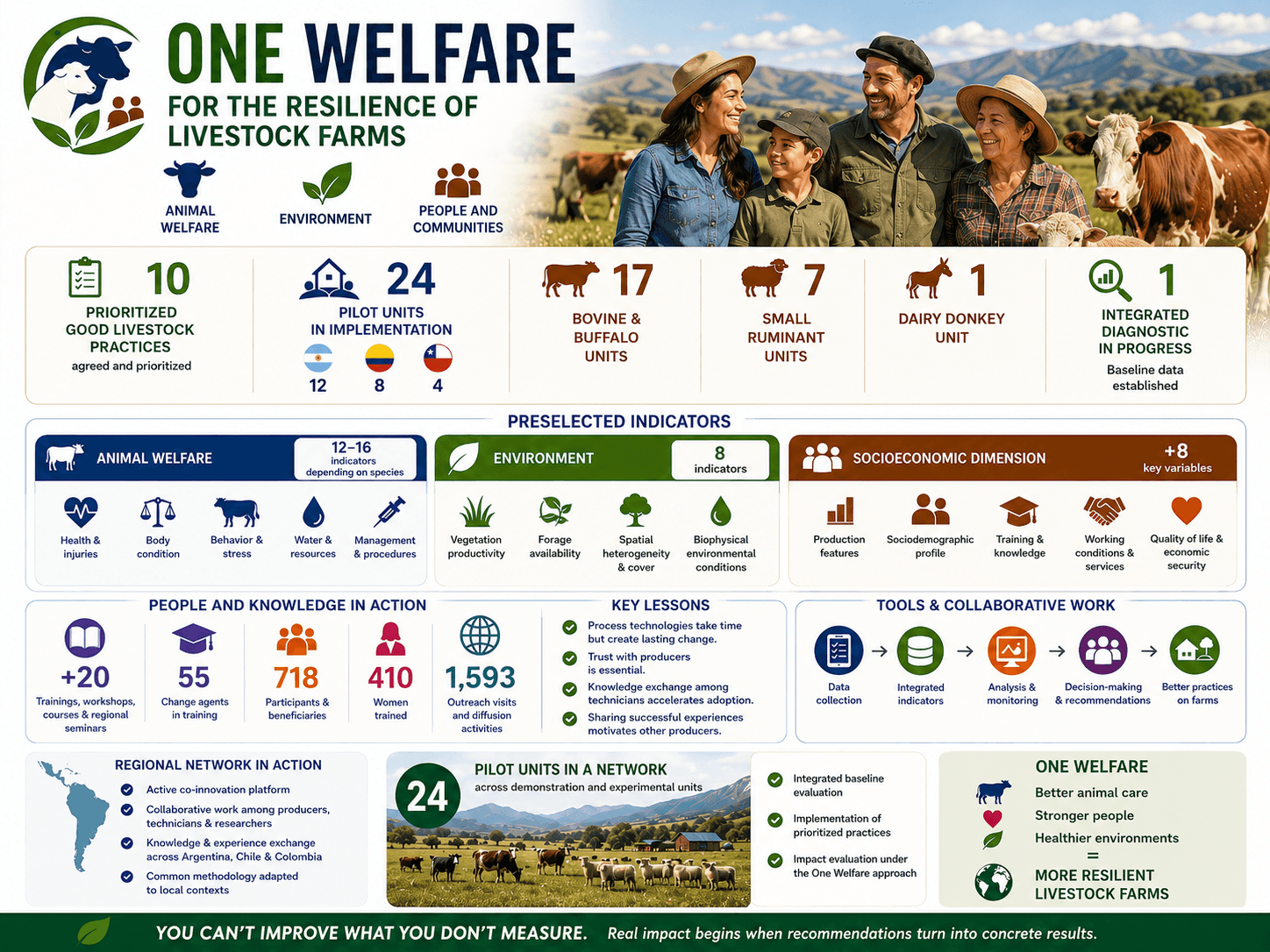
The project is developing a regional methodology for implementing, monitoring and evaluating Good Livestock Practices with an Animal Welfare focus (GLPs-AW), based on the One Welfare conceptual framework. The methodology brings together animal welfare indicators, socioeconomic variables and environmental criteria in a participatory way, and combines territorial co-innovation tools, harmonized evaluation protocols, digital data collection forms and a set of regionally prioritized and validated indicators for cattle and sheep systems. It also includes training and technical support to help producers and implementation teams adopt the practices. It was designed for use across different production contexts in Latin America, allowing results to be compared between ecoregions and evidence to be generated for decision-making. It is currently under construction and will be validated at pilot sites in Argentina, Chile and Colombia.
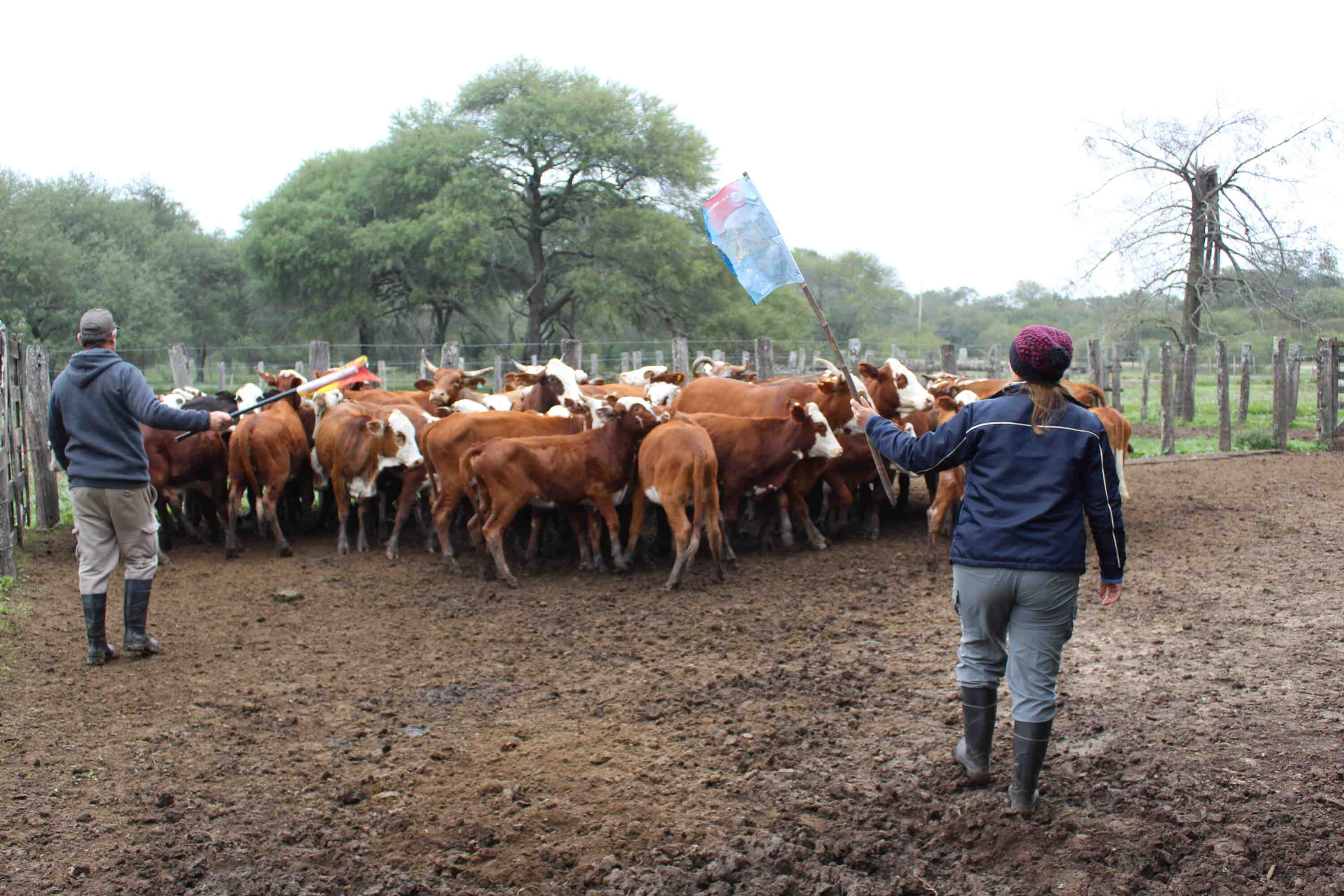
"Capacity development is essential for improving animal welfare in practice, enabling farmers and communities to enhance productivity, reduce stress and disease, and improve livelihoods."— Food and agriculture organization of the united nations (FAO, 2009)
 Agronomic PracticesStrategy 1. Resilient farmsAppliedTechnologicalCattle raisingProductive systems
The project consolidated a regional co-innovation platform bringing together producers, technicians, researchers and institutions from Argentina, Chile and Colombia. Within it, ten Good Livestock Practices with an Animal Welfare focus were identified and prioritized for six ecoregions, a common monitoring methodology was developed under the One Welfare approach, and indicators were harmonized to assess productive, environmental and socioeconomic dimensions. More than 700 stakeholders strengthened their capacities through regional workshops, courses and seminars, forming a network of implementers in the field. A network of 24 demonstration and experimental units was also established, 12 in Argentina, 8 in Colombia and 4 in Chile, for participatory validation of the prioritized practices, and comprehensive diagnostics began, providing baselines and adapting the tools to each ecoregion.
Relevant data









Argentina

Chile
Colombia

Argentina
Argentina

The Tangible Impact of Science and Technology in the Field

 Impact
 Initiatives
 Dashboard
 Alliances
 Impact
 Initiatives
 Dashboard
 Alliances
.jpeg&w=1200&q=75)