 Impact
 Initiatives
 Dashboard
 Alliances

 Impact
 Initiatives
 Dashboard
 Alliances

 Technological
Soybean production across the Americas faces a dual challenge: maintaining its strategic role in food security while responding to growing climate variability and limited opportunities for agricultural land expansion. Under these conditions, future production growth depends largely on genetic gains and on the effective use of genotype-by-environment interactions, which are key to closing the gap between attainable and on-farm yields.
To address this challenge, the project establishes the Regional Soybean Cultivar Evaluation Network (RRECSO-Americas), building on the Argentine Soybean Cultivar Evaluation Network (RECSO)—a well-established public-private initiative operating since 2004 through the collaboration between INTA and the Argentine Seed Association (ASA). Over more than two decades, RECSO has become a benchmark for generating objective, standardized information that supports farmers, advisors, and both public and private breeding programs.
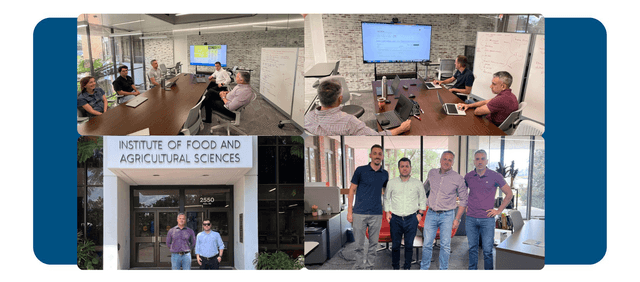
The regional initiative will bring together Argentina, Uruguay, Paraguay, Colombia, and Peru, while also leveraging experiences from other FONTAGRO member countries and from university-based and national trial networks in the United States and Brazil. A key element of the project is the strategic partnership with the University of Florida, which will contribute to the development of advanced predictive models to enhance agronomic decision-making.
Through a network of comparative field trials conducted under unified protocols, the project will identify superior cultivars and management practices tailored to specific production environments. The resulting data will feed predictive models and an open-access digital platform, designed to reduce production uncertainty and improve resource-use efficiency in the face of climate change.
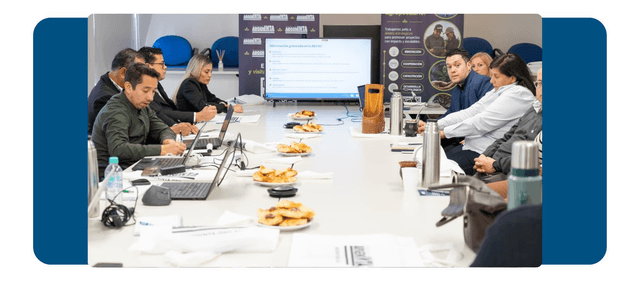
Finally, the project includes a strong knowledge transfer and capacity-building component, delivered through digital platforms, training activities, and outreach events. This approach will ensure that innovation effectively reaches farmers, technical advisors, researchers, students, seed companies, and other value-chain actors, promoting sustainable productivity gains and consolidating RRECSO-Americas as a regional public good supporting agricultural innovation across the Americas.
%2011.04.30%E2%80%AFa.m..png&w=640&q=100)