 Impact
 Initiatives
 Dashboard
 Alliances

 Impact
 Initiatives
 Dashboard
 Alliances

 Technological
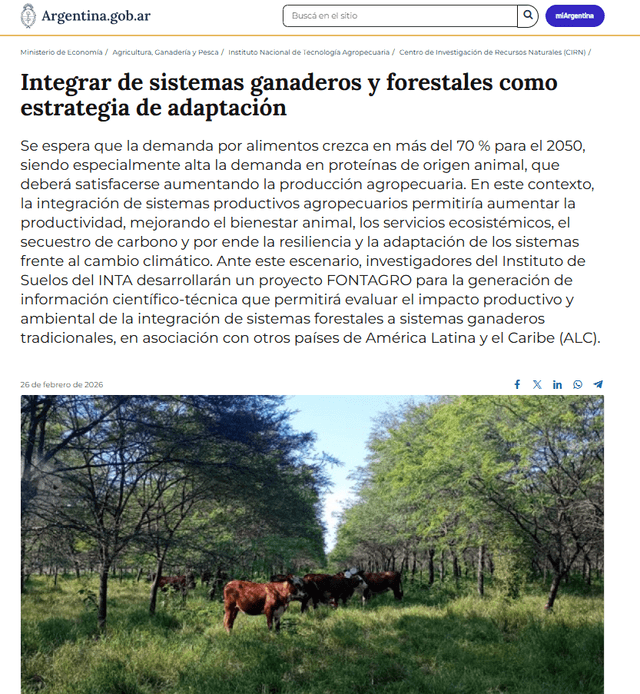
The news published on Argentina.gob.ar addresses a scientific initiative aimed at strengthening the sustainability of production systems in the face of climate change through the integration of livestock with forestry components.
The project is driven by researchers from the National Institute of Agricultural Technology (INTA), particularly from the INTA Soil Institute, and is developed in collaboration with institutions from Latin America and the Caribbean. The proposal recognizes that traditional livestock systems face increasing environmental challenges, including rising temperatures, variability in precipitation, and the greater frequency of extreme weather events.
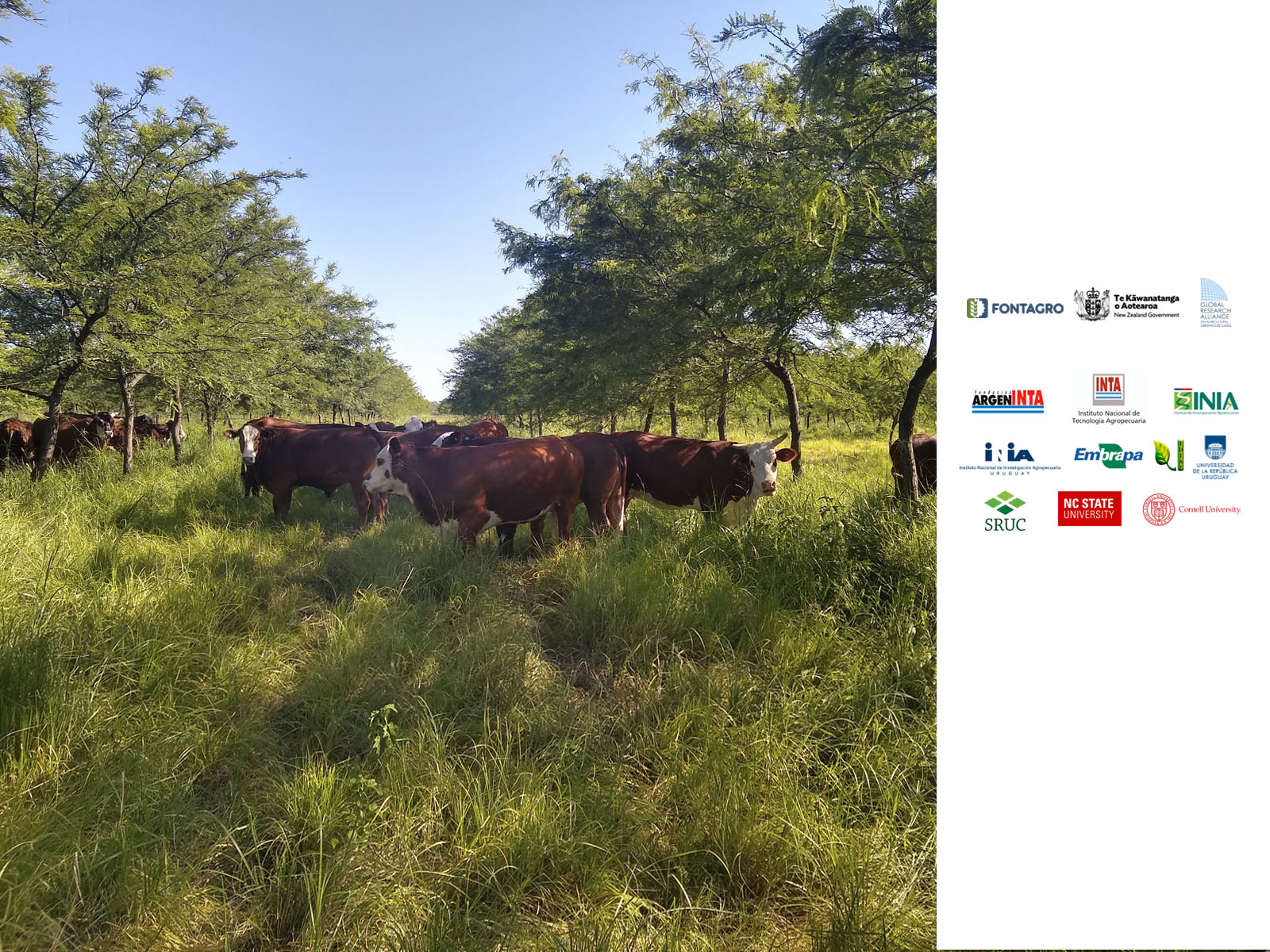
In this context, the integration of trees into livestock systems—through silvopastoral schemes—emerges as an adaptation strategy with multiple benefits. These include improved animal welfare through shade, increased biodiversity, protection of soil against erosion, and optimized water use. Furthermore, these systems contribute to carbon sequestration in biomass and soil, which can help mitigate greenhouse gas emissions without compromising productivity.
The project's objective is to generate technical-scientific evidence that allows for the quantification of these impacts and provides concrete tools for decision-making in public policies and production strategies. Thus, it seeks to promote more resilient, efficient, and environmentally responsible agricultural models aligned with international commitments on climate change.
In summary, the news highlights the importance of innovation and regional cooperation to advance towards more sustainable livestock systems, integrating production and conservation as pillars of climate adaptation.
.png&w=640&q=100)
.png&w=640&q=100)