 Impact
 Initiatives
 Dashboard
 Alliances

 Impact
 Initiatives
 Dashboard
 Alliances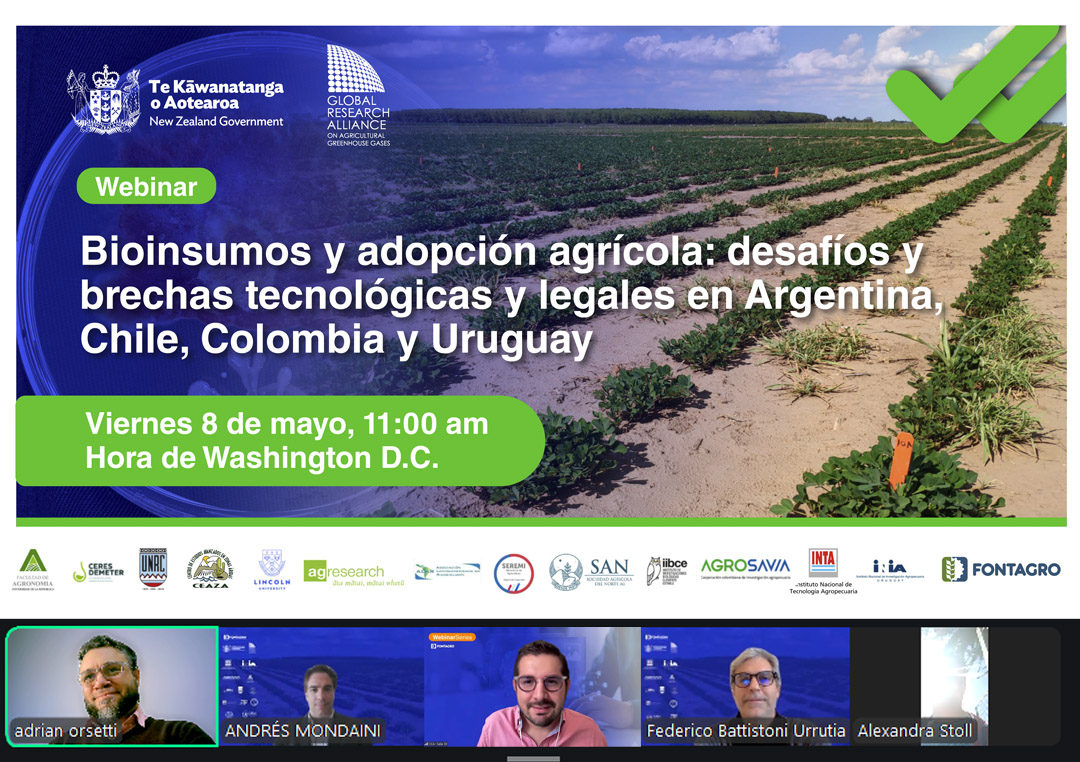

 Technological
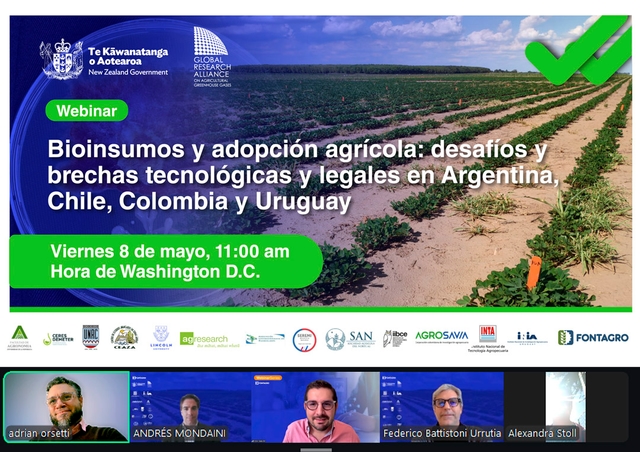
This event brought together the results of two consultancies that explored everything from structural barriers to current governance frameworks related to the production and use of bioinputs.
During the session, the gaps in regulatory, technical, and logistical aspects that limit the scaling of these technologies were analyzed. These challenges were contrasted with the specific advances of each country, such as the National Bioinputs Plan in Uruguay and the multi-agency system in Colombia. The event offered a comparative perspective on registration and oversight models, as well as updated data on bioinputs adoption at the farm level. Key recommendations were also discussed to strengthen agronomic validation and institutional coordination, aiming to bridge the gap between the registered technological offerings and their efficient and sustainable use in the region's agricultural systems.
The event featured invited consultant Andrés Mondaini, an Argentine-Italian economist with extensive experience in both the private sector and international organizations, particularly within the United Nations system. Mondaini has been actively involved in research and the development of policies related to the bioeconomy, agricultural digitalization, and climate change, collaborating with experts from Latin America and the Caribbean to create sustainable solutions and promote economic development.
Additionally, project leaders Federico José Battistoni Urrutia, Associate Research Professor at the Clemente Estable Biological Research Institute (IIBCE) in Uruguay, and Alexandra Stoll, researcher at the Center for Advanced Studies in Arid Zones (CEAZA) and director of the Applied Microbiology Laboratory in Chile, enriched the discussion with their expertise and knowledge.
This event is part of the project "Platform for the Transfer and Efficient Use of Bioinputs in Farms in Latin America," funded by the New Zealand Government as part of its contribution to the Global Research Alliance on Agricultural Greenhouse Gases (GRA). The project is executed by the CEAZA in Chile, the National University of Río Cuarto in Argentina, the Colombian Agricultural Research Corporation (AGROSAVIA), the National Institute of Agricultural Research (INIA) in Uruguay, and the Clemente Estable Biological Research Institute (IIBCE) in Uruguay.
To view the recording of the webinar, click here.