 Impact
 Initiatives
 Dashboard
 Alliances

 Impact
 Initiatives
 Dashboard
 Alliances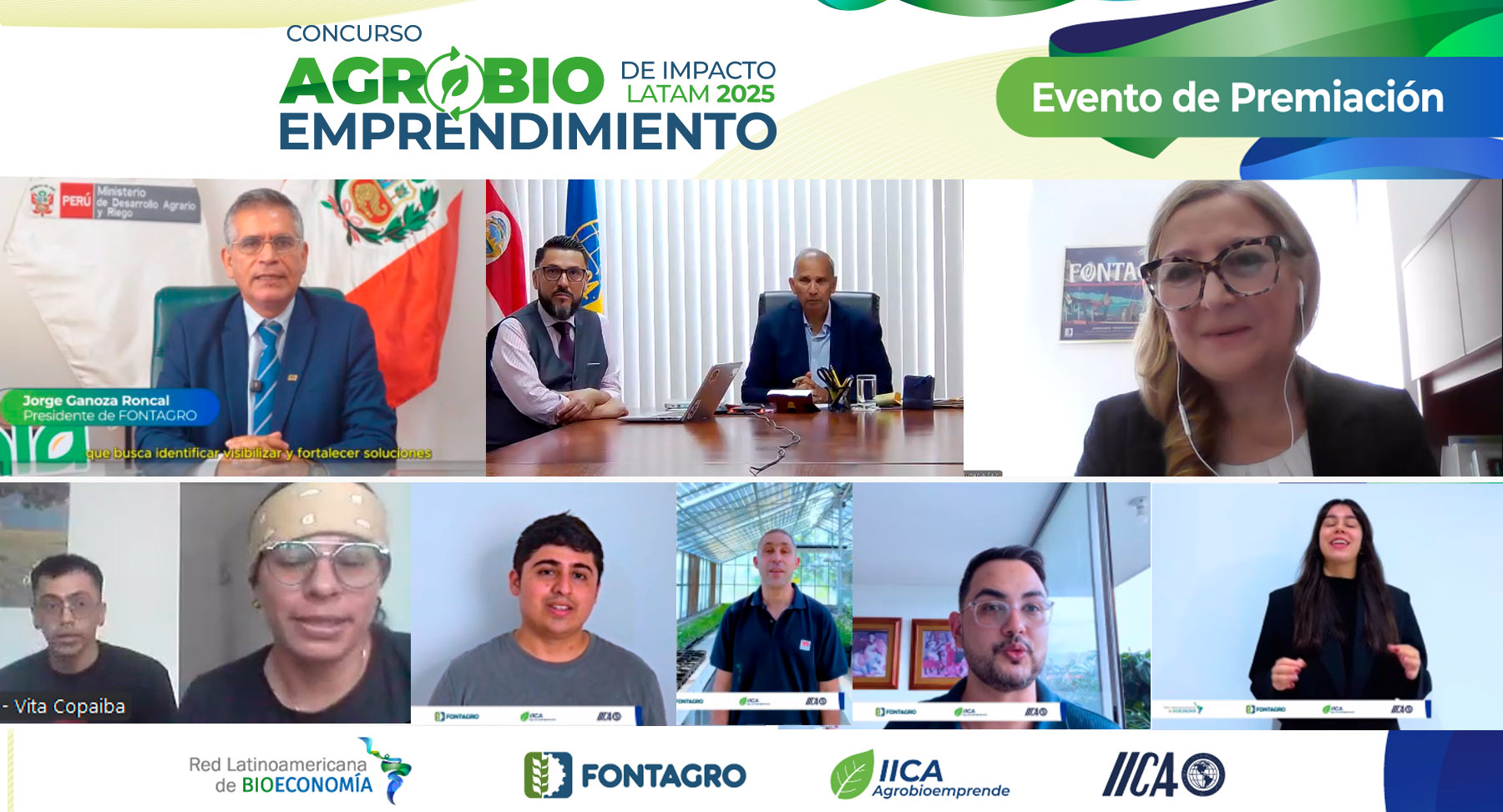

 Institutional
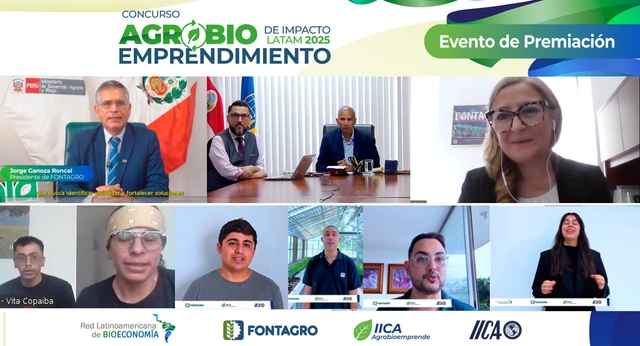
The LATAM 2025 Impact Agri-Entrepreneurship Competition culminated in a significant awards event that highlighted the most innovative bioeconomy initiatives in Latin America and the Caribbean. This competition was designed to identify, incubate, and accelerate the most impactful proposals from the region.
The event, driven by the Center for Agri-Entrepreneurships and Investments, which is part of the Innovation and Bioeconomy Program of the Inter-American Institute for Cooperation on Agriculture (IICA) in collaboration with FONTAGRO and strategic partners, received over a thousand applications from 20 countries in Latin America and the Caribbean. The proposals were submitted by entrepreneurs, startups, spin-off models, private companies, and research institutions, focusing on the development of products or services that sustainably utilize biodiversity through science, technology, and innovation in key sectors of the bioeconomy, such as biomaterials, bioproducts, and bioenergy.
Evaluations were conducted in different phases between September and December 2025, where the proposals were reviewed based on specific criteria of innovation, socioeconomic impact, and alignment with the Sustainable Development Goals (SDGs). Out of the 1,111 initiatives received, 108 advanced to a deeper evaluation, of which 30 were selected as the Top 30 LATAM 2025.
In total, 6 outstanding agri-entrepreneurships achieved the highest scores: SOS Biotech from the Dominican Republic; BSF Logistics from Peru; Carbonlytics Agro from Colombia; 3R Biotec from Mexico; Prix Biotech from Argentina; and Vita Copaiba from Colombia, all of which will receive monetary support.
Muhammad Ibrahim, General Director of IICA, emphasized the importance of promoting agri-entrepreneurs: "We work to build a world of innovation in rural areas that increasingly integrates young people and women into the sustainable use of biodiversity. This competition seeks to contribute to scaling initiatives that create a link between agriculture, energy, health, and environmental care. We are showing that bioeconomy is not just a theoretical concept, but produces concrete products that benefit people."
For his part, Jorge Ganoza, President of FONTAGRO and Executive President of the National Agrarian Innovation Institute (INIA – Peru), highlighted the extraordinary response from bioeconomy entrepreneurs in the region and stated that it demonstrates the great creativity and talent among agricultural innovators. “Bioeconomy is a concrete opportunity to generate economic development, positive environmental impact, and opportunities for farmers. This competition teaches us that when we collaborate regionally, we can strengthen agriculture and help build sustainable ecosystems.”
Hugo Chavarría explained that the competition served as a mechanism to identify agri-entrepreneurships existing on the continent and contribute to their growth. In this regard, he informed that the 30 finalist undertakings will enter an incubation and acceleration program to develop specific skills that contribute to scaling, access to markets and investment, specialized technical mentoring, and strategic support. Additionally, the 100 ventures from the first round will be included in a catalog that will be made available to actors throughout the continent, serving as a significant showcase for visibility.
Finally, Eugenia Saini, Executive Secretary of FONTAGRO, highlighted the value of all the presented proposals: “Behind the ideas are talents that represent new opportunities for our region to innovate in territories, add value, develop businesses, and generate benefits for people. These undertakings strengthen us as a region and enhance our comparative advantages.”
The LATAM Impact Agri-Entrepreneurship Competition not only celebrates innovation but also establishes a commitment to sustainability and economic development in the region.

.jpg&w=640&q=100)