 Impact
 Initiatives
 Dashboard
 Alliances


 Impact
 Initiatives
 Dashboard
 Alliances

 Technological
Regarding one part of the project, “Resilient Native Potatoes,” it aims to find strategies for more sustainable potato farming and help communities cope with climate change.
This specific step seeks to understand the water used by the Marka Corpa community for drinking and irrigating their crops. The goal is to have clear and shared information to conserve water, use it more efficiently, and strengthen native potato production.
How was the work done?
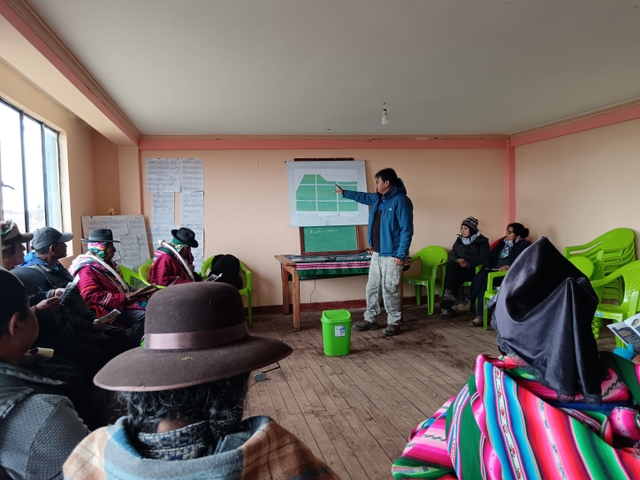
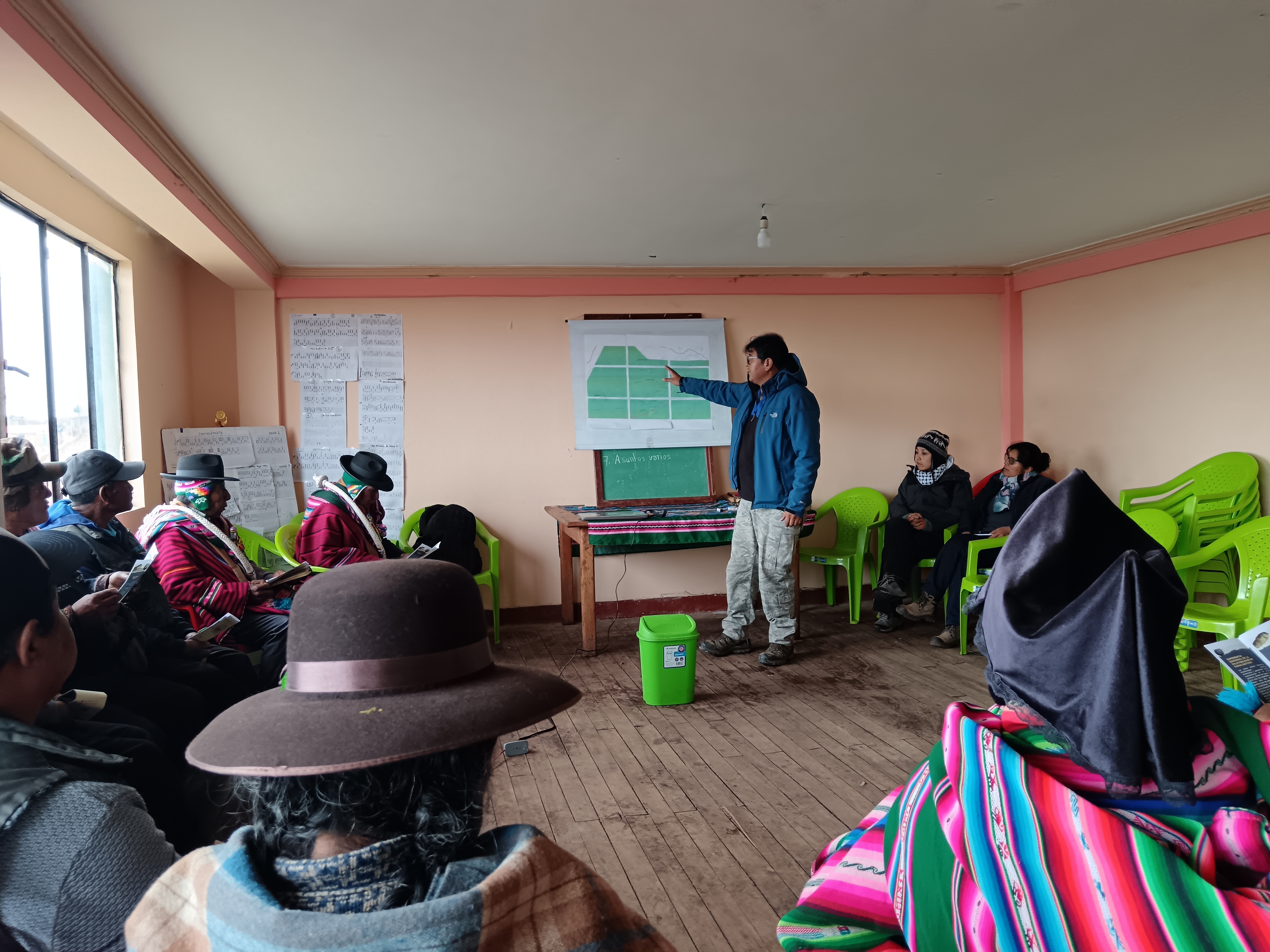
The work began with meetings with the authorities of the Ayllu Corpa community, including those in charge of irrigation and drinking water. They explained how water distribution is organized and accompanied the team to identify the water sources.
Then, the team from the Aquatic Ecology Unit of the Institute of Ecology at UMSA (Universidad Mayor de San Andrés) conducted two field trips (one during the dry season and the other during the transition from dry to wet season). They explored the upper, middle, and lower areas of the watershed, recorded the location of each water source using GPS, and took photographs of each site. Satellite imagery and maps were used to delineate the watershed boundary. Maps drawn by irrigation and drinking water authorities, as well as by professors from the “Avelino Siñani-Corpa” Academic Unit, were also used to confirm the findings.
What was found?
The Corpuma stream micro-watershed was delineated using digital maps. It originates at over 4,500 meters above sea level and flows down to a large wetland next to the Desaguadero River, at 3,825 meters. Along its course, it is joined by other streams such as Collpa Jahuira, Jacha Phusso, Totorani, Umomo, and Tila Tila (Milluni). This watershed encompasses the four ayllus (traditional Andean communities): Llallagua, Pampa, Taypi, and Corpuma, which receive water from surface springs and groundwater sources.
Thirty-five sites were visited and recorded: streams, ponds, springs, pools, and water intakes for drinking and irrigation. All were included in a database with their geographic location and a photo bank. The small springs in the lower areas, with or without tanks, are very important for families, as they rely on these water sources during the dry season.
Water intakes for drinking are located in the higher parts of the micro-watersheds. In the middle section of the Corpuma stream, where it has its highest flow (25.6 liters per second), the water is divided: one section for irrigation and another for other purposes. Both flow into tanks from which it is distributed to families and areas according to agreed-upon schedules. From a technical standpoint, it is a very efficient system because almost no water is wasted; however, from an ecological perspective, it disrupts the continuity of the Corpuma stream, which does not reach the lower parts of the micro-watershed during the dry season.
The work was done during the dry season and the dry-to-wet transition period, when water is most scarce. During those days, the stream's water level didn't even reach the road, and the areas downstream lacked running water. This limits life in the stream and highlights the importance of conserving every drop. It remains to be seen how these areas look during the rainy season. This underscores the importance of other water sources, such as the springs in the lower part of the micro-basin.
What's next?
In March of next year, another field trip will be conducted to gather more information on water sources and coordinate with the authorities of all the ayllus (indigenous communities). The titled territory of Marka Corpa will also be added to the map, for which information has been requested from the INRA (National Institute of Agrarian Reform). The water quality results will be displayed on maps to train local monitors, so that the community itself can monitor its water resources. Furthermore, since the watershed lacks its own weather station, efforts will be made to install one so the community can record its rainfall data.
With these advancements, Marka Corpa will have its own data to decide how to manage and distribute its water, strengthening water security and the cultivation of native potatoes in the face of climate change.