 Impact
 Initiatives
 Dashboard
 Alliances

 Impact
 Initiatives
 Dashboard
 Alliances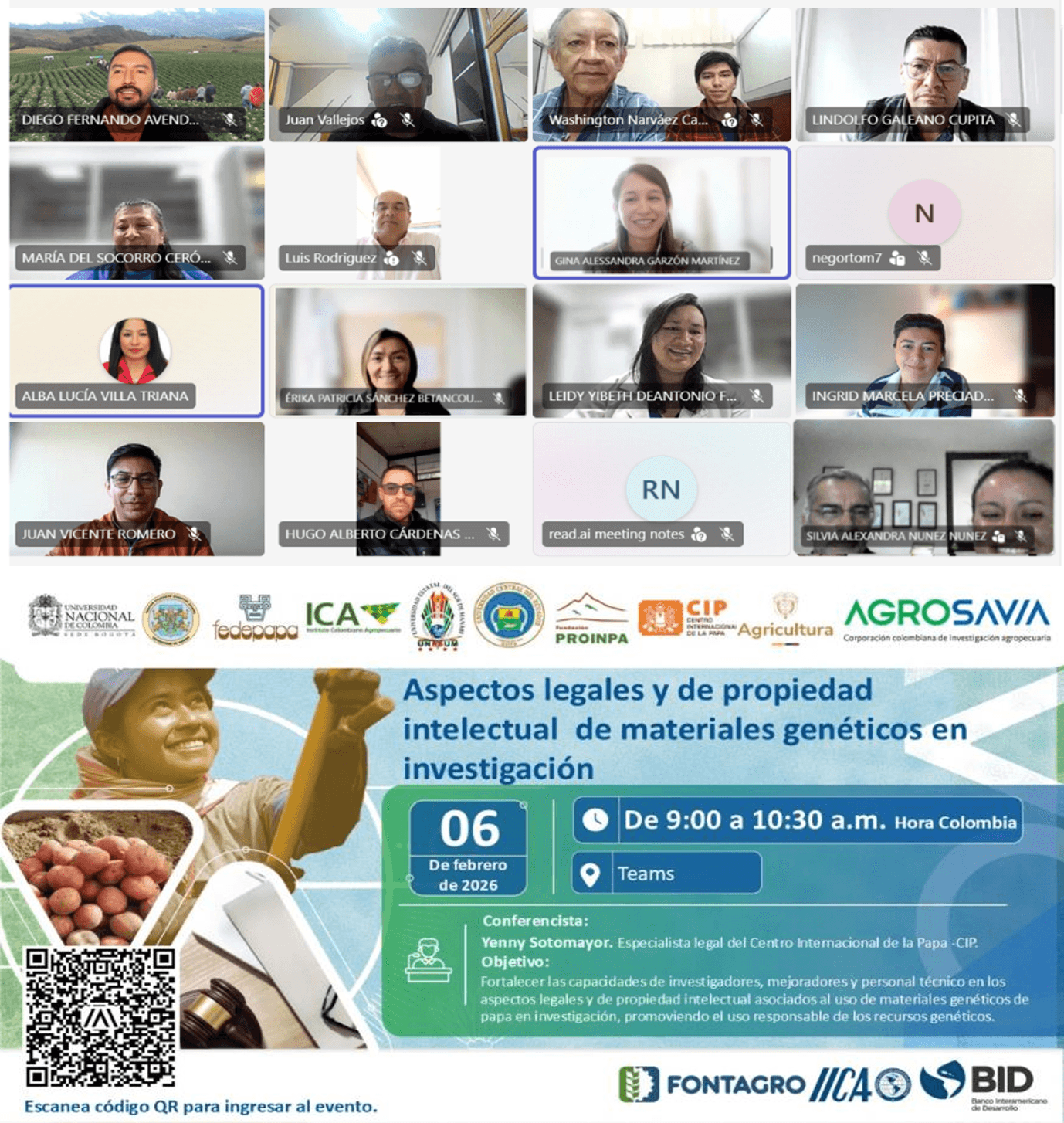

 Technological-Organizational-Institutional
Climate change is an undeniable reality, reflected in the increasingly pronounced climate variability across the Andean region. In the past, agrometeorological conditions were relatively predictable throughout the year; today, however, uncertainty has become the norm.
In response to these challenges, the Andespapa team — representing partner institutions in Ecuador, Bolivia, and Colombia — resumed activities at the start of 2026 with renewed energy and commitment.
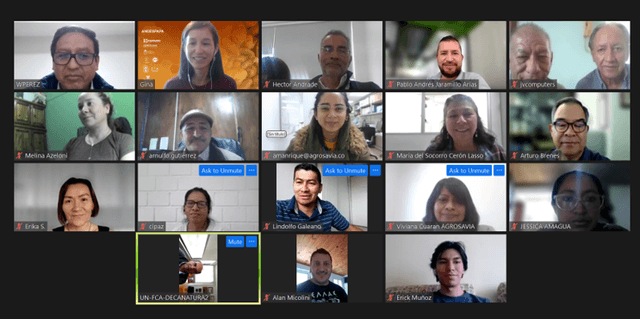
On January 23, the project’s regular virtual progress meeting was held. During this session, partners reviewed advances in ongoing activities, assessed progress toward project objectives, and evaluated deliverables established at the outset of the project for each participating institution: Bolivia (Fundación para la Promoción e Investigación de Productos Andinos (PROINPA)), Ecuador (Universidad Central del Ecuador (UCE) and Universidad Estatal del Sur de Manabí (UNESUM)) and Colombia (Universidad Nacional de Colombia, Universidad de Nariño, and Agrosavia).
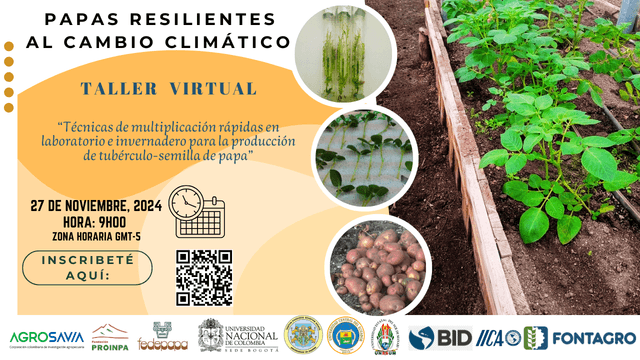
In addition, and in pursuit of the project’s training objectives, participating institutions discussed strategies for strengthening the capacities of farmers, technicians, researchers, faculty members, students, and other actors within the potato value chain. Proposed topics and dissemination formats were outlined to address issues related to the potato production system and the project’s research focus.
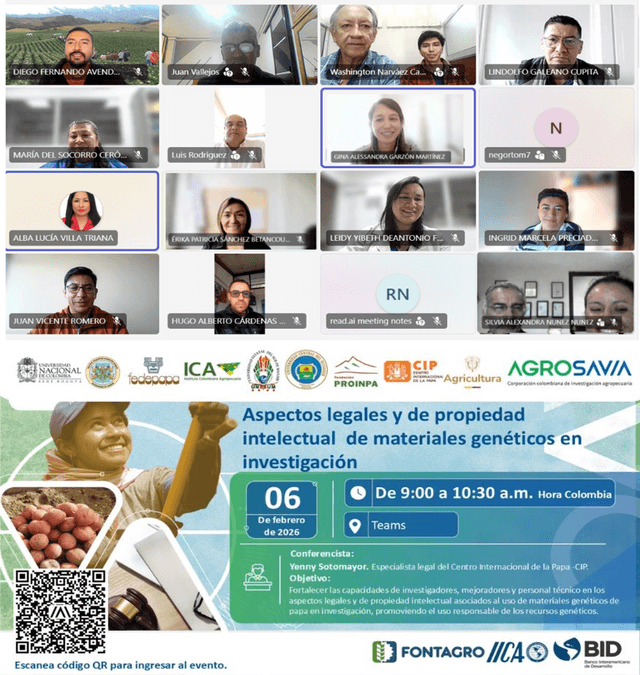
The 2026 seminar series began with the webinar “Legal and Intellectual Property Aspects of Genetic Materials in Research.” Its objective was to strengthen the capacities of researchers, breeders, and technical staff regarding legal and intellectual property considerations associated with the use of potato genetic materials in research, promoting responsible management of genetic resources.
The event featured Dr. Jenny Sotomayor, Legal Specialist at the International Potato Center (CIP), Lima headquarters. Dr. Sotomayor holds a law degree from the University of Lima (Peru), with training in Civil and Business Law, and a master’s degree from the University of Alicante (Spain). She has extensive international experience in trademark registration, patents, Plant Variety Protection (PVP), technology transfer, intangible asset management, and civil and commercial contracting.
During the session, participants discussed fundamental intellectual property concepts applied to plant genetic materials, the importance of Plant Variety Protection (PVP), the identification of legal risks associated with research activities, and CIP’s role in the development and management of new varieties. Key issues were highlighted, including compliance with the International Treaty on Plant Genetic Resources for Food and Agriculture (ITPGRFA), oversight of material use and commercialization, recognition of breeders’ rights, and risks linked to germplasm exchange, such as third-party registration and biopiracy.
The webinar gathered more than 80 participants from Bolivia, Peru, Ecuador, and Colombia, who actively engaged in the discussion. Questions centered on four main themes: The transnational nature of biological resources and legal requirements for their protection outside their country of origin; recognition of breeder and co-breeder rights in historical and collaborative research contexts; licensing agreements and conditions governing the use of genetic materials derived from international projects and partnerships; the limitations imposed by patents — particularly those related to new gene-editing technologies — and their potential impact on research access and development.
The event emphasized the need to maintain and strengthen PVP mechanisms as tools for protecting innovation in research, as well as the importance of aligning intellectual property management with clear strategic guidelines. In this context, the role of CIP as an international center was reaffirmed, particularly in ensuring the active management and protection of intellectual property rights associated with plant genetic materials.
The seminar series will continue throughout 2026 with new spaces for dialogue and learning focused on research, innovation, and potato breeding.
By: Diego Avendaño and Marcela Preciado M.

.jpg&w=640&q=100)