• Go to Fontagro's X profile
  • Go to Fontagro's Instagram profile
  • Go to Fontagro's Linkedin profile
  • Go to Fontagro's Youtube profile
  • About Us
  • Governance
  • Documents
  • News
    • News
    • Events
  • Library
  • Toolkit
Fontagro
  • Menu iconImpact
    • Projects
    • Success Cases
    • Impact Stories
    • Project platform
  • Menu iconInitiatives
  • Menu iconDashboard
  • Menu iconAlliances
  • X icon
  • Instagram icon
  • Linkedin icon
  • Youtube icon
Fontagro
Fontagro
  • About Us
  • Governance
  • Documents
  • News
    • News
    • Events
  • Library
  • Toolkit
  • Menu iconImpact
    • Projects
    • Success Cases
    • Impact Stories
    • Project platform
  • Menu iconInitiatives
  • Menu iconDashboard
  • Menu iconAlliances
Fontagro

Innovation ecosystem for the agri-food sector in Latin America and the Caribbean

Newsletter
  • Impact
  • Initiatives
  • Dashboard
  • Alliances
  • About Us
  • Governance
  • Documents
  • News
  • Library
  • Toolkit

Contact Us

  • E-mailfontagro@fontagro.org
  • LocationIICA USA - 1889 F Street, N.W., Suite 360 Washington, D.C. 20006
  • Terms, conditions and privacy policy

© 2025 Fontagro. All Rights Reserved

  • Go to Fontagro's X profile
  • Go to Fontagro's Instagram profile
  • Go to Fontagro's Linkedin profile
  • Go to Fontagro's Youtube profile
project image

Promote the Resilience of Production Systems to Reduce the Vulnerability of Small Farmers Families through the Revaluation of the Genus Lupinus Neglected Crops

X iconFacebook iconLinkedin icon
Agronomic PracticesAgronomic PracticesAdaptativeAdaptativeTechnological-Organizational-InstitutionalTechnological-Organizational-InstitutionalClimate changeClimate changeStrategy 1. Resilient farms Strategy 1. Resilient farms 20142014inactiveinactive
CodeFTG/RF-14893-RG
InitiativeCall for Proposals
Total AmountUSD 400,000
FONTAGRO AmountUSD 200,000
Counterpart AmountUSD 200,000
Execution Time36 Months
CodeFTG/RF-14893-RG
InitiativeCall for Proposals
Total AmountUSD 400,000
FONTAGRO AmountUSD 200,000
Counterpart AmountUSD 200,000
Execution Time36 Months
Loading map...
Summary icon

Executive Summary

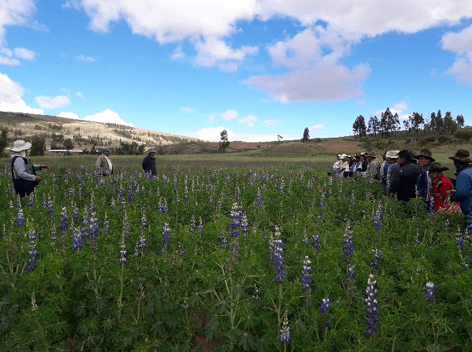
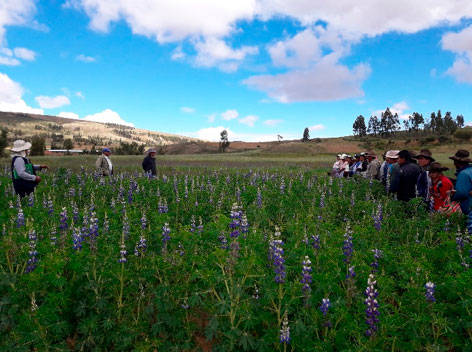
The high Andes of Bolivia and Ecuador, and the Araucania in Southern Chile are highly vulnerable to climate change, show high poverty incidence, and have few economic opportunities. Legumes of the genus Lupinus show high adaptation capacity to adverse weather and soil conditions. In Bolivia and Ecuador the bitter Lupinus (Lupinus mutabilis) prevail, while in Chile, both bitter and sweet (L. albus, L. angustifolius y L. luteum) species are cultivated.  It is estimated that in Bolivia approximately  1,500 ha of Lupinus are cultivated mostly by smallholders. In Ecuador it is estimated that there are 9,596 farms that cultivate a total of 5,974 ha. In Chile over the last 5 years, the area dedicated to bitter Lupinus crops has fluctuated between 4,600 and 12,300 ha, while in sweet Lupinus it has fluctuated between  5,900 and 12,700 ha. Bitter lupinus is cultivated mainly by the Mapuche ethnic group, while sweet lupinus is cultivated by entrepreneurs who cater to the animal feed industry. Lupinus have high nutritional value in terms of protein, calcium, iron and zinc, among others.  The purpose of the project is to promote technological innovations to strengthen resilience of production systems in the High Andes of Bolivia and Ecuador and Southern Chile through the introduction of Lupinus and thus contribute to improving farmers’ well-being.  The project developed a series of technological innovations in Lupinus production, processing, and consumption, and thus contributed to increasing knowledge about the crop as well as increased economic and environmental benefits for farmers.
Solution icon

The technological solution

The following technological solutions were developed 1. Lupinus production: Crop management techniques, planting density and inoculum of rhizobia for lupinus seeds were defined. 2. Post-harvest: Tarwi (Lupinus angustifolius) de-bittering technique and tarwi thresher for family use. 3. Local consumption: Different recipes made from tarwi based on local and external knowledge were generated to promote consumption. 4. Transformation: The entire production process of high quality tarwi mote (in Quechua chuchusmuti) was implemented for its commercialization in supermarkets.
Results icon

Results

In Bolivia, there was large yield variability during a dry year (270 mm) vs a normal year (450 mm).  The beetle  Apion sp and Anthracnose (Colletotrichum spp), can reduce productivity up to 80% and 40%, respectively.  A threshing machine was introduced in local communities to reduce labor and increase grain quality.  Technology to remove alkaloids was validated. It reduced water use from 80 to 40 l/kg of grain.  A recipe containing 9 local dishes was prepared and promoted among families.  A partnership was established with a private enterprise to improve the image of Lupinus and three processed products were sold in the two main supermarket chains in Cochabamba. In 2017, 1,500 units were sold/month.  In Ecuador yields increased from 515 to 909 kg/ha due to fertilization.  Local varieties showed good yields but could not compete in a drier year with the new variety “INIAP 450 Andino” which is more precocious.  A new technique to remove alkaloids was developed. It reduced processing time from 84 to 58 hours, and water use from 96 to 66 l/kg of grain.  Processed lupine without alkaloids is consumed by 71 % of families in the highlands, 20 % in the Coast and 87 % in the Eastern region. Per capita consumption per year is 4 kg in the highlands and Eastern region and 2 kg on the Coast.  Partnerships were established with private companies  to evaluate acceptability and preference for various lupine products (flour, crunchy grain, lyophilized powder, frozen, canned, flavored milk and yogurt). In 2017, the first batch of lupine flour (300 kg) was sold to the Czech Republic. In Chile, L. albus showed a superior potential yield than the other two species. The “Alboroto INIA” variety had an average yield of 4.7 t/ha during the first season and 5.7 t/ha during the second one. L. angustifolius had an intermediate yield and  L. luteus showed the lowest yield.  L. luteus had the highest protein content, followed by L. albus and L. angustifolius. However, due to its highest productivity, L. albus had the highest production of protein per ha (1,500 to 2,000 kg).  BYMV (Bean Yellow Mosaic Virus) appears to be a potential problem for lupine production in Southern Chile. A rye hedge surrounding lupine parcels stopped aphid transmission and reduced significantly the incidence of BYMV.  A meeting was organized between INIA and a private salmon feed mill. As a result it started to buy and process lupine.
Beneficiaries icon

Beneficiaries

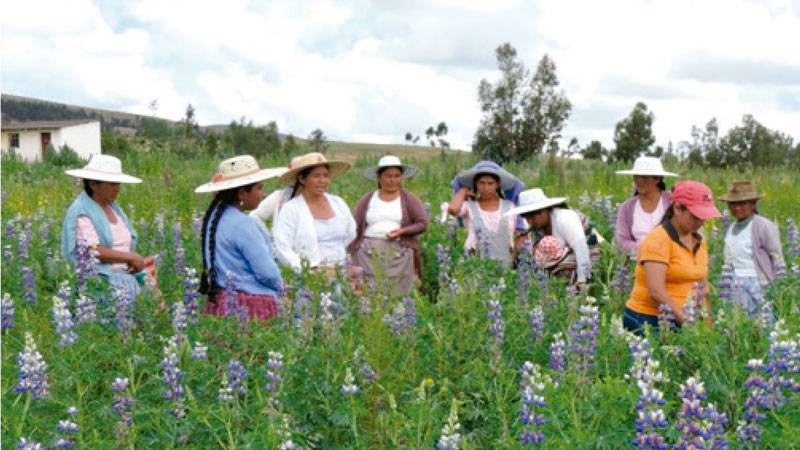
The project trained, through different methods, more than 500 producers, in addition, more than 100 families were direct beneficiaries that currently market tarwi to local companies.

Sustainable Development Goals

This project actively contributes to achieving the Sustainable Development Goals, promoting more equitable, resilient, and sustainable regional development.


No povertyZero HungerGood health and well-beingClimate actionPartnerships for the goals
No poverty
Zero Hunger
Good health and well-being
Climate action
Partnerships for the goals

Main Donors

FONTAGRO

Project news

Lupinus: a strategy for adaptation to Climate Change
Read more
Project Story Image

Learn more about this story

Project Webstory

Go to webstory
Organizations icon

Participating Organizations

Executor

  • PROINPA Fundación para la Promoción e Investigación de Productos Andinos

Co-Executor

  • INIA Instituto de Investigaciones Agropecuarias
  • INIAP Instituto Nacional de Investigaciones Agropecuarias
Cargando mapa...
Publication icon

Publications and Resources

Download document

Informe Técnico Final

Download document

Poster 2018

Download document

Poster 2017

Publication icon

Dissemination products

Poster

Lupinus a forgotten crop: an adaptation strategy for climate change

Fontagro TECH

Revaluing forgotten Andean crops: Lupinus an adaptation strategy to climate change

Fontagro TECH

Protocols for the production of snacks from Lupinus

Fontagro TECH

Lupinus mutabilis debittering technique

Fontagro TECH

Development of a fermented product based on lupinus

Fontagro TECH

Protocol for obtaining lupinus milk

Researchers icon

Participating Researchers

Pablo Mamani
BoliviaProject Leader

Pablo Mamani

Ana Karina Saavedra
BoliviaResearcher

Ana Karina Saavedra

Elena Villacrés Poveda
EcuadorResearcher

Elena Villacrés Poveda

Mario Félix Mera Krieger
ChileResearcher

Mario Félix Mera Krieger

Nelson Mazon
EcuadorResearcher

Nelson Mazon

Angel Murillo Ibay
EcuadorResearcher

Angel Murillo Ibay

Eduardo Peralta
EcuadorResearcher

Eduardo Peralta

Maria Belén Quelal Tapia
EcuadorResearcher

Maria Belén Quelal Tapia

Pablo Mamani
BoliviaProject Leader

Pablo Mamani

Ana Karina Saavedra
BoliviaResearcher

Ana Karina Saavedra

Elena Villacrés Poveda
EcuadorResearcher

Elena Villacrés Poveda

Mario Félix Mera Krieger
ChileResearcher

Mario Félix Mera Krieger

Nelson Mazon
EcuadorResearcher

Nelson Mazon

Angel Murillo Ibay
EcuadorResearcher

Angel Murillo Ibay

Eduardo Peralta
EcuadorResearcher

Eduardo Peralta

Maria Belén Quelal Tapia
EcuadorResearcher

Maria Belén Quelal Tapia

Other projects

The tangible impact of science and technology in the field

Project image

Collaborative research networks on resilient livestock produ...

Call for Proposals 1998 ATN/SF-6486-RG26/98

The genetic variability of Chilean and Argentinean oak and raulí was evaluated using molecular and isoenzymatic markers to establish criteria for conservation, genetic im...

Project image

Competitive areas of sustainable corn production in Central ...

Seed fund 2017 ATN/RF-16338-RG1

Family farming (FF) systems located in marginal areas are frequently more vulnerable to the negative effects of the climate and its changes. The sustainable intensificati...

Project image

Adaptation to climate change of family farming

Call for Proposals 2019 ATN/RF-18079-RG

In recent decades there has been a rapid expansion and intensification of agricultural production in the South American Chaco region. However, most livestock producers st...

Sponsors

BID logoIICA logo

With the support of

KPK logo