 Impact
 Initiatives
 Dashboard
 Alliances


 Impact
 Initiatives
 Dashboard
 Alliances

 Technological
The Santa Ana Experimental Agricultural Station (EEA Santa Ana), through its Sub-Directorate of Genetic Resources and with funding from the Regional Fund for Agricultural Technology (FONTAGRO), launched the 2026-2027 agricultural campaign for the ATN/RF-21538-RG Project, “Resilient Native Potatoes: Safeguarding Food Security in the Face of Climate Change,” with the establishment of three experiments in the community of Chaquicocha, Pariahuanca district, Junín (Peru). These activities were carried out jointly with the community's farmers, seeking to integrate research with the knowledge and practices that are part of their agricultural tradition.
One of the main objectives is to revalue “ticcpa” or no-till farming and compare it with conventional tillage, known as “chaccma.” This experiment is designed to evaluate CO2 emissions, generating information that will help understand environmental stewardship practices. The other experiment aims to determine production during different lunar phases, and finally, a morphological characterization experiment is underway for 72 varieties of native potatoes, with the purpose of understanding their characteristics and contributing to their conservation.
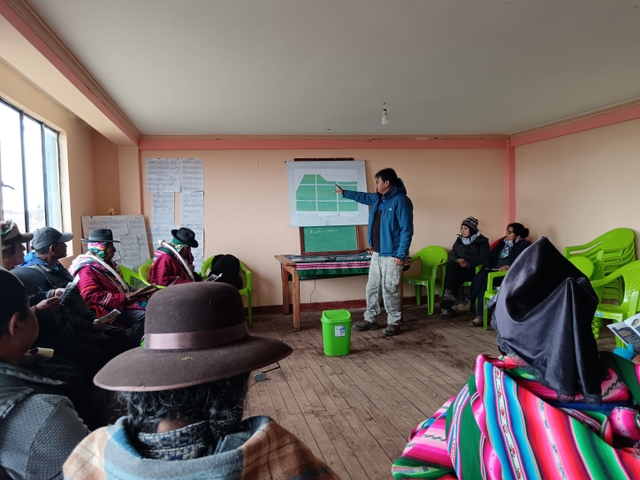
The start of agricultural activities was accompanied by the community's customs. The day began with the pagapu, or offering to the earth, as a way of thanking and asking permission from Mother Earth, "Pachamama," to begin the work. Afterward, the "chacchapeo" (chewing of coca leaves) took place, followed by a gathering among the participants, creating a space for interaction between farmers and specialists.
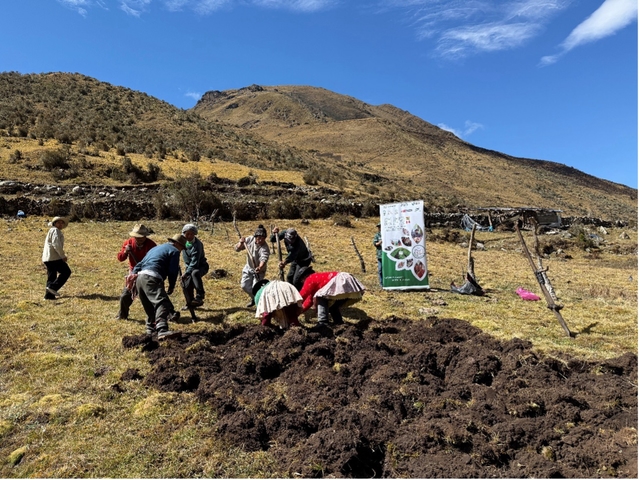
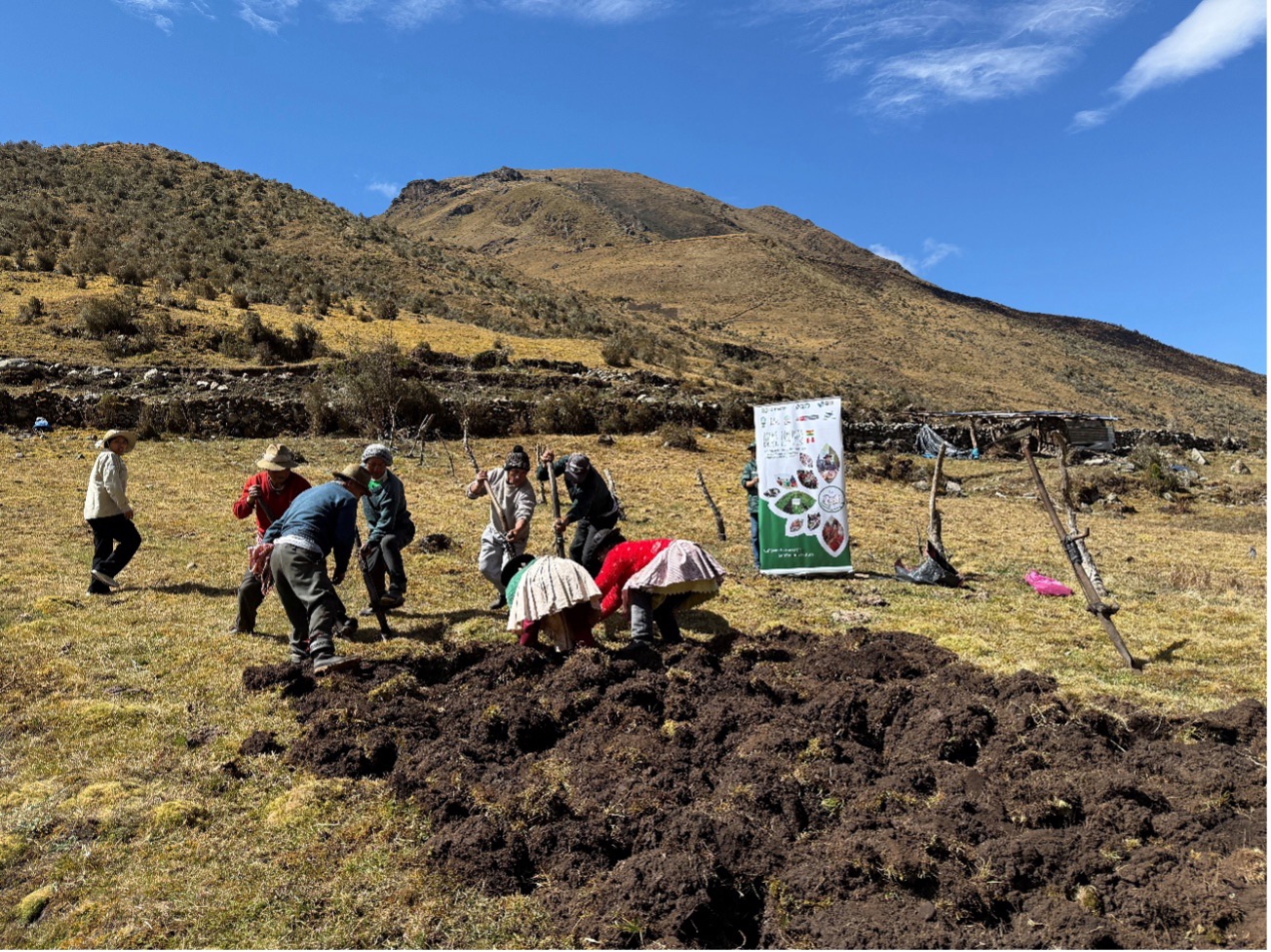
During the setup of the experiments, the farmers actively participated alongside the technical team. For planting using the ticcpa method, the traditional chaquitaclla (foot plow) was used, as well as for land preparation using the chaccma system, complemented by the use of picks to break up the soil clods.
The first carbon capture measurement was also taken.
The work also allowed for observation of the organization and collaboration among the families in the community. The tasks were divided according to the required activities. The men were responsible for digging the holes and preparing the ground, while the women participated in planting the seeds and preparing the plots. In this way, men and women contributed together to the day's work.
With these activities, the EEA Santa Ana and the community of Chaquicocha continue to strengthen a joint effort that seeks not only to generate scientific information, but also to recognize, value and preserve the agricultural knowledge inherited from generation to generation, especially those related to the cultivation and conservation of native potatoes.