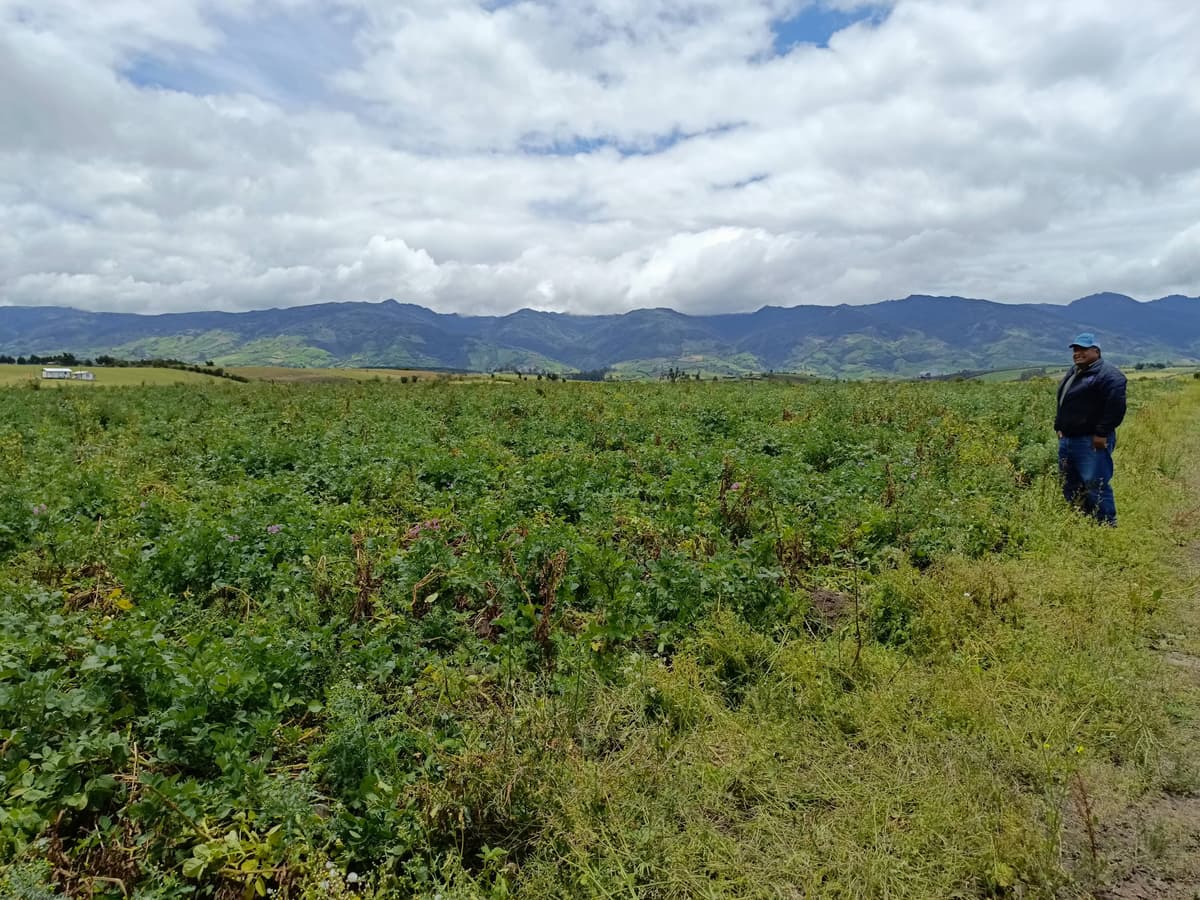
The Potato Purple Top Complex (CPMP) causes production losses ranging from 25% to 53%. The increased use of pesticides for its control raises costs and negatively impacts the environment, as well as the health of consumers and producers, leading to crop abandonment and a reduction in cultivated areas. To address this issue, experts from Ecuador, Peru, Colombia, and Chile will collaborate on a research project, with objectives that include developing a regional assessment, optimizing detection protocols, and disseminating knowledge about management practices, involving various institutions and producer associations.
The technological solution of this proposal focuses on the development and optimization of molecular detection protocols for pathogens causing the Potato Purple Top Complex (CPMP). Additionally, it aims to strengthen knowledge about best practices for integrated pest management, combining biological and cultural approaches to reduce pesticide dependence. The project also includes training for technicians and farmers in these new methodologies, ensuring effective knowledge transfer to stakeholders in the value chain. Practical guides and educational materials will be developed to promote sustainable management strategies. Through these actions, the project aims to mitigate the impact of CPMP on potato production and foster more efficient and environmentally friendly agricultural practices in the region.
This project will generate significant impacts across multiple economic, environmental, and social dimensions directly related to the challenges of CPMP. Furthermore, it will foster the development of human resources as a critical pillar for long-term success in CPMP management. To facilitate the transfer and dissemination of the project's results, training and capacity-building programs will be established for technicians, farmers, and other stakeholders in the value chain.



.jpg&w=3840&q=100)

 Agronomic Practices














 Impact
 Initiatives
 Dashboard
 Alliances
 Impact
 Initiatives
 Dashboard
 Alliances





.png&w=750&q=75)
.png&w=750&q=75)