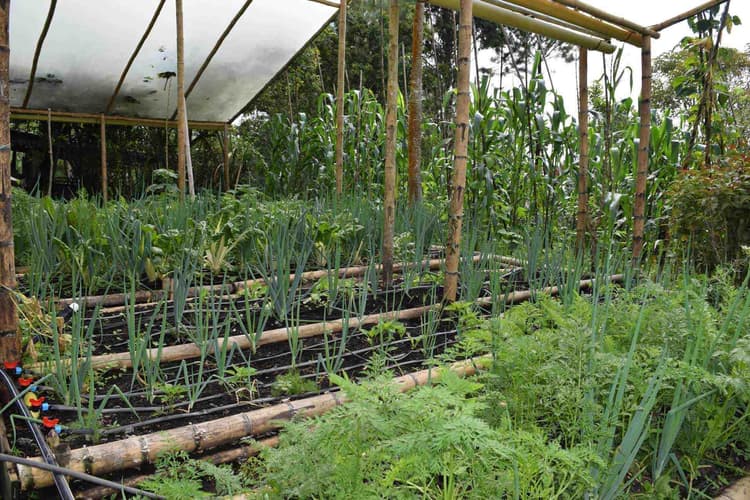
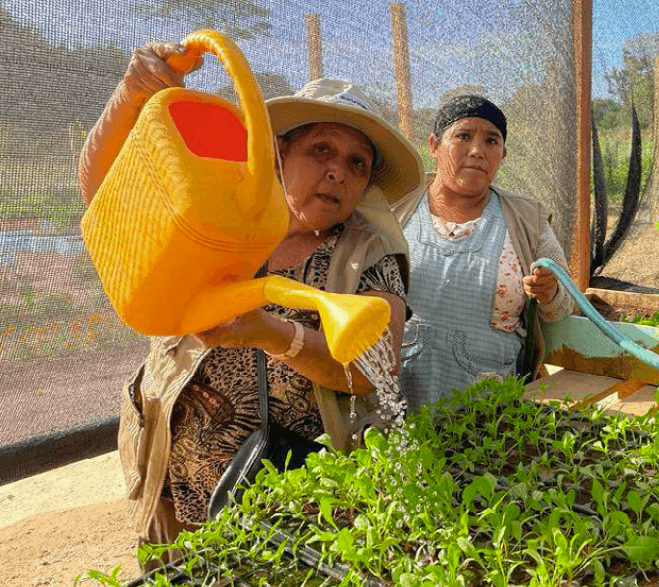
In 2018, Valle Nuevo National Park in the Dominican Republic underwent a significant change with the implementation of the Rescue Action Plan, which permanently banned agricultural and livestock activities to protect its biodiversity. Given the local residents' dependence on agriculture, the Ministry of Environment relocated these families to what is now Villa Poppy in Constanza. Surrounded by fertile soils and a favorable climate for agriculture, this community has transformed into an example of sustainable agricultural development. Through a cooperative, 52 families have overcome economic and technological challenges, achieving certification as state suppliers, allowing them to participate in institutional purchases and substantially.
The technological solution implemented in Villa Poppy has been fundamental for its sustainable development. With technical support from the FAO and the British Embassy, a weather station was installed, optimizing water use by precisely measuring crop water needs. A drip irrigation system, along with the introduction of new crop varieties, has significantly improved resource use efficiency and agricultural productivity. The formation of the Cooprovipo Cooperative has been crucial, allowing the community to collectively manage production and marketing, reducing logistical costs through the acquisition of a refrigerated truck and improving access to competitive markets. These innovations have not only enhanced the quality of life for farmers but have also established Villa Poppy as a model of advanced and sustainable agricultural development. The cooperative has achieved certification as a state supplier, expanding its reach and securing a stable market for its products, contributing to a more robust and diversified local economy.
The impact of the actions implemented in Villa Poppy has been profound, encompassing everything from the environment to the local economy and the formalization of agricultural production. The introduction of a weather station and a drip irrigation system has optimized water use, achieving 90-95% efficiency. The creation of Cooprovipo, a cooperative formed by local families, has formalized production and strengthened community cooperation. This cooperative has become a state supplier and has secured funding for infrastructure that reduces logistical costs and improves product delivery. Additionally, agricultural production has opened up new markets, such as international restaurant chains and national supermarkets, benefiting over 52 families and creating 25 jobs in the community. The support from entities like the FAO and the British Embassy has been crucial for the sustainable development of Villa Poppy, through technical assistance.
Villa Poppy: Key Steps Towards Sustainability and Success
_15_46_20.png&w=3840&q=100)



_15_37_382.png&w=3840&q=100)

_16_12_14.png&w=1200&q=75)
_16_12_141.png&w=3840&q=100)
 Bioeconomía
_15_54_132.png&w=3840&q=100)







 Impact
 Initiatives
 Dashboard
 Alliances
 Impact
 Initiatives
 Dashboard
 Alliances