
 Impact
 Initiatives
 Dashboard
 Alliances
 Impact
 Initiatives
 Dashboard
 Alliances


Learn more about this story
Project Webstory
Go to webstory





 Agronomic PracticesResilient Crops and Carbon Neutrality (“PI-1”)AppliedTechnological
 2025
2025 Active
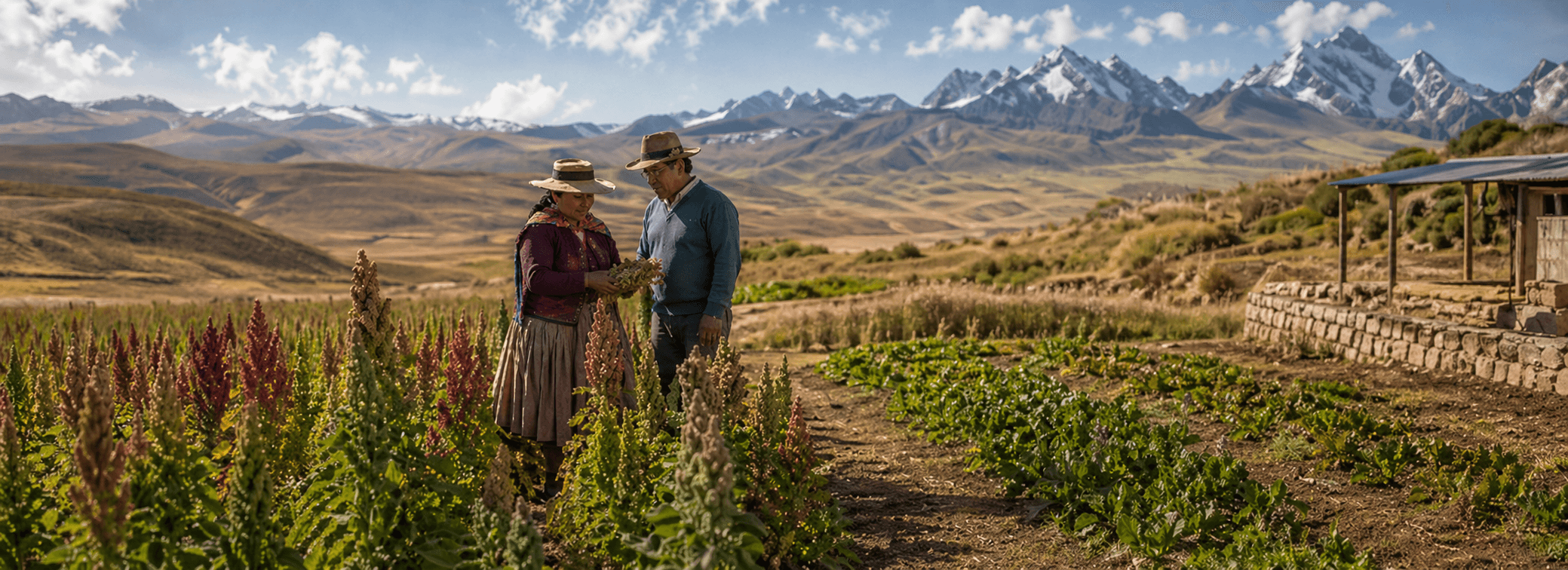
Quinoa (Chenopodium quinoa Willd.), considered a strategic crop for global food security, is undergoing a structural crisis in the Bolivian and Peruvian highlands. Despite the increase in international demand, small family farmers have faced a drastic 58% drop in prices and a 40% reduction in exports since 2015. This situation is aggravated by low agricultural yields (603 kg/ha versus a potential of 1,500 kg/ha), caused by soil degradation, wind erosion, low organic matter content, and the impacts of climate change, such as the increase in the frequency and intensity of extreme phenomena. Approximately 15 million tons of livestock manure and 250 thousand tons of agro-industrial waste are generated annually, inputs that represent an opportunity to improve soil fertility and reduce greenhouse gas (GHG) emissions. However, livestock farming is responsible for 14.5% of global GHG emissions, mainly due to methane from enteric fermentation and poor manure management. Faced with this scenario, a circular economy strategy is proposed based on the transformation of manure into bio-inputs through controlled anaerobic digestion.
A circular economy strategy is proposed based on the transformation of manure into bio-inputs through controlled anaerobic digestion. This technology reduces methane emissions by up to 80% and allows the production of organic fertilizers that increase quinoa yield (up to 1,100 kg/ha), improve soil quality (0.8% increase in organic matter), and decrease wind erosion (by up to 35%). The objective of the project is to strengthen the climatic resilience and sustainability of organic quinoa production in Bolivia and Peru, increasing productivity and reducing GHG emissions. The proposal includes three components:
Diagnosis of the agri-food system and emissions baseline.
Use of biologicals to improve productivity and mitigate emissions.
Capacity building of producers in sustainable technologies.
In response to low productivity conditions, the use of biologicals is expected to increase quinoa yields from an average of 603 kg/ha to approximately 1,100 kg/ha. Environmentally, the initiative will improve soil quality, increasing organic matter content by 0.8%, while reducing wind erosion by up to 35% through improved soil structure. Critically, controlled manure treatment will reduce methane emissions from livestock by up to 80%.
In terms of capacity building, the project will empower Andean producers through knowledge transfer workshops and will deliver public goods such as measurement protocols, databases, and scientific publications to support the transition toward carbon-neutral systems.
This project actively contributes to achieving the Sustainable Development Goals, promoting more equitable, resilient, and sustainable regional development.

Ariel Santivañez Aguilar
Madeleyne Villa Astaca
Sponsors


With the support of



