Transformation of livestock manure into biologicals through circular economy approaches to strengthen climate resilience, reduce emissions, and improve quinoa yields in Bolivia and Peru.

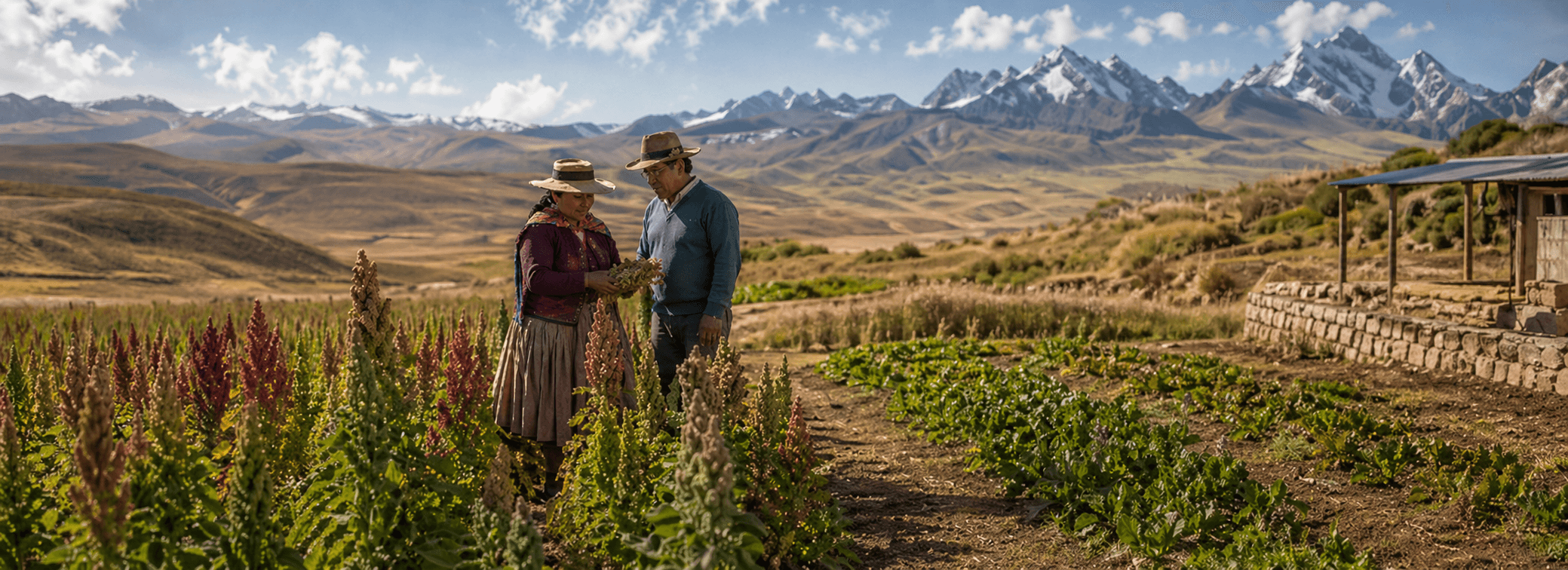
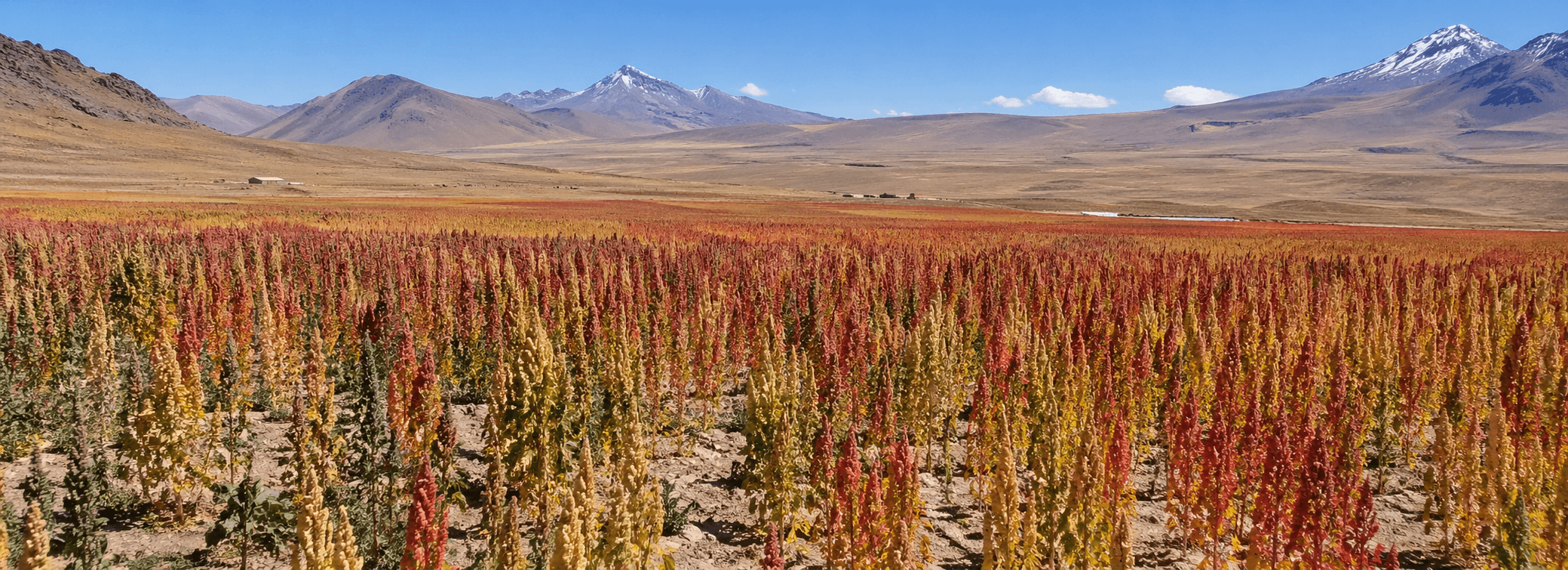
Quinoa is a strategic crop for food security, but it is facing a crisis in the highlands of Bolivia and Peru. Smallholder farmers are experiencing a sharp drop in prices and low yields due to soil degradation, wind erosion, low organic matter content, and extreme climate events. At the same time, livestock production in the region generates millions of tons of manure annually which, when poorly managed, emits large amounts of methane, a potent greenhouse gas. These activities are typically carried out in isolation, missing opportunities to integrate sustainable solutions.
Integrating crop and livestock systems through circular economy approaches to mitigate climate change and enhance organic quinoa production in the Andean region.
The project aims to strengthen climate resilience and the sustainability of organic quinoa production in Bolivia and Peru through a circular economy strategy. Implemented by a binational consortium of research institutions and universities, the initiative focuses on three areas: developing a baseline emissions diagnosis, increasing agricultural productivity while mitigating greenhouse gas (GHG) emissions, and strengthening the technical capacities of local producers. It will integrate livestock and crop production by transforming livestock waste into climate solutions and productive inputs.

The technological solution proposes a strategy focused on the use of livestock and agro-industrial waste. Specifically, it involves processing livestock manure through controlled anaerobic digestion to convert it into high-quality biologicals (organic fertilizers). By collecting and properly treating manure, its decomposition in open environments is avoided, significantly reducing methane emissions to the atmosphere. These biologicals are then applied both to the soil and as foliar treatments in organic quinoa fields. This practice nourishes the crop, enhances microbial diversity, increases organic matter, and improves soil structure, making it less vulnerable to the wind erosion characteristic of the highlands.
"“The digestate from anaerobic fermentation is a valuable fertilizer due to the increased availability of nitrogen.”"— Peter Weiland - 2010
 Agronomic PracticesResilient Crops and Carbon Neutrality (“PI-1”)AppliedTechnologicalCrops
In response to low productivity conditions, the use of biologicals is expected to increase quinoa yields from an average of 603 kg/ha to approximately 1,100 kg/ha. Environmentally, the initiative will improve soil quality, increasing organic matter content by 0.8%, while reducing wind erosion by up to 35% through improved soil structure. Critically, controlled manure treatment will reduce methane emissions from livestock by up to 80%. In terms of capacity building, the project will empower Andean producers through knowledge transfer workshops and will deliver public goods such as measurement protocols, databases, and scientific publications to support the transition toward carbon-neutral systems.





Sede Central
Bolivia

Perú

Perú

Bolivia


 Impact
 Initiatives
 Dashboard
 Alliances
 Impact
 Initiatives
 Dashboard
 Alliances