
 Impact
 Initiatives
 Dashboard
 Alliances
 Impact
 Initiatives
 Dashboard
 Alliances


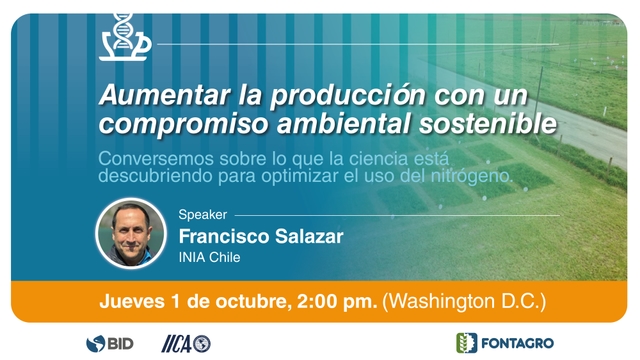
%206.19.13%E2%80%AFp.m..png&w=640&q=100)
Learn more about this story
Project Webstory
Go to webstory




 Agronomic PracticesAppliedTechnological-Organizational-Institutional
 2023
2023 Active
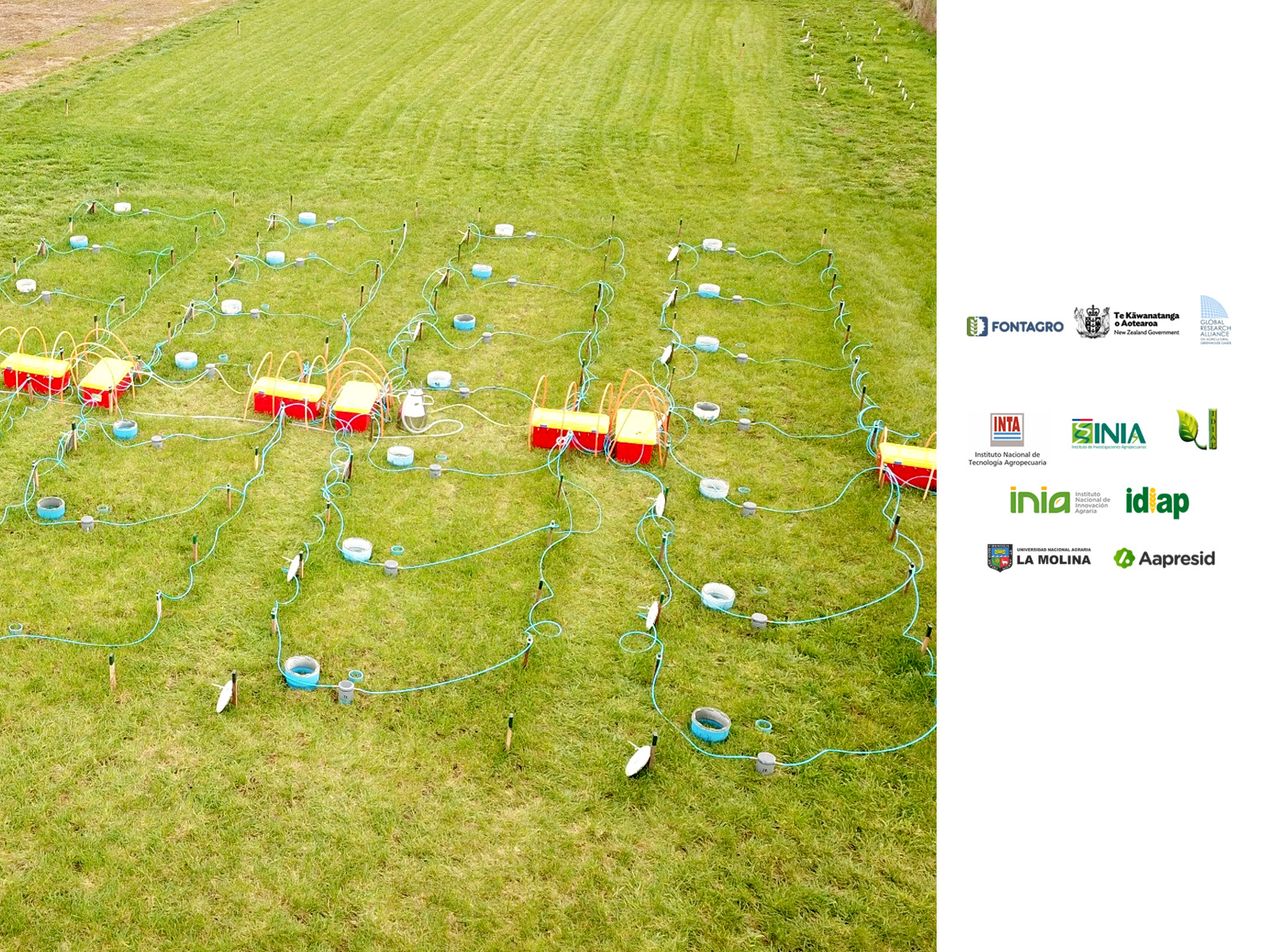
Food production has increased worldwide strongly in the last 20 years in response to population growth, with a significant impact on the countries of the Americas. This is owed to their agricultural potential, in terms of land area and climatic conditions suitable for agriculture. However, the maintenance of this productivity, as well as its future potential development, depends on the effects of climate change, and the strategies proposed to face the climate crisis, to maintain and increase food production under more sustainable systems. The use of nitrogen-based fertilizers in agricultural soils is an essential requirement for food production, however, it is responsible for the generation of nitrous oxide (N2O), which is a potent greenhouse gas that is generated in the soil by biochemical processes for degradation. In most countries, considering the agriculture sector, this greenhouse gas is the second most important, after methane (CH4) produced by enteric fermentation, and has important implications for global warming. This has prompted different actions involving the public and private sectors, to promote its mitigation, including the development of site-specific emission factors and of best management practices that promote the use of the Right N source, the Right rate, the Right moment and the Right place of application (4Rs). This technical cooperation (TC) is made up of Chile, Argentina, Peru, Panama and the Dominican Republic, countries that need to build capacities on greenhouse emission measurements to determine emissions factors based on locally marketed nitrogen sources and evaluate the doses of fertilizer commonly used by farmers. This baseline information is essential to define and evaluate mitigation strategies ensuring food production. For this, each country of the TC will evaluate, under field conditions, the production and emission of N2O, to determine nationally specific emission factors, for different nitrogen sources, doses, and times of the year. They will also develop mitigation strategies to reduce emissions while maintaining yields. Results of this work will be disseminated to the public and private sectors directly and through the partners of this proposal. The project is funded by the New Zealand Government as part of its contribution to the Global Research Alliance on Agricultural Greenhouse Gases (GRA).
Recommendations for good practices for the use of nitrogen fertilizer will be generated from the evaluation of N sources, doses and potential greenhouse gas mitigation strategies, that will increase the N use efficiency in the TC countries, reducing environmental losses.
The emission factors obtained in crops and grasslands with high N requirements will allow for robust GHG national inventories, which favor the development of public policies aligned to comply with the international commitments of the participating countries to reduce GHG emissions.
The project is in its second year of implementation, with funding received at the end of 2024 and field and extension activities commencing in 2025, the year for which this report is being prepared with preliminary results. To date, three trials have been established in Argentina and one field trial in Chile, with the second trial scheduled to begin in August 2026. The initial field trials have evaluated fertilization alternatives for pastures and crops, also considering mitigation measures to establish emission factors for Argentina and Chile. Various project dissemination activities have been carried out, including workshop, field day, and presentations at conferences, along with two publications in conference abstracts. The MPI project also includes co-implementation with the FONTAGRO project, which also involves Peru, the Dominican Republic, and Panama. To date, the commitments outlined in the reported project have been met.
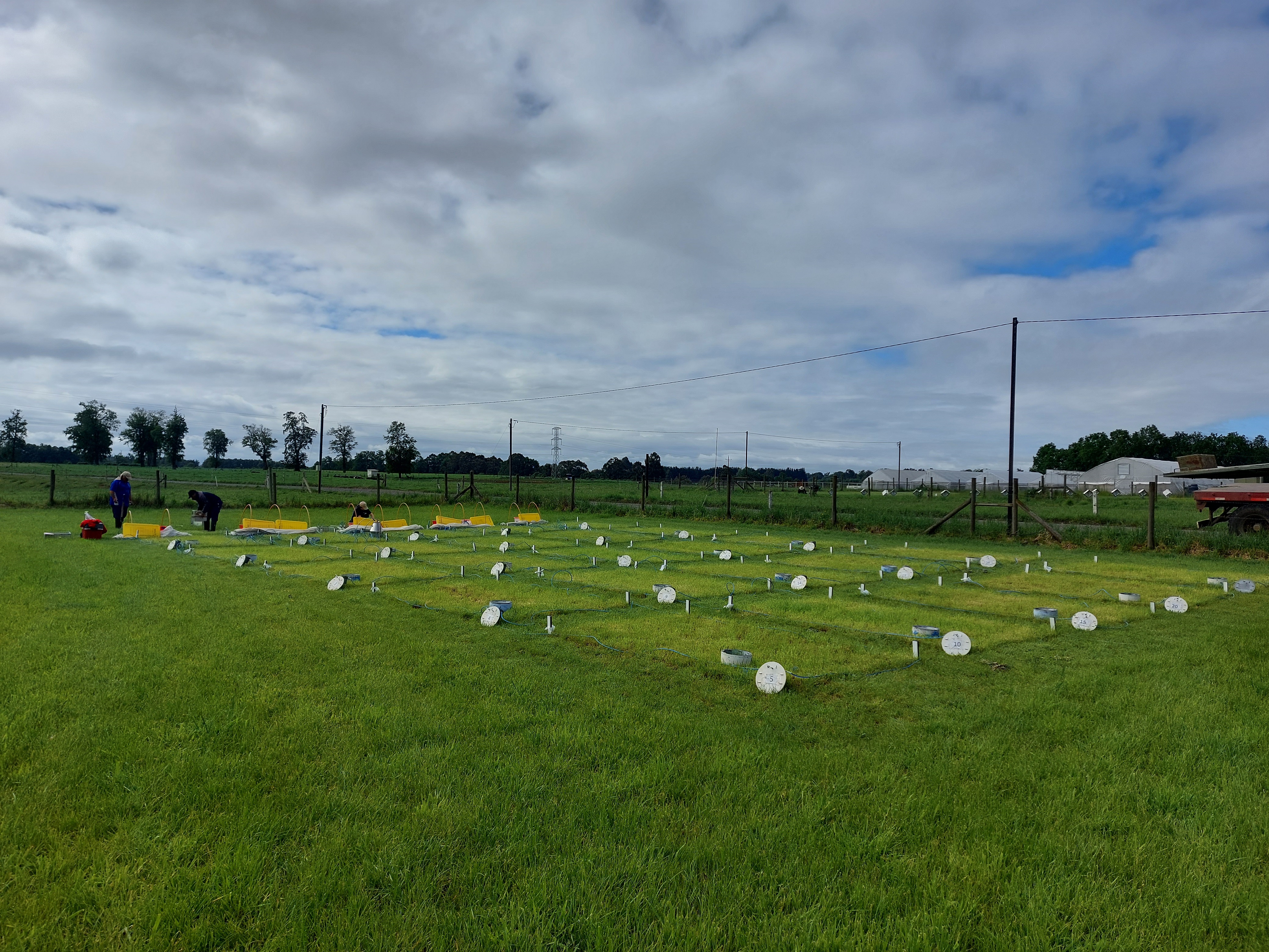
Preliminary resuls. Field experiments were established in maize (Zea mays L.) and perennial ryegrass (Lolium perenne L.) to assess N₂O emissions, NH₃ volatilization, and dry matter yield responses to synthetic fertilizers (urea, UAN, slow-release urea) and organic inputs (swine effluent), with and without mitigation additives (DCD, biochar, zeolite). In Argentina, cumulative N₂O emissions were highest under plain urea and UAN, while mitigation treatments (UAN+DCD and slow-release urea) produced lower emissions, though differences were not yet statistically significant (p > 0.05). NH₃ volatilization peaked within days of application and was greatest for urea. In the swine effluent trial, dicyandiamide (DCD) was the most effective additive for reducing N₂O emissions, and zeolite addition improved maize yield.
In Chile, NH₃ losses from urea applications to permanent pasture increased significantly with N rate (cumulative losses: 0.1–27.2 kg N-NH₃ ha⁻¹; EFs: 7.3–18.0%; p < 0.01), with no significant effect on nitrogen use efficiency. Dry matter yields ranged from 3,761 to 7,576 kg DM ha⁻¹ across N rates. These results represent early-stage data from ongoing experiments; N₂O analyses for Chile and results from Peru, the Dominican Republic, and Panama are pending. This research will generate region-specific emission factors (EFs) and contribute to the improvement of national greenhouse gas inventories, as well as to the development of evidence-based nitrogen management and mitigation strategies aimed at reducing nitrogen losses and increasing nitrogen use efficiency in Latin American agricultural systems.
This project actively contributes to achieving the Sustainable Development Goals, promoting more equitable, resilient, and sustainable regional development.




Francisco Salazar Sperberg
Romina Romaniuk
Elizabeth Consuelo Heros Aguilar
Gregorio García Lagombra
Rubén Collantes
Sady García Bendezú
Luis Opazo Ruiz
Sara Hube
Jaime Carrillo
Josué Martínez Lagos
Ignacio Beltrán
Luis Ramírez
Boris Nieto
Vanina Cosentino
Marcelo Beltrán
Monica Gabriela Pérez
Alejandro Costantini
Carolina Alvarez
Lisveth Flores del Pino
Lia Ramos
Rember Emilio Pinedo Taco
Alfredo Alberto Beyer Arteaga
Héctor Baroni Cantaro Segura
Fernando Braulio Chung Montoya
Pedro Antonio Nuñez Ramos
Joaquín Caridad del Rosario
Víctor José Asencio Cuello
Marcos Javier Ureña
Angel Noel Ozorio
Greiby Medina
The tangible impact of science and technology in the field
Sponsors


With the support of



.png&w=384&q=75)