 Impact
 Initiatives
 Dashboard
 Alliances

 Impact
 Initiatives
 Dashboard
 Alliances
%203.06.37%E2%80%AFp.%C2%A0m..png&w=3840&q=100)

 Technological-Organizational-Institutional
Context
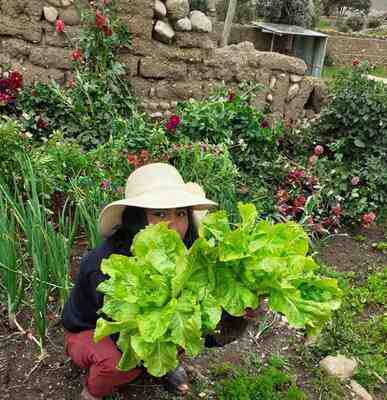
The project’s main focus is to address the challenges faced by family farming in the Altiplano region of Bolivia and Peru. Within this context, young men and women, while still in school, will soon face the challenge of becoming the future farmers in their area. In other words, their decisions, knowledge, and resilience will shape their own development, as well as that of their families and communities.
In general, this population has not benefited from in-person agricultural technical assistance or training programs. Their agricultural knowledge has mainly come through verbal exchanges with their parents or previous generations. With support from FONTAGRO, it was proposed to disseminate knowledge generated through agricultural research and locally validated to secondary school students whose households practice family farming. The innovative aspect was engaging authorities, teachers, and students to receive this information virtually. This was the initial challenge. It was considered that, by embracing a virtual medium, schoolchildren would be able to gain a broader perspective on their personal development.
Background
This year, FAO declared the International Year of Family Farming, highlighting its importance both now and in the near future. Climate change (CC), intensification, and, in general, the Sustainable Development Goals (SDGs), make it necessary to seek efficient mechanisms to address these challenges. In this context, FONTAGRO, CIRNMA, and ALTAGRO have been developing a participatory scaling-up methodology aimed at school-aged boys and girls through virtual means. For this purpose, a Virtual Dissemination Platform (VDP) has been structured, where 44 Agricultural Technology Alternatives (ATAs) are available. The idea is for students to access the VDP, register as users, and review the ATAs that interest them before downloading or commenting on them.
Response to the Challenge
A first element was the students’ curiosity to access the VDP and then review the ATAs. The chart shows the evolution of their visits to the VDP. Initially, there were only a limited number of visits, which later increased. By the end of 2019, a decline in visits can be observed, due to the fact that the school year ends in November or December. This is an aspect that remains a challenge to address. Once familiar with the VDP, students can navigate through it, review project information and ATA information grouped by components. Based on this process, they responded by “visiting,” “downloading” (PDF), and “commenting on” ATAs.
Consequently, the challenge of interacting with students through a VDP can indeed be addressed. Achieving 6,706 visits in 10 months, of which 10% became “users,” as well as the number of ATAs “visited” and especially “downloaded” or “commented on,” demonstrates the strong interest among students in rural areas in accessing agricultural information virtually and then putting it into practice with their parents.
Lesson Learned
A strong willingness has been observed among a segment of the rural population—young men and women still of school age, who had not been the target of technical assistance programs—to take on challenges and develop a better understanding of the role of their own agricultural system.
%203.02.38%E2%80%AFp.%C2%A0m..png&w=640&q=100)
%203.00.04%E2%80%AFp.%C2%A0m..png&w=640&q=100)
%201.04.10%E2%80%AFp.%C2%A0m..png&w=640&q=100)
%203.06.37%E2%80%AFp.%C2%A0m..png&w=640&q=100)
%203.04.33%E2%80%AFp.%C2%A0m..png&w=640&q=100)