• Go to Fontagro's X profile
  • Go to Fontagro's Instagram profile
  • Go to Fontagro's Linkedin profile
  • Go to Fontagro's Youtube profile
  • About Us
  • Governance
  • Documents
  • News
    • News
    • Events
  • Library
  • Toolkit
Fontagro
  • Menu iconImpact
    • Projects
    • Success Cases
    • Impact Stories
    • Project platform
  • Menu iconInitiatives
  • Menu iconDashboard
  • Menu iconAlliances
  • X icon
  • Instagram icon
  • Linkedin icon
  • Youtube icon
Fontagro
Fontagro
  • About Us
  • Governance
  • Documents
  • News
    • News
    • Events
  • Library
  • Toolkit
  • Menu iconImpact
    • Projects
    • Success Cases
    • Impact Stories
    • Project platform
  • Menu iconInitiatives
  • Menu iconDashboard
  • Menu iconAlliances
Fontagro

Innovation ecosystem for the agri-food sector in Latin America and the Caribbean

Newsletter
  • Impact
  • Initiatives
  • Dashboard
  • Alliances
  • About Us
  • Governance
  • Documents
  • News
  • Library
  • Toolkit

Contact Us

  • E-mailfontagro@fontagro.org
  • LocationIICA USA - 1889 F Street, N.W., Suite 360 Washington, D.C. 20006
  • Terms, conditions and privacy policy

© 2025 Fontagro. All Rights Reserved

  • Go to Fontagro's X profile
  • Go to Fontagro's Instagram profile
  • Go to Fontagro's Linkedin profile
  • Go to Fontagro's Youtube profile
project image

Strategies Review for Management Coffee Berry Borer (HYPOTHENEMUS hampei) to Cope Climate Changes in Production Systems of Inshore Coffee (Coffea canephora) in Panama, Honduras and Nicaragua.

X iconFacebook iconLinkedin icon
Agronomic PracticesAgronomic PracticesAdaptativeAdaptativeTechnological-Organizational-InstitutionalTechnological-Organizational-InstitutionalClimate changeClimate changeStrategy 1. Resilient farms Strategy 1. Resilient farms 20142014inactiveinactive
CodeFTG/RF-14894-RG
InitiativeCall for Proposals
Total AmountUSD 500,000
FONTAGRO AmountUSD 200,000
Counterpart AmountUSD 300,000
Execution Time36 Months
CodeFTG/RF-14894-RG
InitiativeCall for Proposals
Total AmountUSD 500,000
FONTAGRO AmountUSD 200,000
Counterpart AmountUSD 300,000
Execution Time36 Months
Loading map...
Summary icon

Executive Summary

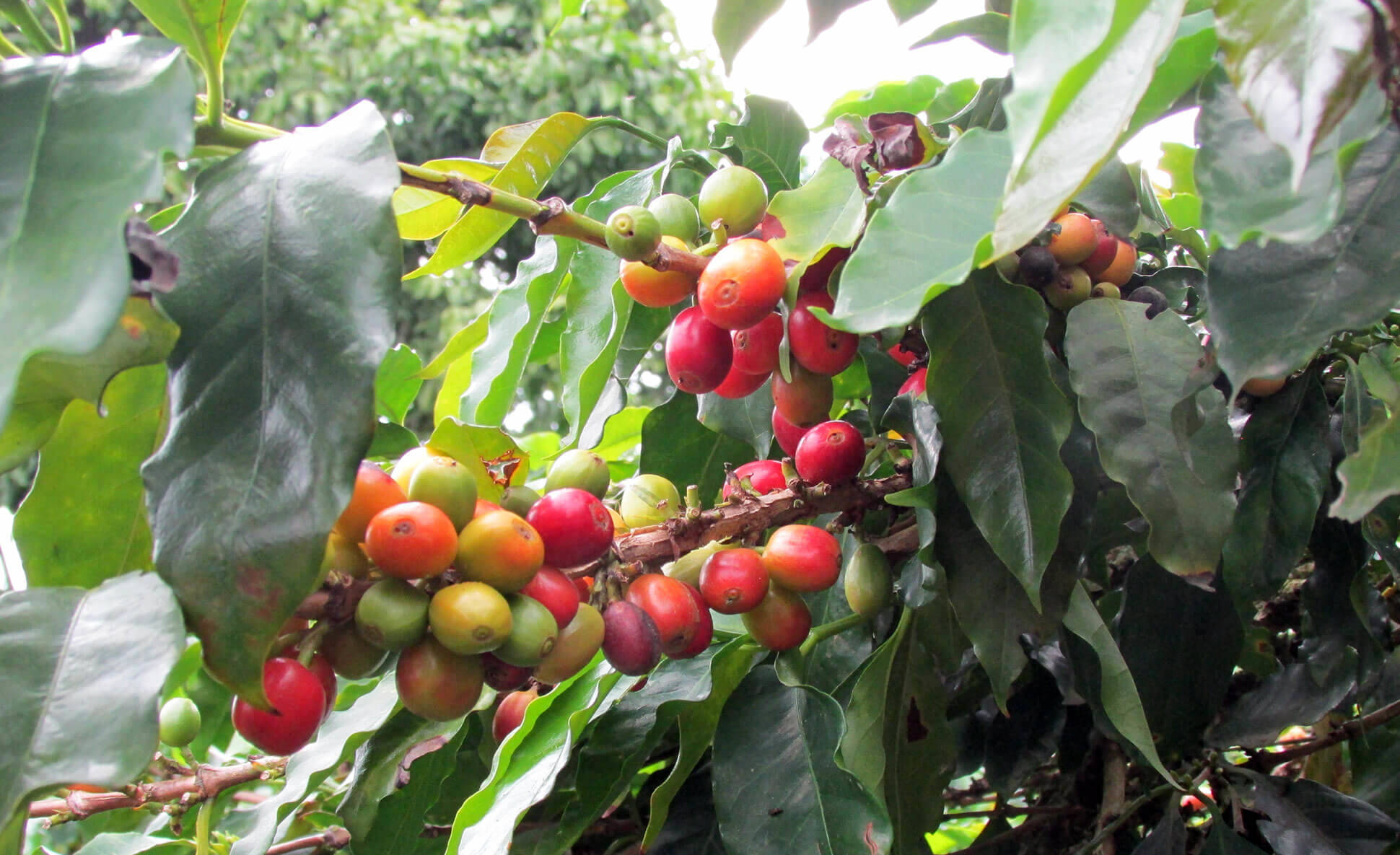
Pests affect the yields and quality of coffee, the Coffea canephora species -known as Robusta or lowland coffee- is no an exception. Coffee Berry Borer (Hypothenemus hampei), a significant pest, is favored by variations in precipitation and temperature and poor agronomic management. In Panama, with a cultivated area of ​​19,000 hectares of both Coffea arabica and Coffea canephora, the borer was detected in 2005 and has spread throughout the country, causing losses of up to 80% of the grain. In Honduras, where about 265,751 ha are cultivated, the borer was detected in 1977 and in Nicaragua with an area of ​​153,186 ha, in 1988. In all cases coffee production tends to be dominated by small and medium producers with a very low level of technology. The purpose of the project is to reduce economic damage by identifying technical limitations in production systems, analyzing climatic variations, proposing the Integrated Management of the Borer (IMB) as well as adjustments to improve the effectiveness of current strategies. Climatic conditions affect the behavior of the pest: with less precipitation, the borer is dispersed and as of the month of June higher percentages of infestation are recorded. With the knowledge generated, IMB is feasible and desirable, it includes both manual and biological control as well as better agronomic practices.  
Results icon

Results

The project generated results in four dimensions:  Monitoring: Coffee beans that remain in the soil or in the plant after harvesting allow the insect to proliferate and infest new beans. Climatic alterations such as late rains and early harvests contribute to the maintenance of pest cycles.  Climatic characterization: High temperatures favor the multiplication of the insect, shorten its cycle and boost its migration towards new crops. A worrying element is that the borer is adapting well to highland conditions (San Jerónimo, Honduras at 1440 masl) with infestations of up to 5% in Arabica coffee.  Characterization of productive systems: Production tends to be dominated by small-scale farmers, with a high incidence of poverty, low technology and low schooling. These conditions make it difficult to handle and control the pest.  Implementation of management and control practices: The modifications that the project successfully introduced are based on the elimination of fallen and remnant grains, the use of handmade traps, and the use of predators and parasites such as Cephalonia stephanoderis and fungi such as Beauveria bassiana, plus a very strong effort In training.
Beneficiaries icon

Beneficiaries

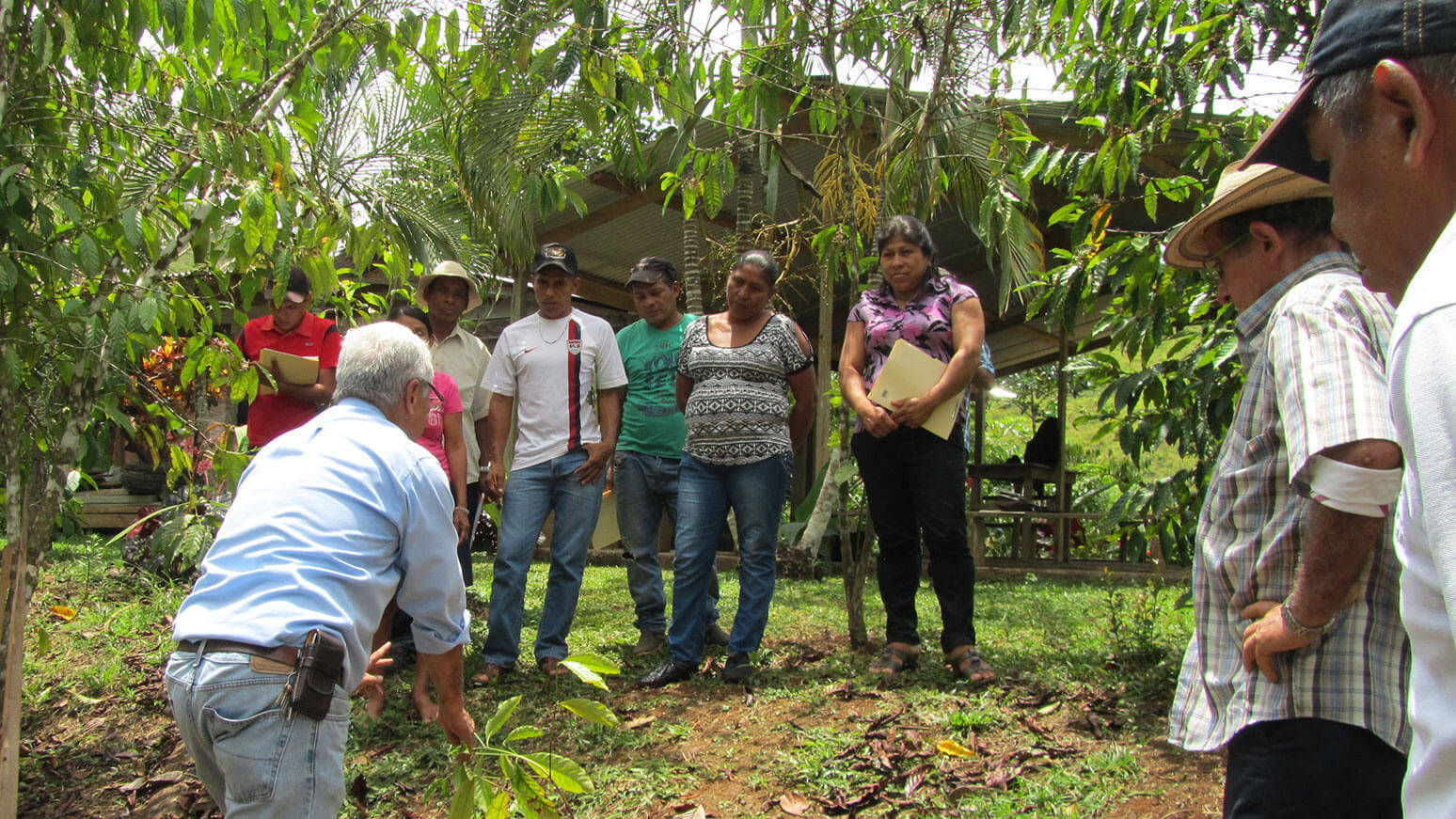
The project had significant achievements training, under different means, a total of 3,440 producers. Additionally, it was able to incorporate a total of 218 new producers to coffee cultivation in Panama. In sum, the direct final beneficiaries have been 3,658.  There is no precise account of potential or indirect beneficiaries, but they will undoubtedly be many more than the direct ones.

Sustainable Development Goals

This project actively contributes to achieving the Sustainable Development Goals, promoting more equitable, resilient, and sustainable regional development.

Responsible consumption and productionClimate actionLife on landPartnerships for the goals
Responsible consumption and production
Climate action
Life on land
Partnerships for the goals

Main Donors

FONTAGRO
Project Story Image

Learn more about this story

Project Webstory

Go to webstory
Organizations icon

Participating Organizations

Executor

  • IDIAP Instituto de Innovación Agropecuaria de Panamá

Co-Executor

  • DICTA Dirección de Ciencia y Tecnología Agropecuaria
  • INTA Instituto Nicaragüense de Tecnología Agropecuaria
Cargando mapa...
Publication icon

Publications and Resources

Download document

Informe Técnico Final

Download document

Poster 2018

Download document

Poster 2017

Publication icon

Dissemination products

Poster

Strategies for control of Coffee Berry Borer in Coffea canephora

Fontagro TECH

Strategies for managing coffee berry borer in Robusta coffee in a framework of climatic variation.

Fontagro TECH

Biological control of the coffee berry borer

Researchers icon

Participating Researchers

Omar Alfaro
PanamáProject Leader

Omar Alfaro

Jose Angel Lezcano Barrozo
PanamáResearcher

Jose Angel Lezcano Barrozo

José Misael Espinoza Portillo
HondurasResearcher

José Misael Espinoza Portillo

Jorge Ilich Bolaños Taleno
NicaraguaResearcher

Jorge Ilich Bolaños Taleno

Julio Matamoros
HondurasResearcher

Julio Matamoros

Narciso Meza Linares
HondurasResearcher

Narciso Meza Linares

Omar Alfaro
PanamáProject Leader

Omar Alfaro

Jose Angel Lezcano Barrozo
PanamáResearcher

Jose Angel Lezcano Barrozo

José Misael Espinoza Portillo
HondurasResearcher

José Misael Espinoza Portillo

Jorge Ilich Bolaños Taleno
NicaraguaResearcher

Jorge Ilich Bolaños Taleno

Julio Matamoros
HondurasResearcher

Julio Matamoros

Narciso Meza Linares
HondurasResearcher

Narciso Meza Linares

Other projects

The tangible impact of science and technology in the field

Project image

Implementation Strategy GCyC

Joint proyects 2020 ATN/RF-18757-RG

Crop and animal breeding is one of the constant challenges faced by the agricultural sector when trying to achieve increases in product yield and quality. The FAO propose...

Project image

Grow More with Less (SRI)

Call for Proposals 1998 ATN/SF-6486-RG26/98

The genetic variability of Chilean and Argentinean oak and raulí was evaluated using molecular and isoenzymatic markers to establish criteria for conservation, genetic im...

Project image

Sustainable control of citrus greening vector in family farm...

Call for Proposals 2015 FTG/RF-15460-RG

In Latin America, 80-90 % of producers belong to the Family Agriculture (FA) sector. This group occupies between 14 to 70% of the agricultural area of Latin American coun...

Sponsors

BID logoIICA logo

With the support of

KPK logo