 Impact
 Initiatives
 Dashboard
 Alliances
 Impact
 Initiatives
 Dashboard
 Alliances


Learn more about this story
Project Webstory
Go to webstory




 Agronomic PracticesClimate changeAppliedTechnological
 2021
2021 Active
The advancement of soil degradation, desertification processes, and the increasing frequency and intensity of droughts are causing significant productive and economic losses in Andean agriculture, increasing levels of food insecurity, poverty, and social vulnerability. In response to this challenge, the project proposes the use of nanotechnology as an innovative alternative aimed at improving soil moisture retention. Within this framework, nanoclays and organic hydrogels were developed and evaluated at the laboratory level, with some materials showing water absorption capacities exceeding 200% of their own weight.
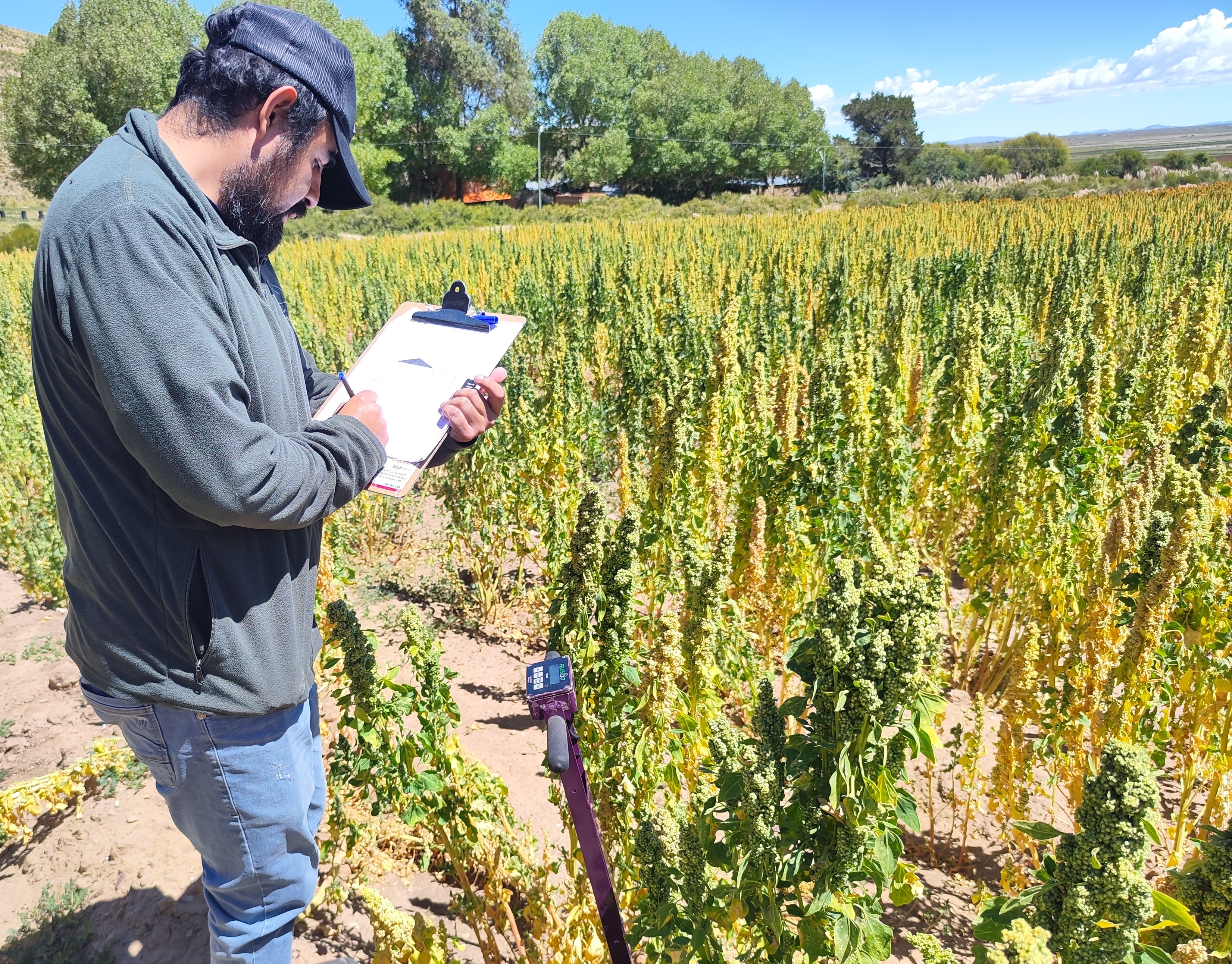
During the 2025–2026 agricultural season, the selected products were evaluated under field conditions in quinoa, potato, wheat, and maize crops in different communities of Bolivia and Ecuador. In Bolivia, drought occurred irregularly throughout the agricultural cycle, making it possible to identify significant differences among the various application rates of both products, particularly in quinoa and wheat crops. In potato cultivation, the effect was less noticeable, while in maize, crop development was affected by hail events. On average, the water absorption and retention capacity of both products exceeded 20%. In Ecuador, field trials are still ongoing, and the final results are expected by June 2026. Likewise, during the 2026–2027 agricultural season, these results are expected to be validated and consolidated through a more active participation of farmers in the evaluation and adoption process of the technologies.
To strengthen the management and dissemination of the knowledge generated, the Virtual Learning Community (VLC) was established, bringing together researchers, farmers, universities, and technicians interested in nanotechnology applied to agriculture. Its main achievements include the development of dissemination materials, technical presentations, and virtual knowledge-exchange spaces. In addition, through the support of the VLC, five training workshops were conducted for more than 330 farmers, promoting learning and the dissemination of technologies aimed at helping agriculture adapt to drought and climate change.
The project strategy is based on the development and application of nanoclays and organic hydrogels as innovative technological solutions to address soil degradation and drought-related challenges in Andean agriculture. Due to their reduced particle size, high specific surface area, and swelling capacity, nanoclays significantly enhance soil water retention and water availability. Organic hydrogels, in turn, are produced from cellulose fibers derived from agricultural residues, representing a low-cost, biodegradable, and environmentally sustainable alternative.
Both materials exhibit a high capacity for water absorption and storage, contributing to the reduction of soil moisture losses, the improvement of soil physical and biological properties, and the enhancement of crop resilience under drought conditions. Following their development and laboratory validation, these products are being evaluated under field conditions in Andean agricultural areas affected by persistent soil degradation processes and water deficit, with the objective of determining their effects on soil moisture retention, soil microbial activity and diversity, and agricultural productivity improvement.
At the laboratory level, the capacity of different nanoclays and organic hydrogels to absorb and retain water was evaluated. The nanoclays were obtained from clay-rich rocks collected in Ecuador and processed through grinding and sieving, whereas the hydrogels were produced from organic residues transformed into cellulose and subsequently chemically modified. The results revealed differences in water retention capacity depending on the type and concentration of clays. In the case of the hydrogels, those produced from borojó and sugarcane residues exhibited the highest performance, with water absorption capacities exceeding 200% relative to their dry mass.
Baseline assessments and field trials were also conducted in communities of Bolivia and Ecuador recurrently affected by drought conditions. The studies revealed local perceptions of soil degradation and erosion, as well as growing concern regarding the increasing frequency and intensity of drought events. During the 2025–2026 agricultural season, nanoclays and hydrogels were evaluated in quinoa, potato, wheat, and maize crops. Positive effects were observed mainly in quinoa and wheat, where the different application rates contributed to improved soil moisture retention. In Ecuador, field trials are still ongoing, and during the 2026–2027 agricultural season, the results are expected to be validated through a participatory approach involving farmers and other stakeholders from the agricultural sector.
As part of the dissemination and capacity-building activities, 2,000 technical fact sheets on nanoclays and hydrogels, along with other outreach materials, were developed for farmers, technicians, and students. In addition, eight training workshops were conducted in communities of the Bolivian Altiplano and semi-arid inter-Andean valleys, reaching a total of 330 farmers. Simultaneously, the Virtual Learning Community (VLC) on Nanotechnology for Agricultural Soil Moisture Management was established, connecting universities, public and private institutions, farmers, technicians, and students through meetings, academic events, and knowledge-exchange platforms. This initiative seeks to consolidate itself as a regional platform for promoting innovation and the adoption of technologies aimed at addressing drought and soil degradation in the Andean region.
The direct beneficiaries of the project are primarily the farming families from the communities where the project activities are being implemented. In addition, students, technicians, and researchers from different institutions linked to the project through the virtual platform entitled “Virtual Learning Community (VLC) on Nanotechnology for Agricultural Soil Moisture Management” are also considered direct beneficiaries. This platform connects universities, public and private institutions, farmers, technicians, and students through meetings, academic events, and knowledge- and experience-sharing spaces.
Indirect beneficiaries include farmers, technicians, scientists, professors, and students from different regions of Bolivia and Ecuador who will have access to the knowledge, experiences, and results generated by the project. Finally, potential beneficiaries comprise other stakeholders associated with the agricultural sector at the national and regional levels who are interested in the application of innovative technologies for agricultural soil moisture management.
This project actively contributes to achieving the Sustainable Development Goals, promoting more equitable, resilient, and sustainable regional development.

Pablo Mamani
BoliviaJosé Antonio Castillo
BoliviaYamil Cartagena
EcuadorThe tangible impact of science and technology in the field
Sponsors

With the support of