New Zealand and FONTAGRO: A partnership driving climate-smart innovation in LAC
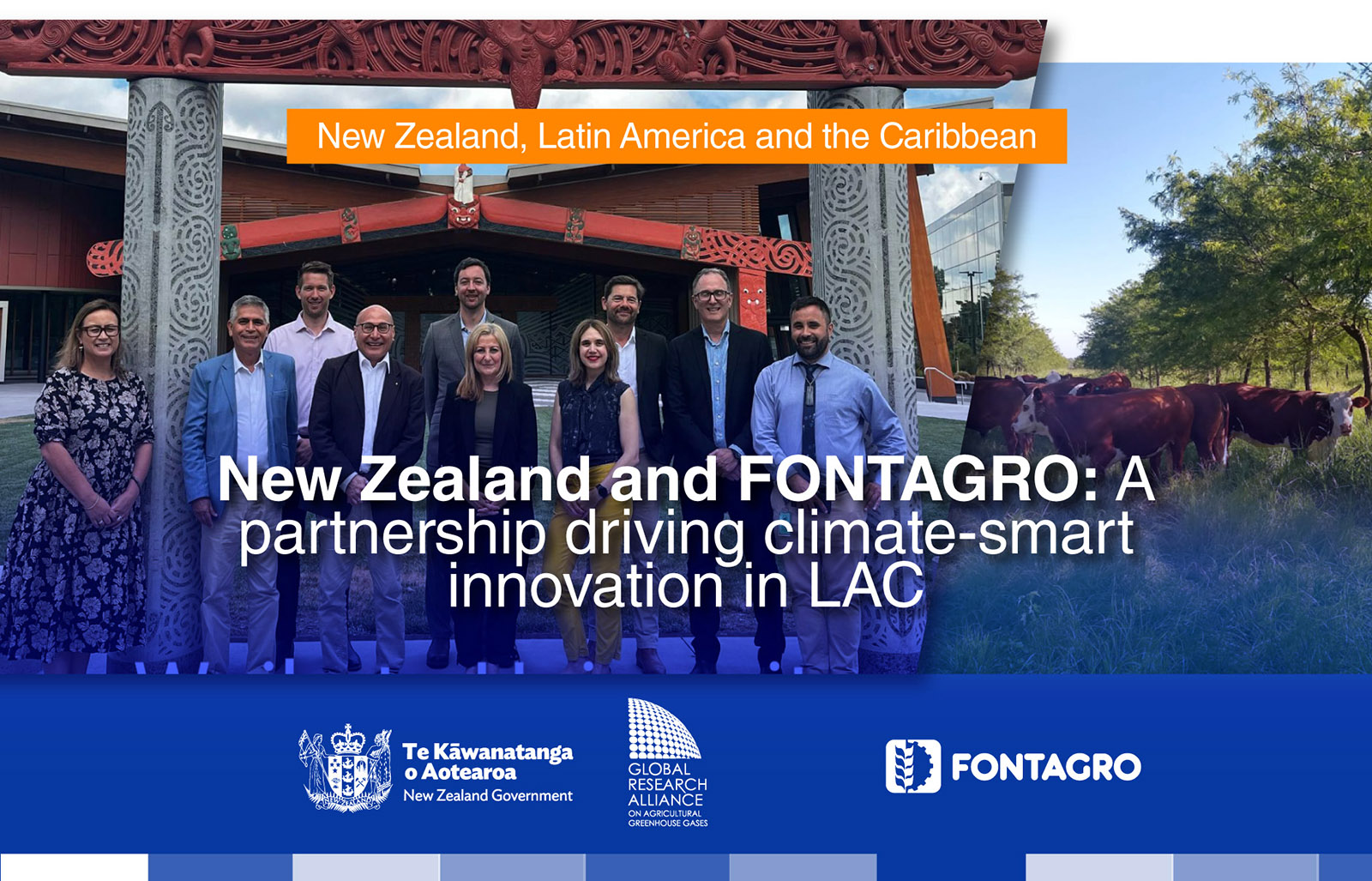
For more than 16 years, the Government of New Zealand and FONTAGRO have built a strategic partnership to advance agricultural innovation in Latin America and the Caribbean, establishing one of the region's strongest and longest-running international research collaborations. Through joint investment, knowledge sharing, and scientific cooperation, the partnership has driven progress in sustainable livestock systems, soil management, and climate-smart agriculture, innovations now applied across multiple countries to strengthen the productivity, resilience, and sustainability of agrifood systems. It has also helped build the capacity of national research systems and consolidate a broad regional cooperation network.
In recent years, this collaboration has entered a new phase through the Climate-Smart Agriculture Programme for Latin America and the Caribbean, which supports projects aimed at reducing greenhouse gas emissions and building resilience to climate variability. Carried out under the Global Research Alliance on Agricultural Greenhouse Gases (GRA), the programme is generating scientific evidence and solutions tailored to the region's tropical and subtropical production systems.
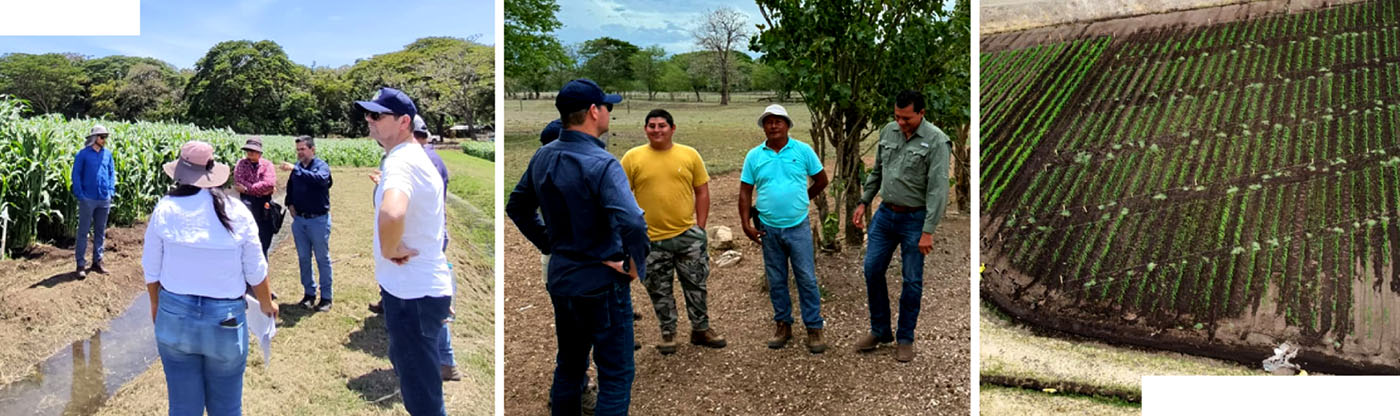
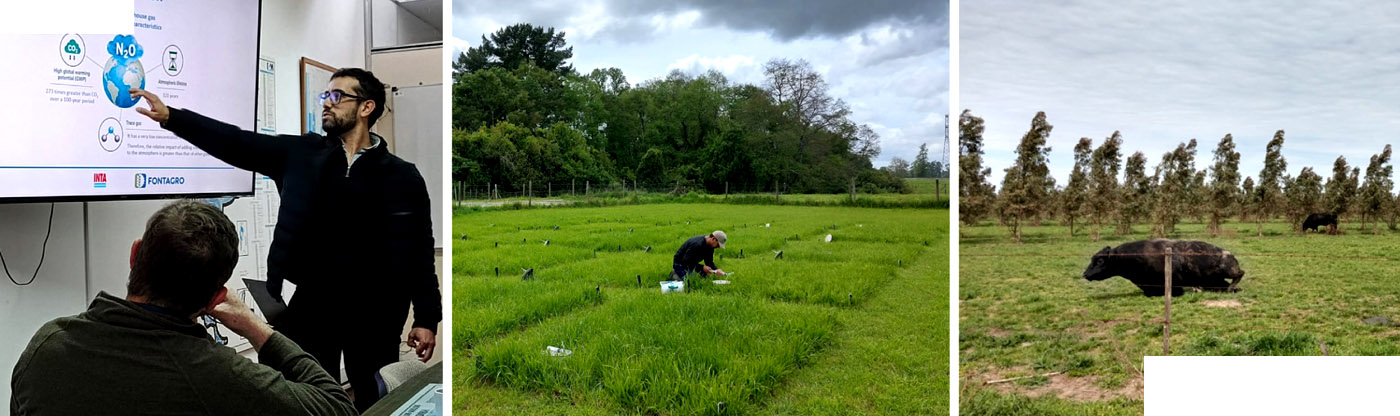
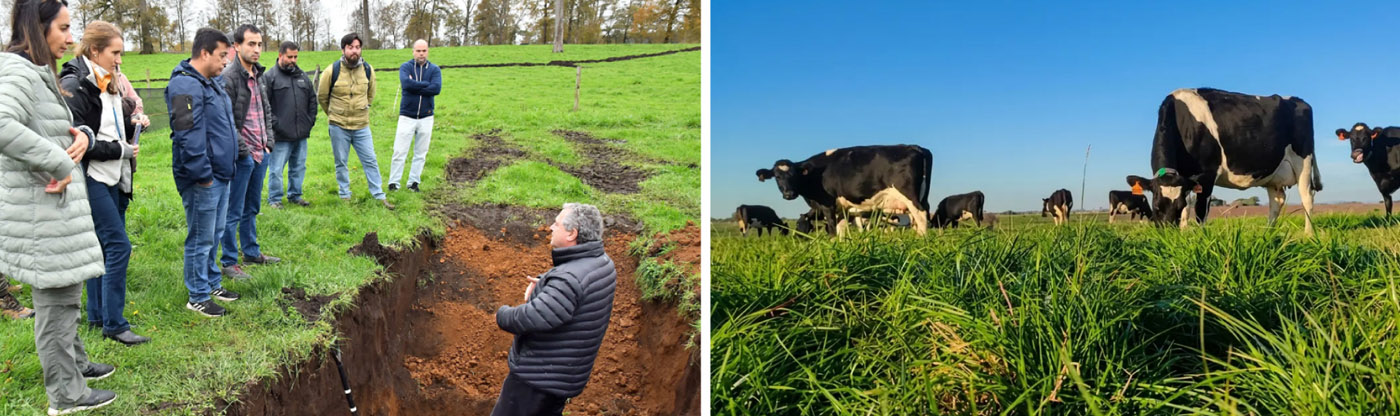
To see the progress firsthand, representatives of the Government of New Zealand made a technical tour of several projects funded through the partnership. The delegation included Lee Nelson, head of the Climate-Smart Agriculture Programme for Latin America and the Caribbean, and Nicolás Costa, head of research and policy for Latin America at the GRA.
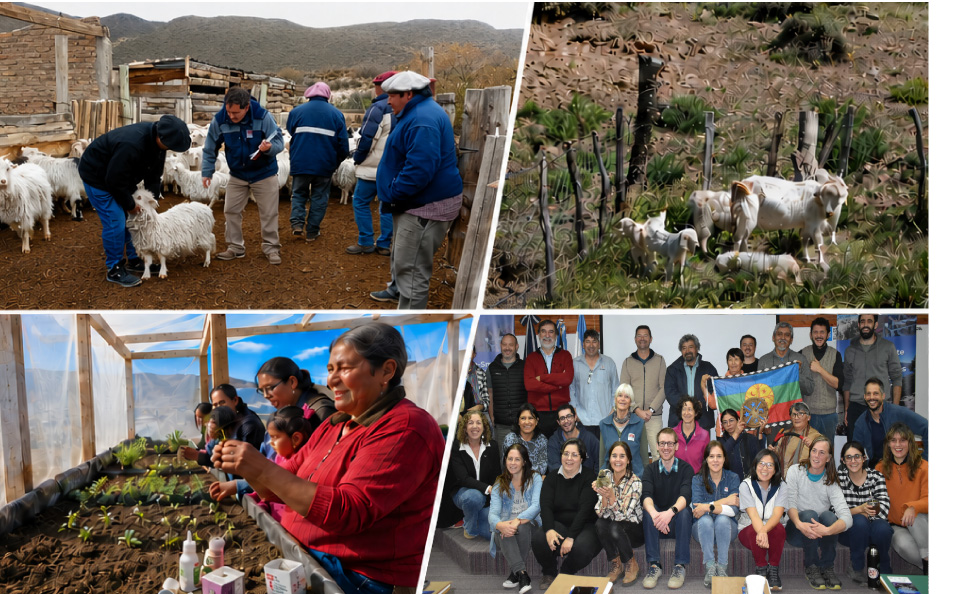
As part of the project “Climate-smart research and indigenous communities”, the delegation visited Indigenous communities in Patagonia alongside the INTA Bariloche team to review the progress of an initiative that promotes sustainability, territorial resilience, and food security by strengthening climate-smart livestock systems built through an intercultural, participatory approach.
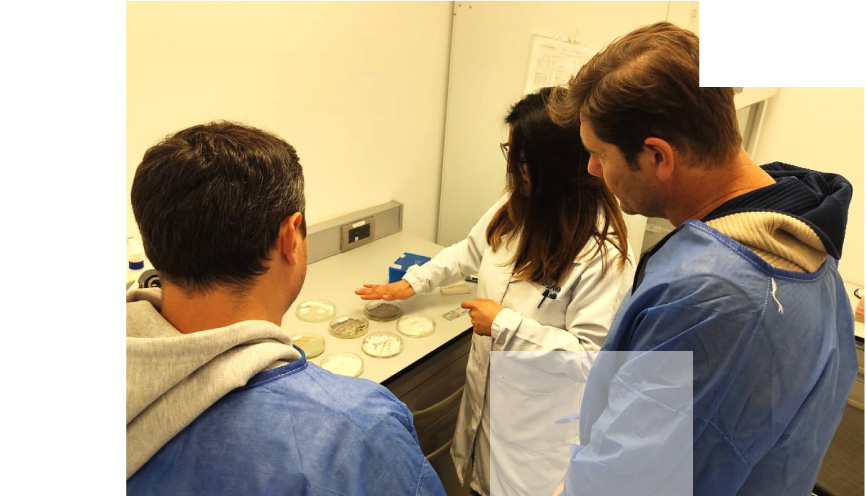
At AGROSAVIA's Tibaitatá and Nataima research centers, the delegation reviewed progress on the project “Leveraging biological products to build climate resilience”, an initiative that seeks to increase maize productivity and build its resilience to climate variability through the use of fungi and other beneficial microorganisms.
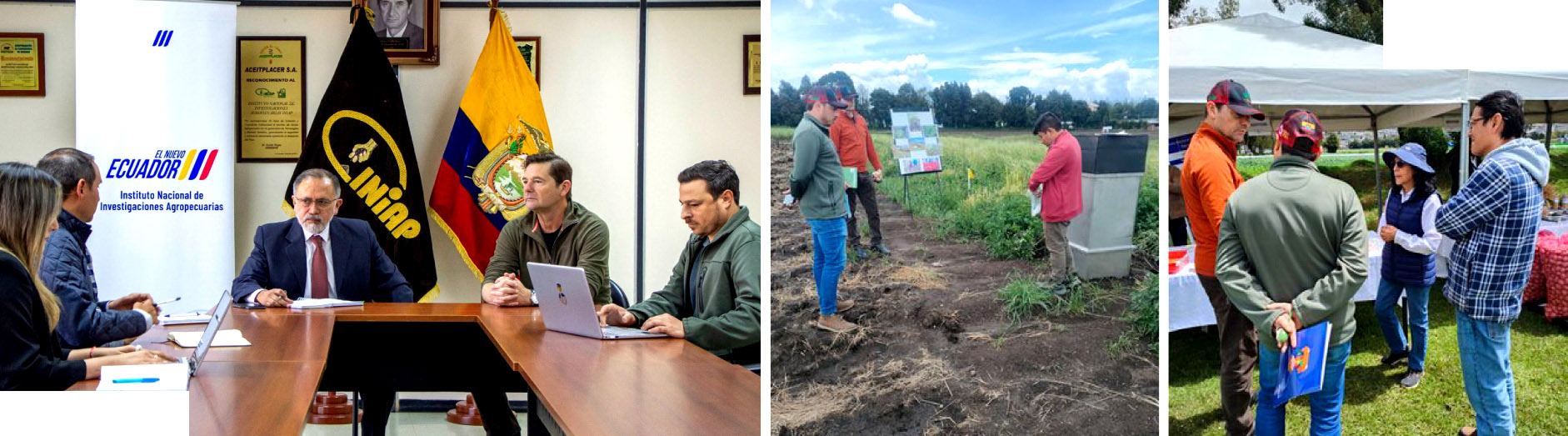
Ecuador's National Institute of Agricultural Research (INIAP) hosted the delegation to share progress on the project “Reducing greenhouse gas emissions in potato-pasture systems in Ecuador and Peru,” an initiative focused on developing strategies to cut greenhouse gas emissions and improve the sustainability of these production systems.
The tour continued with a review of the project “Integration of sorghum cultivation into production systems of Latin America,” an initiative aimed at strengthening the productivity, sustainability, and resilience of crop and livestock systems in the arid zones of Latin America and the Caribbean. Through knowledge generation, technology development, innovation, and collaborative work, the initiative seeks to reduce vulnerability to water-deficit events, increase productivity, and promote the sustainable intensification of agriculture.

 Impact
 Initiatives
 Dashboard
 Alliances
 Impact
 Initiatives
 Dashboard
 Alliances