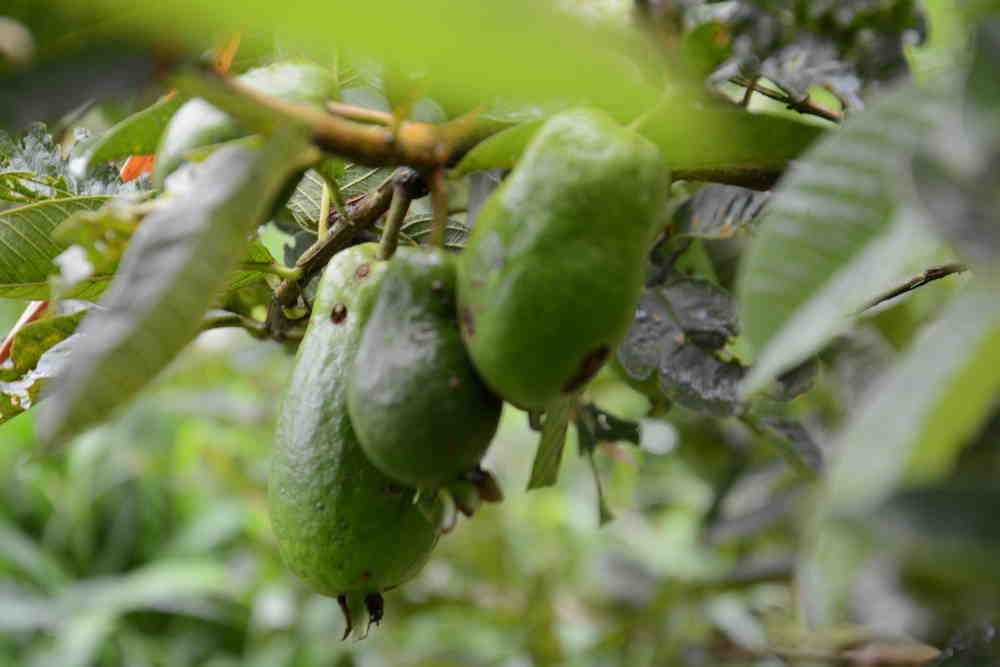
Guava is attacked by the weevil (Coleoptera: Curculionidae) causing damage to the fruits such as malformation, tissue necrosis, early ripening and premature fall. This affects both the yield and the quality of the fruit, preventing its commercialization in the market and causing a considerable volume of losses. The most important disease of this fruit is caused by a fungi (Pestalotia spp), which causes between 75 and 100% of the damage to the fruits. The lack of adequate management of these pests that involves timely cultural, biological and chemical strategies, has made some orchards unproductive and resulted in their total abandonment.
In the pre-harvest component, 12 research studies related to the recognition, behavior, levels of damage and control methods of insects and diseases, such as the fruit weevil, white speck, blossom end rot and pestalia, were carried out. In the postharvest, 7 research works were carried out regarding the treatment of fruits in postharvest with applications of calcium, waxes, packaging and storage to prolong the useful life of the guava, determination of optimal harvest states, physical-chemical characterization of promising materials and determination of industrial use. Four studies were carried out for the formulation and standardization of guava arequipe, guava sabajon, acidic guava gummies and dehydrated guava pieces. Also, within this objective, a pulp cooler prototype was designed and built.
Interdisciplinary research groups were formed among the countries with specialists in Integrated Pest Management, Physiology, Agroindustrial Processes, Chemical and Food Engineering. 15 university students from the schools of Agronomy, Biology, Agroindustrial Engineering and Chemistry, among others, were linked to the process, who carried out their graduate theses, thus forming an important group of young researchers. It is important to highlight the achievements made with the development of the project, the results of which are reflected in a series of recommendations that help to solve each of the problems raised. These generated technologies are adapted to the socioeconomic conditions of small producers and industrialists, are easy to apply, within the reach of their economy, and do not impact the environment.





 Agronomic Practices






 Impact
 Initiatives
 Dashboard
 Alliances
 Impact
 Initiatives
 Dashboard
 Alliances