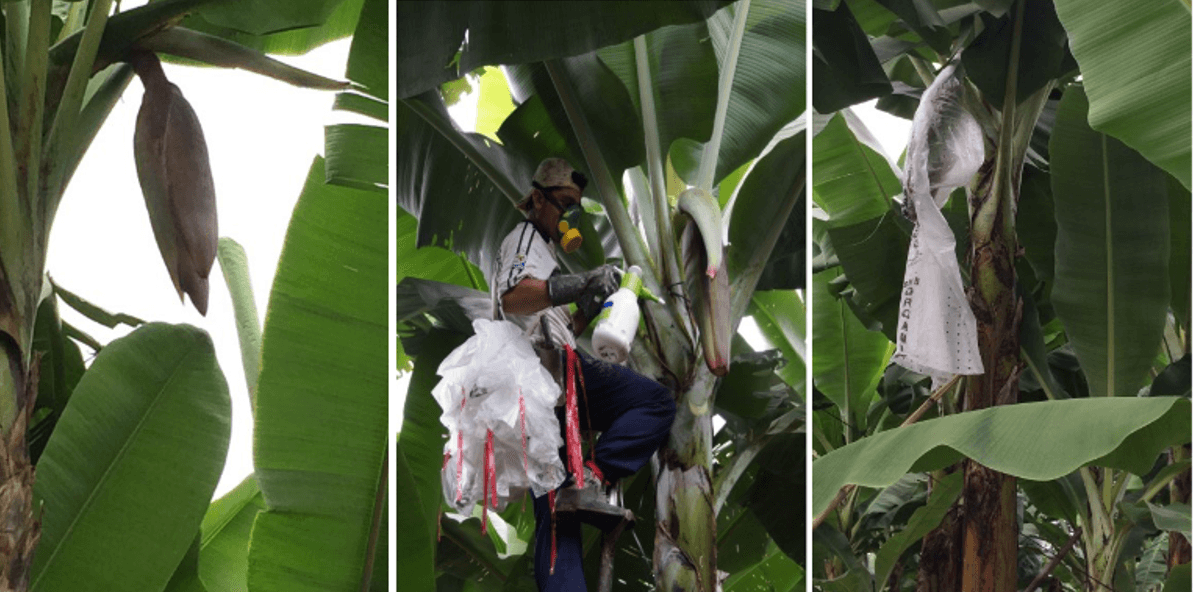
Plantain and banana are traditionally propagated by vegetative cloning, that is, by corms or suckers. This type of propagation allows the staggered multiplication of crops and the reuse of seed between one harvest and another, but the use of planting material affected by phytopathogens is the main source of disease spread. Among the most relevant are the vascular wilt or Moko of quarantine importance. The inappropriate use of the affected planting material has contributed to the spread of Moko in several countries of Latin America and the Caribbean, such as Mexico, Honduras, Ecuador, Venezuela, Guyana, Trinidad, and Colombia, where it has devastated up to 100% of areas cultivated with musaceae.
Development and use of technologies for the phytosanitary management of plantain, including thermal cameras for the production of hills and seedlings, identification of disease-resistant genotypes, development and use of leachates, biological controllers and low-cost bio-fertilizers that reduced the impact of agrochemicals on the environment, applying a participatory research scheme.
- 30% reduction in total management costs of black Sigatoka in Quindío
- 75% reduction in systemic fungicide costs for Sigatoka control
- Implementation of thermal chambers for plant propagation: 4 in Colombia, 2 in Venezuela, and 2 in Ecuador
- Moko-resistant genotypes: (1 plantain, 2 banana)
- Black Sigatoka-resistant genotypes: (4 plantain, 2 banana)
- Picudo-resistant genotype: (1 plantain)
- Development of leachates: Biofertilizer, biofungicide, and bactericide






 Value chain





 Impact
 Initiatives
 Dashboard
 Alliances
 Impact
 Initiatives
 Dashboard
 Alliances



.png&w=750&q=75)