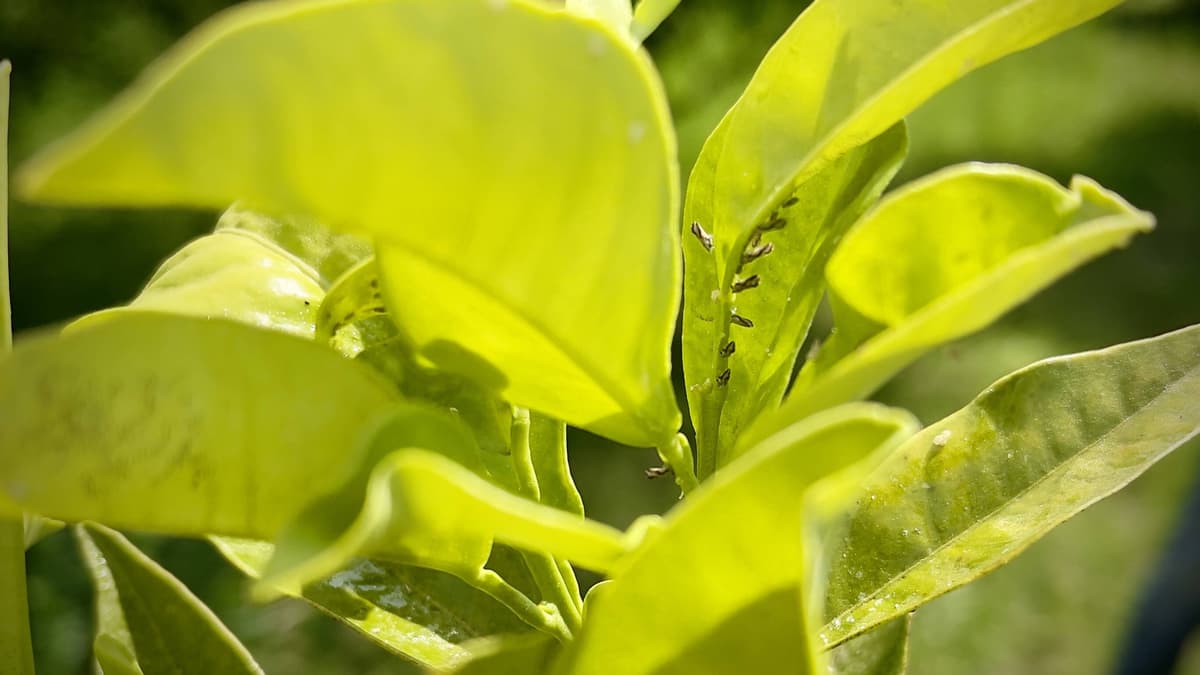
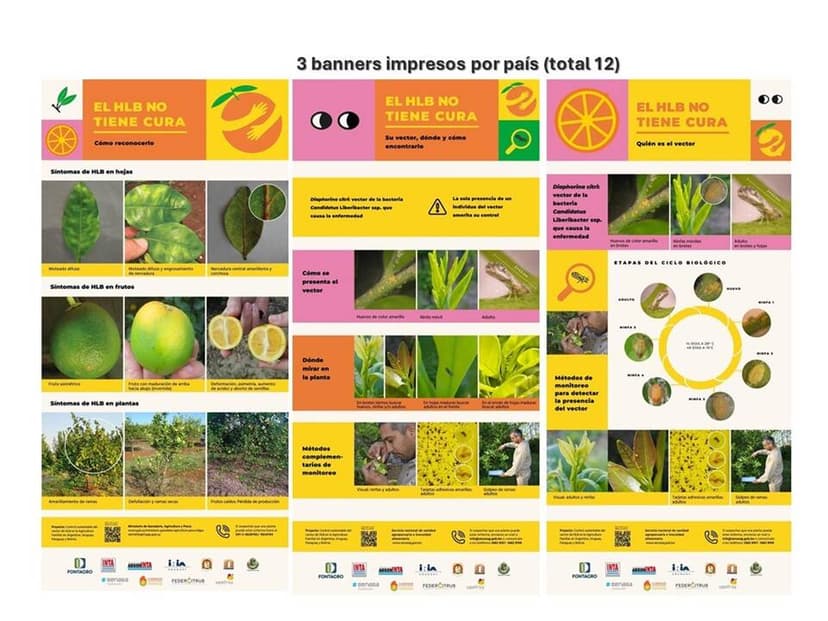
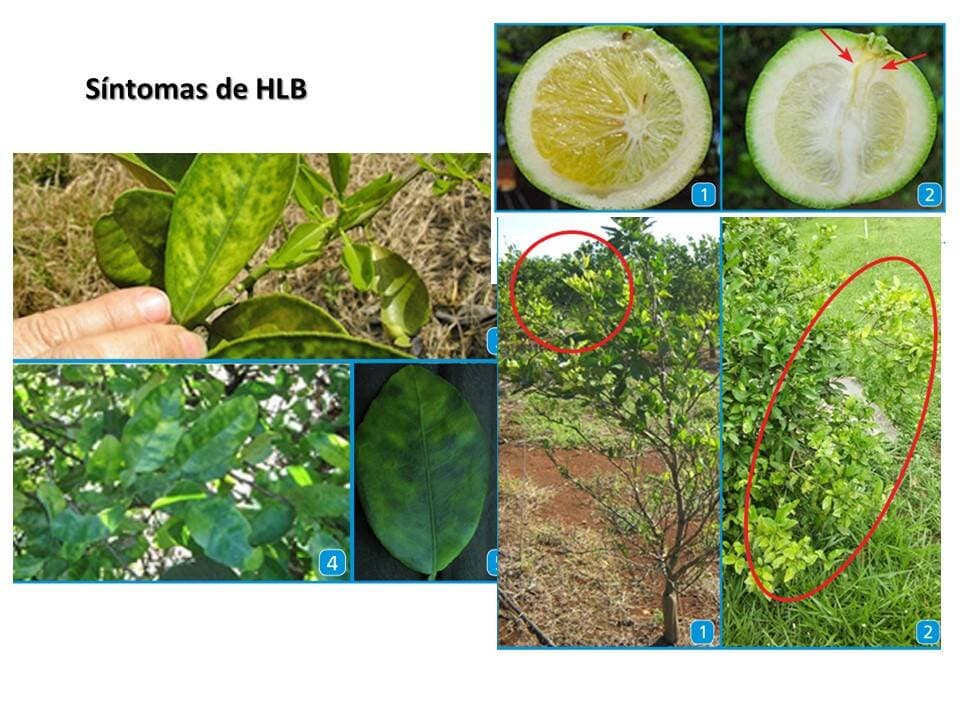
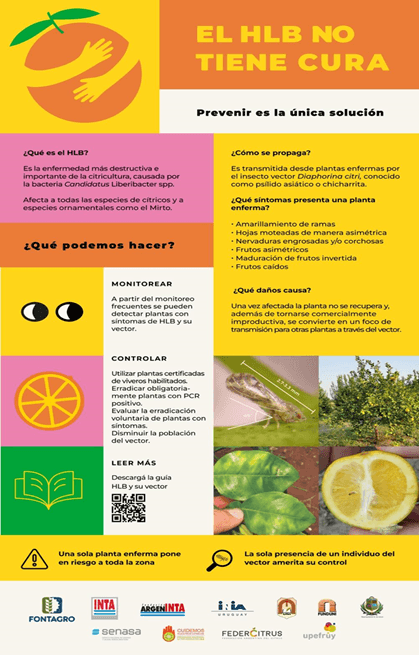
HLB (Huanglongbing)/citrus greening is the most destructive disease of citrus in the world, caused by a bacterium (Candidatus Liberibacter spp). It is transmitted by an insect vector (Diaphorina citri) or through already-infected plants. There is currently no cure. Prevention relies on the use of healthy material, constant crop and vector monitoring, vector control, and early elimination of infected plants. At present, vector and crop control is scarce and, when carried out, phytosanitary applications on a fixed-calendar basis prevail, mostly using products with higher toxicity levels and without prior monitoring.
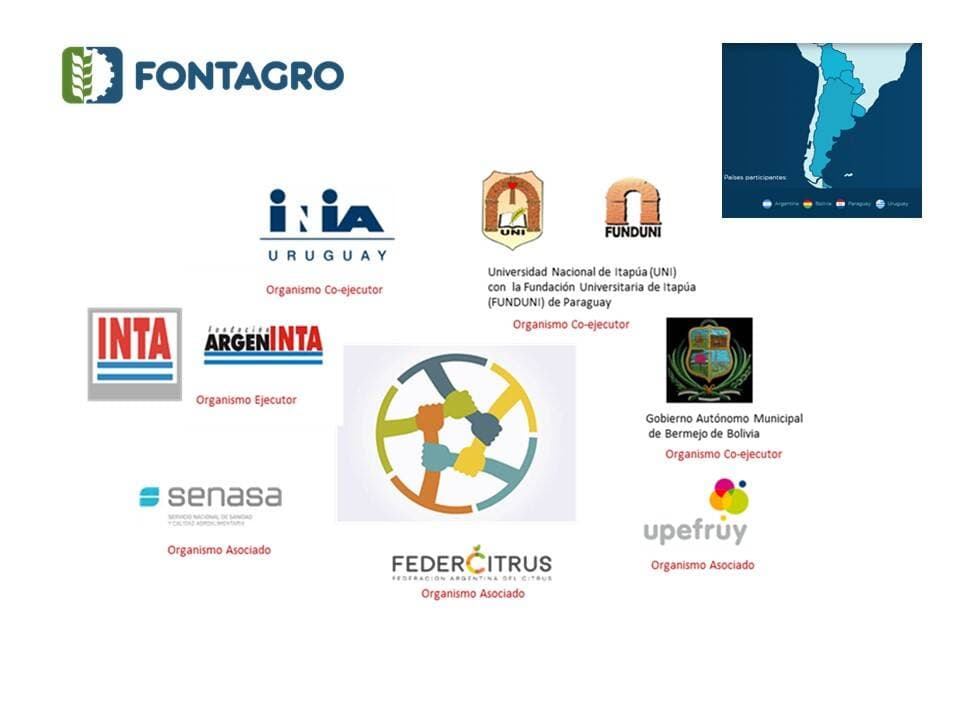
The insect vector is present in all four countries of the project platform, with the disease first detected in 2012 in Argentina, 2013 in Paraguay and in 2022 in Uruguay.
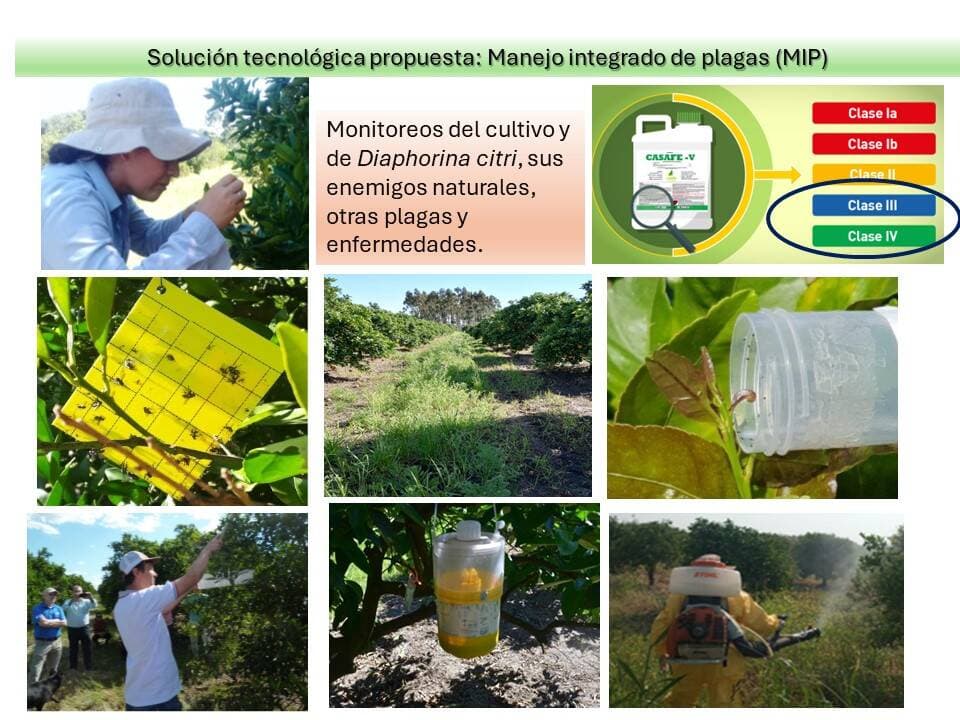
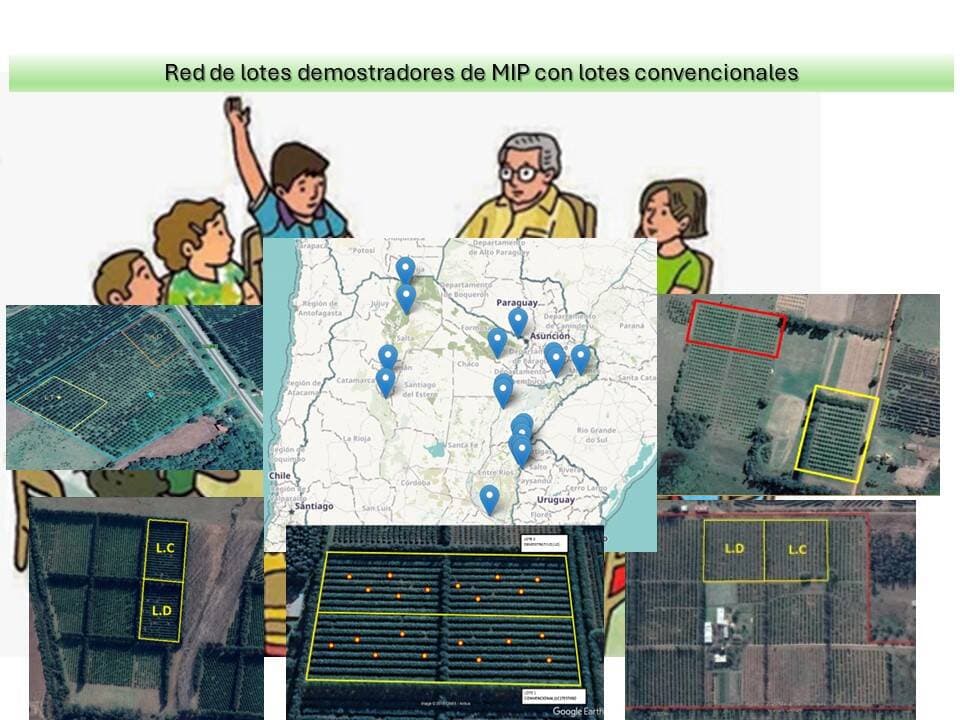
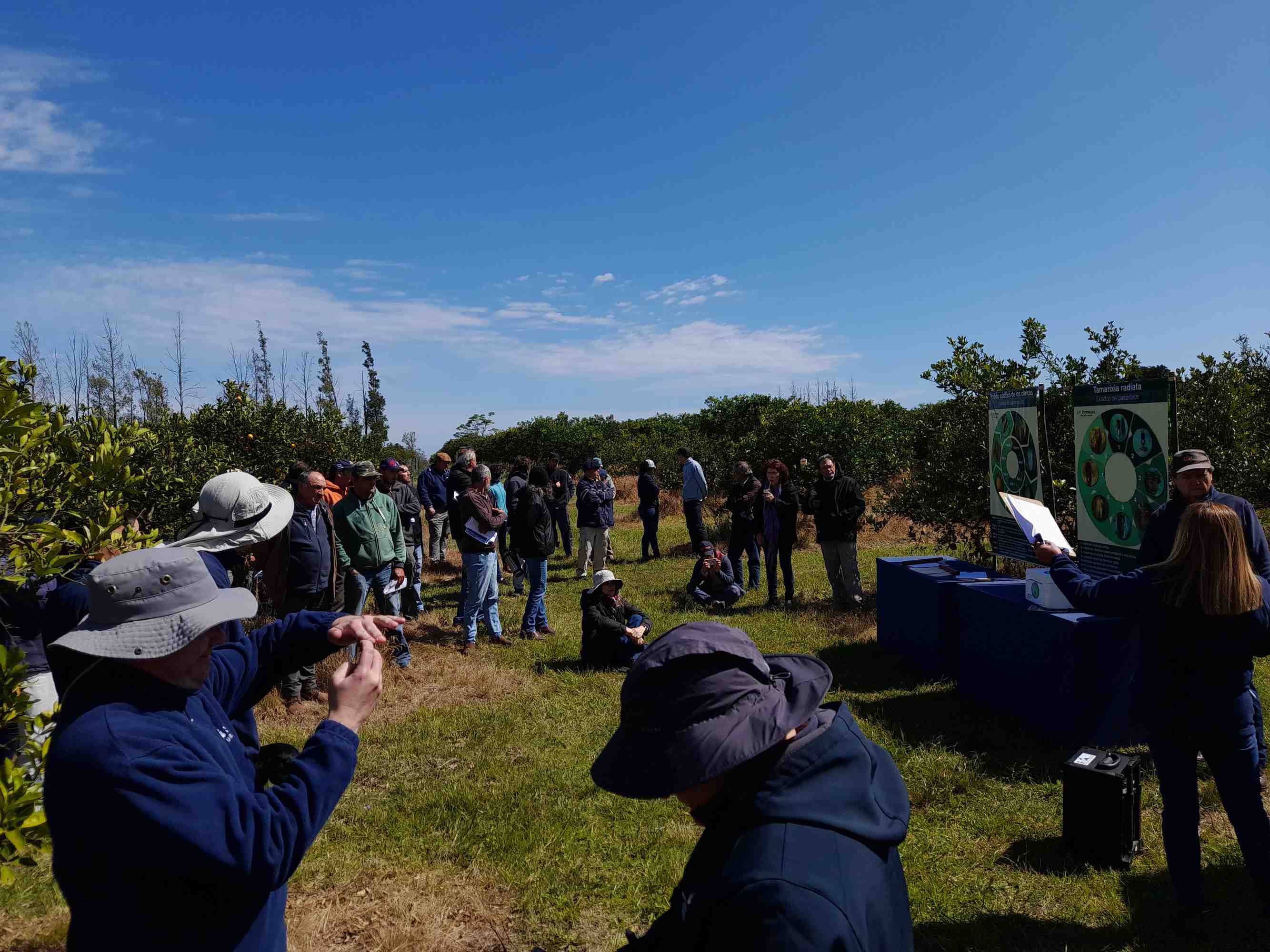
IPM is based on systematic monitoring of the HLB vector (Diaphorina citri), natural enemies (Tamarixia radiata, etc.), plants with HLB symptoms, phenological monitoring and monitoring of other relevant diseases and pests. A network of IPM demonstrator plots (DP) and conventional plots (CP), also monitored but with regular management by the grower, was established.
Based on the monitoring, control actions were implemented in the DPs - biological, cultural, ethological and low-impact chemical methods. An alert system was activated for producers via cell phone and e-mail with free access to the BioTic INTA-FONTAGRO HLB web portal, along with the development of a prototype of a mobile app for uploading monitoring data.
The impact of IPM was evaluated in terms of sustainability, fruit quality at harvest and economic analysis.
A virtual and face-to-face training course for pest monitors with certification was technologically and pedagogically designed and a comprehensive communication strategy was implemented. Scaling was applied with a collective innovation management approach.
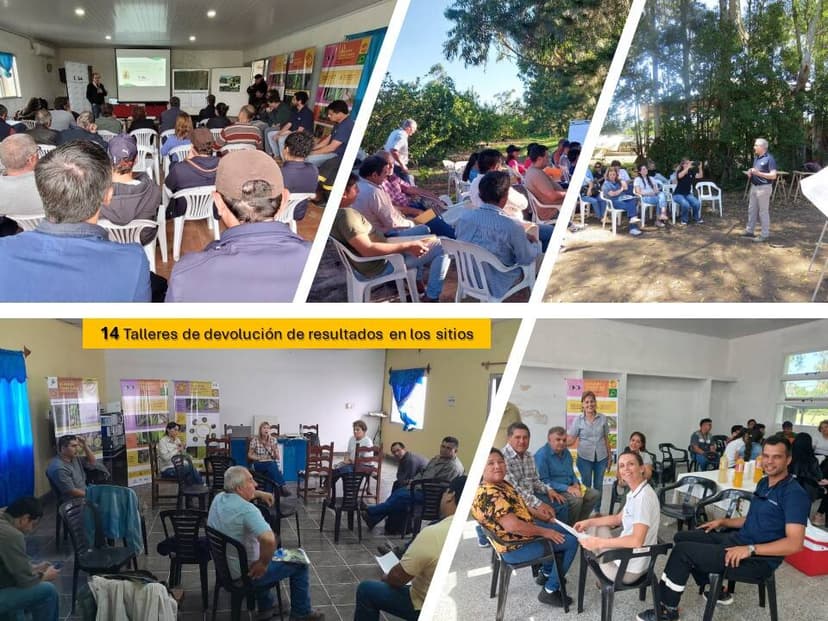
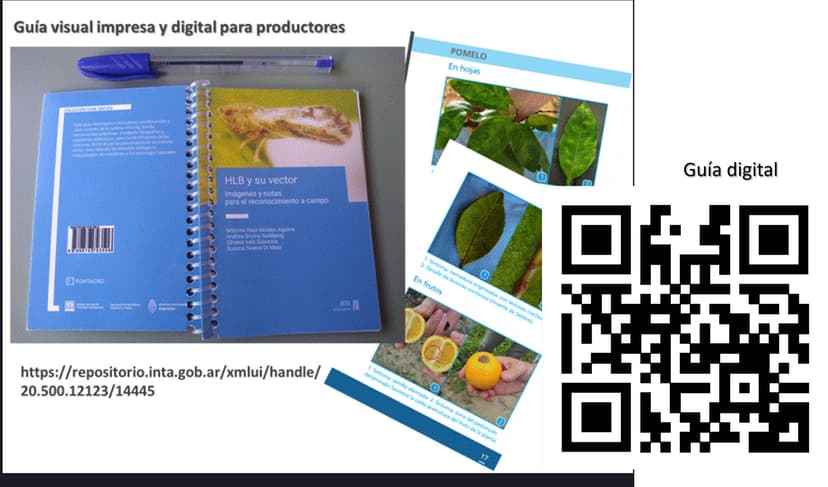
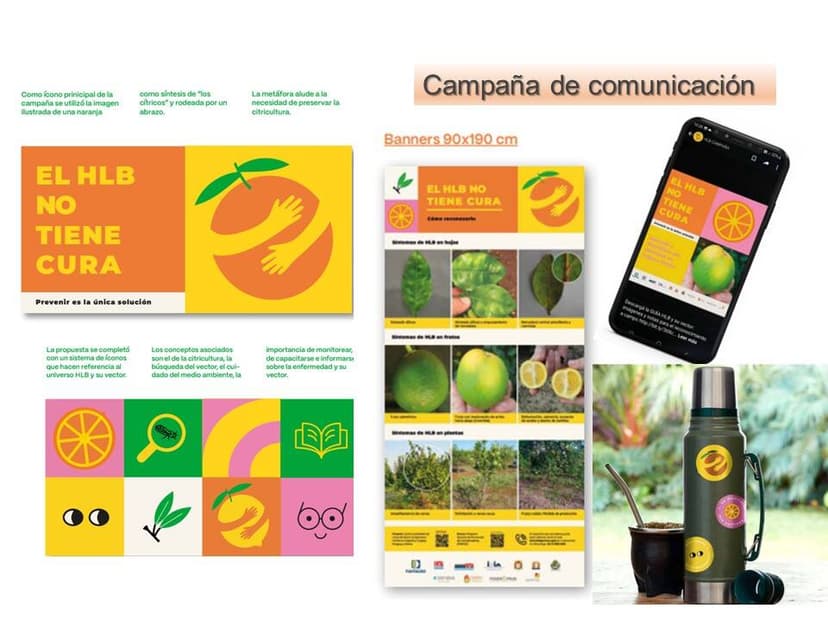
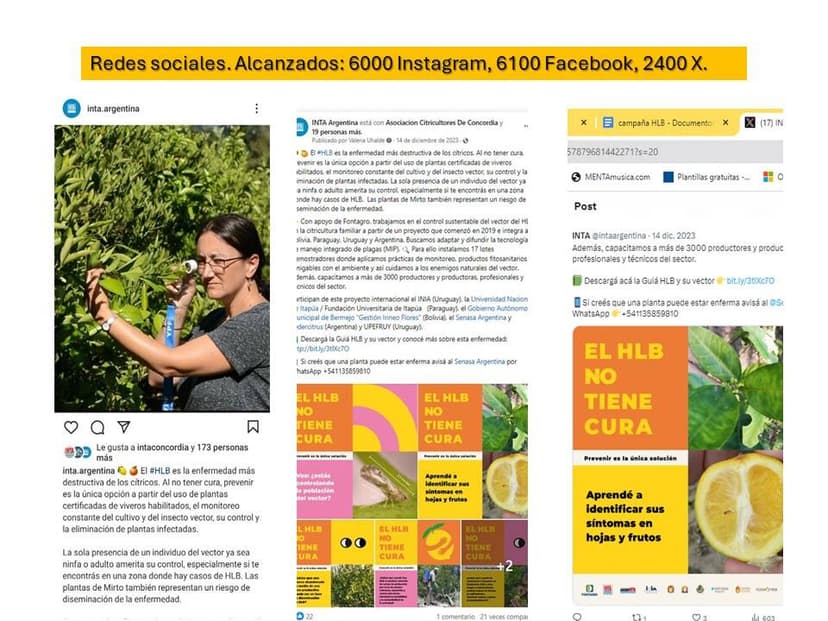
Monitoring results in the DP (IPM) versus the CP show decreases of the HLB vector between 60-99% in 3 sites and an increase of natural enemies from 17% to 332% in 11 sites. The average environmental impact index in the evaluated DP was positive. The improvement in fruit quality was evidenced by lower incidence of diseases and/or reduced pest pressure. The economic analysis shows that direct IPM costs increased, with higher gross margins in some DP from the second or third season onwards. The following were designed and implemented: 3 editions of a virtual/on-site course for pest monitors on the INTA PROCADIS Web platform; an alert system with access to the BioTic INTA-FONTAGRO HLB web platform; a prototype app for recording monitoring data; and a graphic and digital communication campaign for the prevention and management of the HLB vector. Other results include participatory workshops, training, and publishing 2 manuals. More than 22,900 people were reached.





 Agronomic Practices














 Impact
 Initiatives
 Dashboard
 Alliances
 Impact
 Initiatives
 Dashboard
 Alliances