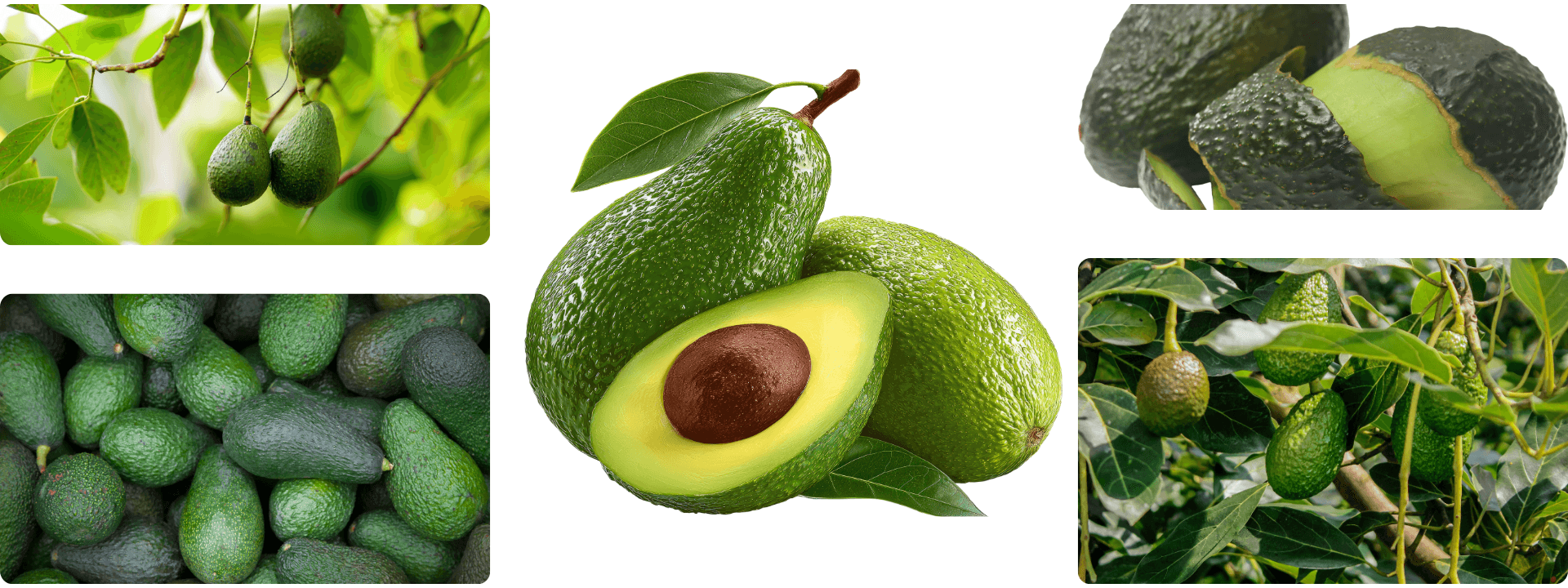
A regional platform bringing together Peru, Ecuador, Colombia, and Bolivia to quantify cadmium in Hass avocado and develop strategies that protect exports and consumer health.

Avocado is one of the most dynamic agro-export products in the Andean region. Peru, the world’s second-largest exporter in 2024 with revenues of US$ 1.25 billion, and Colombia and Ecuador have shown sustained growth. However, since 2021, the European Union has detected shipments of Peruvian avocado with cadmium (Cd) levels above the 0.05 ppm limit established by Regulation (EU) 2023/915. Cadmium, a heavy metal of both geogenic and anthropogenic origin, accumulates in the fruit, putting human health and access to international markets at risk. The lack of a regional baseline, standardized methodologies, and coordinated management strategies among countries prevents an effective technical response to this shared threat.
Andean Regional Platform for Cadmium Management in Avocado Cultivation: Quantification, Mitigation Strategies, and Knowledge Management
The initiative establishes a collaborative research platform among the national agricultural innovation institutes of Peru (INIA), Ecuador (INIAP), Colombia (AGROSAVIA), and Bolivia (INIAF), with IICA as the executing agency and FONTAGRO funding. Over 36 months, the partners will standardize sampling methodologies, build a regional baseline of cadmium in soil, leaves, fruits, water, and fertilizers, evaluate low-accumulation rootstocks, implement bioaccumulation trials in the field and laboratory, and formulate management strategies. The knowledge generated will be transferred to 2,000 producers and 200 extension agents through workshops, guidelines, and scientific articles, strengthening the safety and competitiveness of Andean avocado.

SIDMCA brings together three complementary innovations. First, a harmonized protocol for cadmium sampling and analysis in soil (total and bioavailable), leaves, fruits, irrigation water, and fertilizers, validated in 50 plots across four countries under diverse soil and climatic conditions, generating a comparable and traceable regional baseline. Second, a set of management tools: evaluation of 24 avocado rootstocks in pots with Cd-enriched soil to identify rootstock–scion combinations with low accumulation; factorial field trials with soil amendments and balanced fertilization over two growing seasons; and laboratory kinetic adsorption trials that model Cd immobilization through amendments with high cation exchange capacity. Third, a knowledge management system including dissemination materials, good practice manuals, and training for lead instructors, all supported by scientific publications and a regional network of laboratories and certified technical specialists.
"“The cadmium content in soil is the main predictor of Cd concentration in the fruit, with local geology being the most determining factor in Andean areas.”"— Thomas, B. et al. (2023)
 Agronomic PracticesResilient Crops and Carbon Neutrality (“PI-1”)AppliedTechnologicalCropsAgriculture
As expected results, the project will generate a regional baseline on the presence of cadmium in the avocado production system, supported by the analysis of more than 250 samples of soil, leaves, fruits, water, and fertilizers collected from 50 representative plots in Peru, Ecuador, Colombia, and Bolivia. This process will make it possible to establish a consensual protocol and standardized technical notes for sampling and laboratory analysis applicable throughout the Andean region, thereby strengthening the comparability, reliability, and traceability of the information. It is also expected to identify at least 24 avocado rootstocks with lower cadmium bioaccumulation capacity in leaves and fruits under controlled conditions, as well as to generate experimental evidence on the effect of soil amendments and balanced fertilization schemes in reducing cadmium availability in soil and its accumulation in fruit on pilot farms. In addition, kinetic models of cadmium adsorption will be developed to support the selection of effective amendments and to provide the scientific basis for formulating a validated proposal of strategies and good agronomic practices for mitigating this contaminant in the crop.








Sede Central

Perú

Ecuador
Colombia
Bolivia


 Impact
 Initiatives
 Dashboard
 Alliances
 Impact
 Initiatives
 Dashboard
 Alliances