The Dominican Republic and the IDB agreed to execute an Agroforestry Development Program (ADP) in rural communities of seven watersheds, aimed at (i) increasing food security, income and productivity through forestry, agroforestry and silvo-pastoral technologies; (ii) increase forest cover; (iii) strengthen the management capacity of peasant organizations; and (iv) increase resilience to climate change. The IDB required a consultancy to evaluate the technologies proposed by the ADP and propose sustainable and resilient agroforestry alternatives as a reference for a new ADP.
The consultants evaluated the technological packages proposed by the ADP and suggested potentially sustainable and resilient agroforestry alternatives to cope with climate change. Expert knowledge was applied to the analysis of the local socio-ecological, agricultural, socio-economic and environmental context, which was supported by interviews with farmers and local actors. A database was analyzed, field visits were carried out and a comparative analysis between field observations and documentary information was conducted. While the original ADP suggests simplifying current agroforestry systems, based on coffee and home gardens, along with a reduction in cultivated biodiversity and introducing intensive monoculture of avocado, cocoa and mango with greater input use, the consultancy proposes five diversified agroforestry options, based on coffee, cocoa and avocado, which would allow a sustainable transition between current systems and the intensive model proposed by the initial PDA.
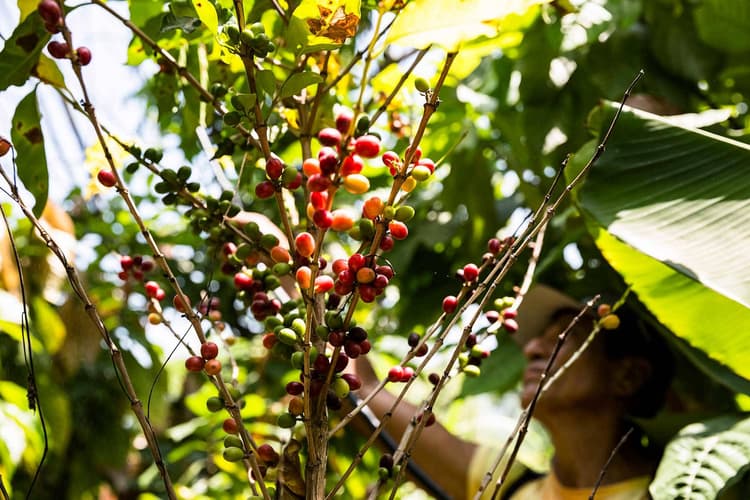
The study proposes five agroforestry packages: simple coffee, complex coffee, simple cacao, complex cacao and avocado, differentiated by varieties, planting density and associated crops. Its implementation requires making a typology of producers by sub-basin, zoning of climates and soils, carrying out a transitional transfer and an environmental and agricultural integration, and designing a marketing and monitoring strategy. The impact will occur in the future in the project areas after its execution. The area to be intervened is 21759 ha within 10 years. The beneficiaries will be the rural communities of the seven river basins considered in the proposal.





 Capacity Building







 Impact
 Initiatives
 Dashboard
 Alliances
 Impact
 Initiatives
 Dashboard
 Alliances







.jpg&w=750&q=75)