In the coming decades, the demand for food will substantially increase, which will require increasing agricultural production in a sustainable manner, without affecting other environmental services. However, climate change and the frequent occurrence of extreme events are affecting productivity, which requires technological innovation, supported by enabling policies, to reduce farm vulnerability and promote adaptation and mitigation of greenhouse gas emissions.
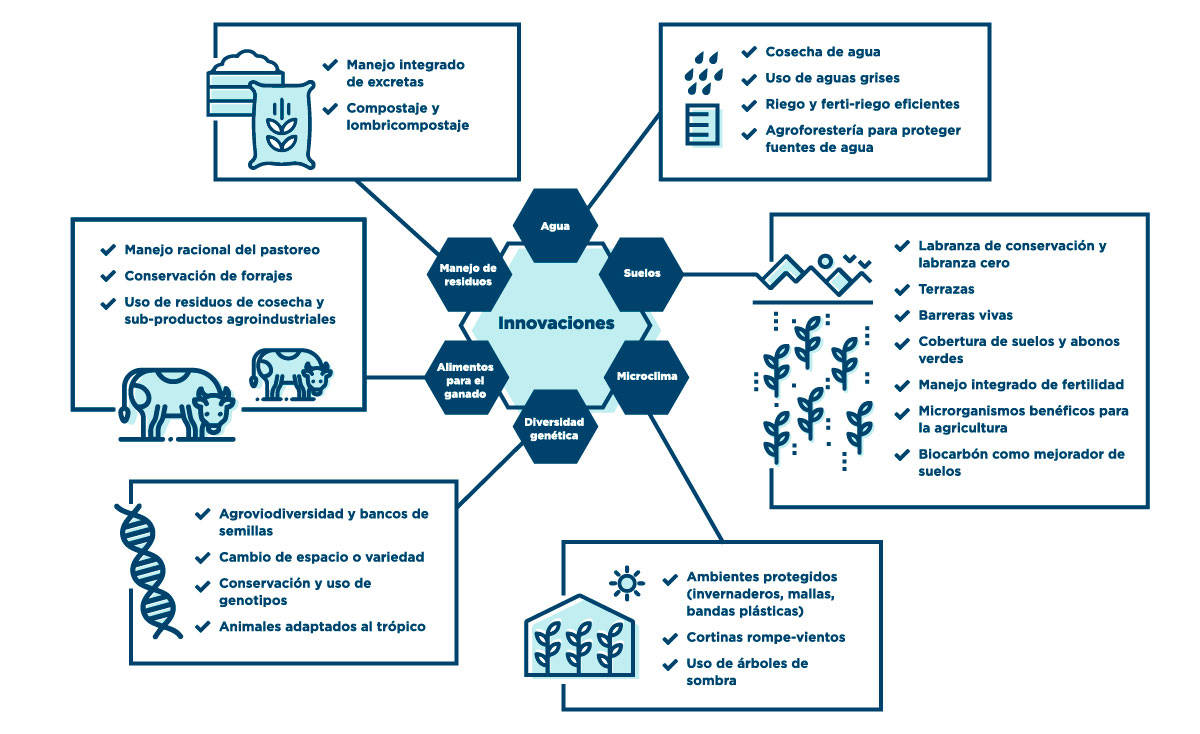
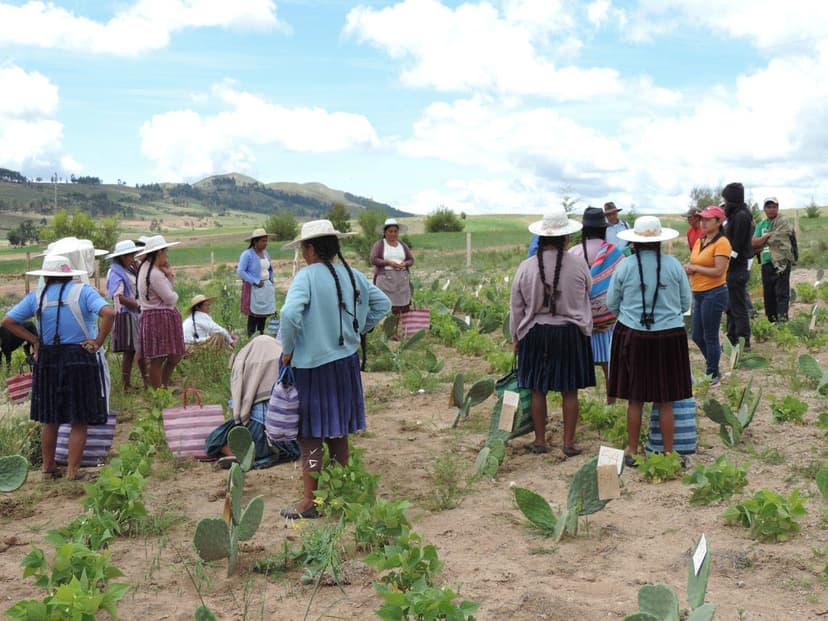
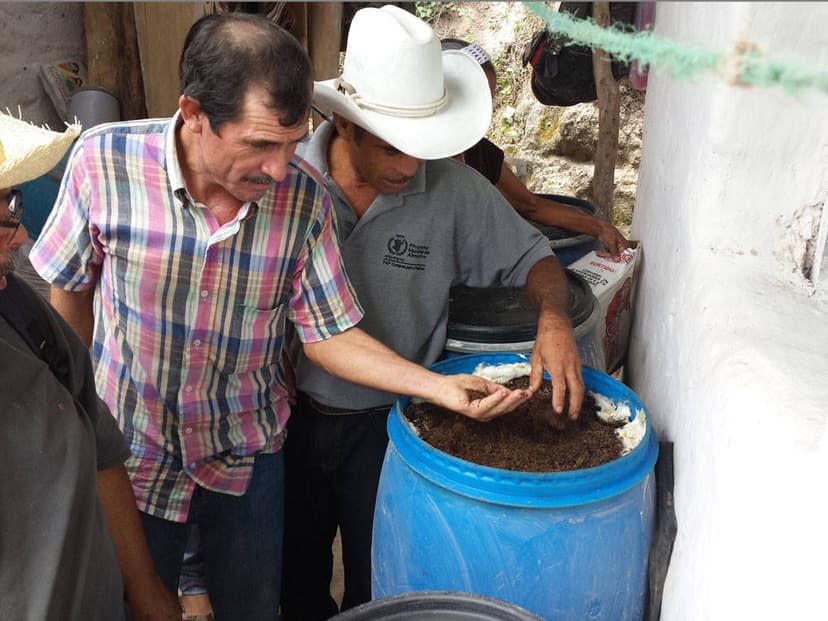
Food demand and agricultural production in LAC was analyzed under different climate change scenarios, and adaptation strategies are proposed. The probable territorial adaptation of 22 crops to the climatic scenarios was estimated. Thirty-five experts from the region participated through two virtual consultations that identified 23 innovations aimed at improving water capture and use, soil conservation and fertility, the appropriate use of genetic diversity and the rational management of feed resources for livestock and of excreta and crop residues. The agro-ecological zones where they have the greatest application potential, how they contribute to reducing vulnerability, the requirements for their adoption and the expected benefits are indicated. The enabling conditions of the changes leading to resilient production are pointed out and the reengineering of the research and extension systems is proposed, acknowledging the differences between countries.
The future food demand, the probable future climate scenarios, their effects on agriculture, and the adaptation territories of different crops are summarized. Technological and institutional innovations to reduce vulnerability and promote adaptation to climate change are described. The enabling conditions of the changes towards a resilient agriculture are identified, including the reengineering of the research systems and the political framework. It is suggested that regional integration organizations endorse the proposed innovations and apply them in research and development programs and projects funded in the region and in strengthening national research institutions.
Innovations for adaptation to climate change




 Capacity Building







 Impact
 Initiatives
 Dashboard
 Alliances
 Impact
 Initiatives
 Dashboard
 Alliances












.jpg&w=750&q=75)