



 Impact
 Initiatives
 Dashboard
 Alliances

 Impact
 Initiatives
 Dashboard
 Alliances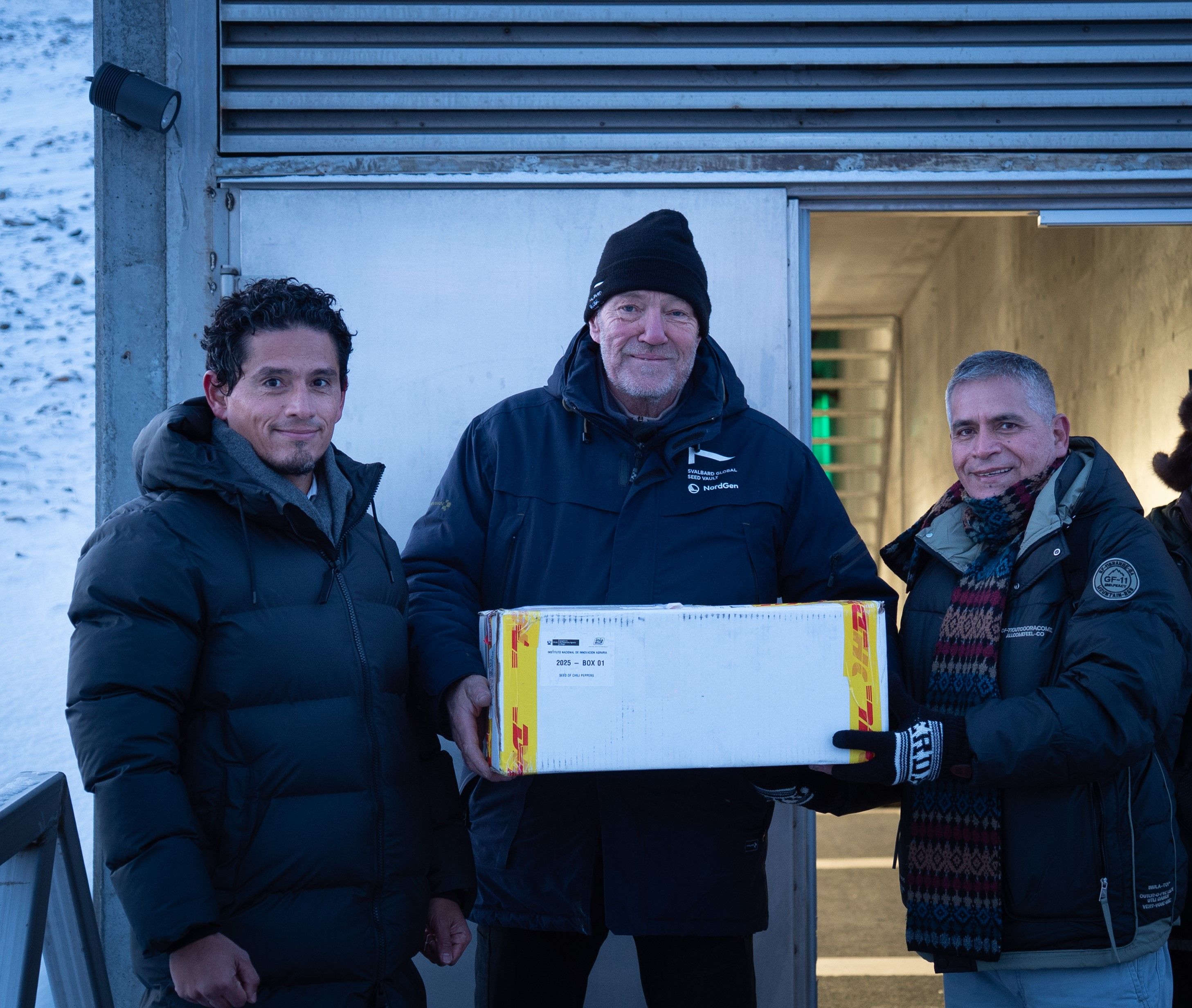
For the first time, Peru has sent native chili seeds to the Svalbard Global Seed Vault in Norway, to preserve Peruvian chili against natural disasters and global crises.
In a significant step toward the conservation of agrobiodiversity, Jorge Ganoza Roncal, President of FONTAGRO and Executive President of the National Institute of Agricultural Innovation (INIA) of Peru, arrived in Norway to strengthen international cooperation in the preservation of phylogenetic resources.
During his stay, Ganoza Roncal participated in a seed deposition ceremony at the famous Svalbard Global Seed Vault, where INIA – Peru contributed 25 accessions of native chilies belonging to four species of the Capsicum genus. This act highlights the importance of chili as a symbol of life and Peruvian culture, as well as its value in the context of global food security.
“Chili, from a research perspective, represents a genetic resource of great value due to its tolerance to extreme conditions, its wide variability, and its natural compounds that determine flavor, color, and aroma. These qualities are essential for both the genetic improvement of new varieties and for Peruvian gastronomy, which has made chili a symbol of creativity and national pride. Protecting our seeds means protecting life, identity, and the future of food," declared Ganoza Roncal during the ceremony.

This event not only represents a commitment to biodiversity conservation but also recognizes the fundamental role that agricultural communities in Latin America and the Caribbean play in preserving genetic heritage. This is exemplified by the Germplasm Bank of INIA – Peru, recognized by the FAO as one of the most diverse collections on the planet, which conserves more than 17,000 seeds from 56 different crops across 21 Agricultural Experimental Stations, including:
• 11 of the world’s 13 tomato species.
• 1,300 vareties of quinoa, 388 of kiwicha, 253 of cañihua, 1,000 of tarwi.
• Native fruit trees, cacao, colored cotton, and Andean roots.
In his speech, Ganoza Roncal also emphasized Peru's efforts to align its initiatives with the International Treaty on Plant Genetic Resources for Food and Agriculture (ITPGRFA), highlighting collaborative work among countries to ensure responsible access and equitable distribution of the benefits arising from the use of agrobiodiversity—a common goal shared with FONTAGRO.
"The agrobiodiversity we conserve does not belong to a single nation; it is a global heritage," he concluded, reaffirming the importance of international collaboration in the protection of vital resources.
The FONTAGRO Board of Directors extends its heartfelt congratulations to all members of the National Institute of Agricultural Innovation (INIA – Peru) for this historic act and for their tireless efforts. Their dedication and commitment to research and innovation have been fundamental in promoting the conservation of agrobiodiversity, decisively contributing to the well-being of agricultural communities and global food security.