



 Impact
 Initiatives
 Dashboard
 Alliances

 Impact
 Initiatives
 Dashboard
 Alliances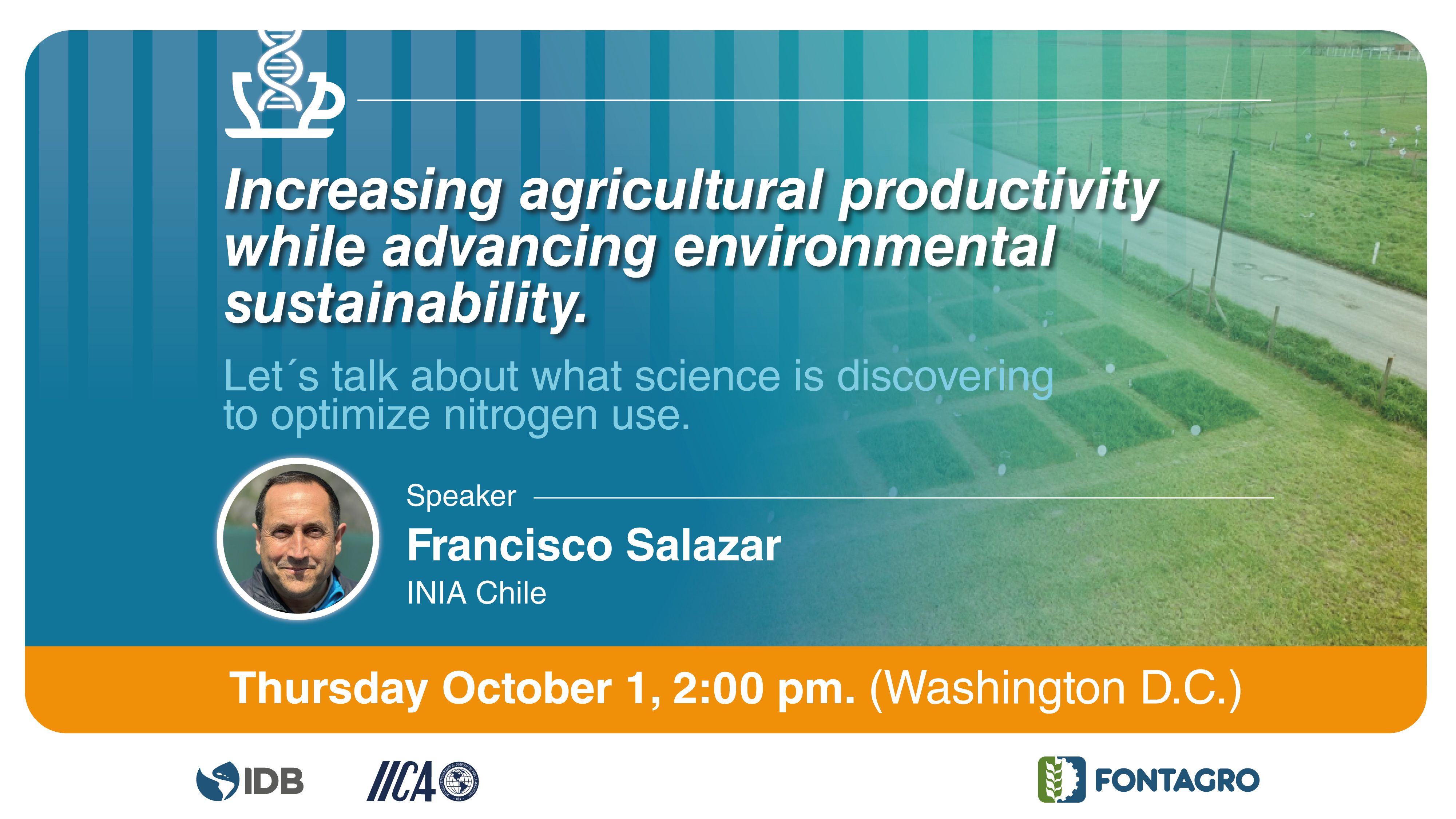
FONTAGRO devoted a new edition of its Science Café to efficient nitrogen management. Francisco Salazar, a researcher at the Agricultural Research Institute (INIA) Chile and leader of the project “Optimizing the use of nitrogen, higher production and lower impact (N4Rs),” shared the progress INIA has made in this area.
Salazar noted that food production has grown significantly over the past 20 years in response to population growth. This trend has been especially important in the Americas, given the region’s high agricultural potential. However, sustaining and building on that productivity depends on the effects of climate variability and on the strategies used to cope with it.
In that context, Salazar highlighted the 4R nitrogen stewardship approach (N4Rs): applying the right source, at the right rate, at the right time, and in the right place. Adopting farming practices based on this approach is a key adaptation and mitigation strategy, because it makes nitrogen use more efficient and reduces losses to the environment, including emissions of nitrous oxide, a potent greenhouse gas.
The project he leads measures nitrous oxide production and emissions in the field to develop site-specific emission factors. To do so, it evaluates different nitrogen sources, application rates, and timing, as well as mitigation strategies. With this evidence, the project aims to develop best-practice recommendations that improve nitrogen use efficiency and reduce environmental losses.
This regional initiative is implemented by INIA (Chile) in collaboration with the National Agrarian University La Molina (Peru), IDIAF (Dominican Republic), IDIAP (Panama), and INTA (Argentina).