 Impact
 Initiatives
 Dashboard
 Alliances

 Impact
 Initiatives
 Dashboard
 Alliances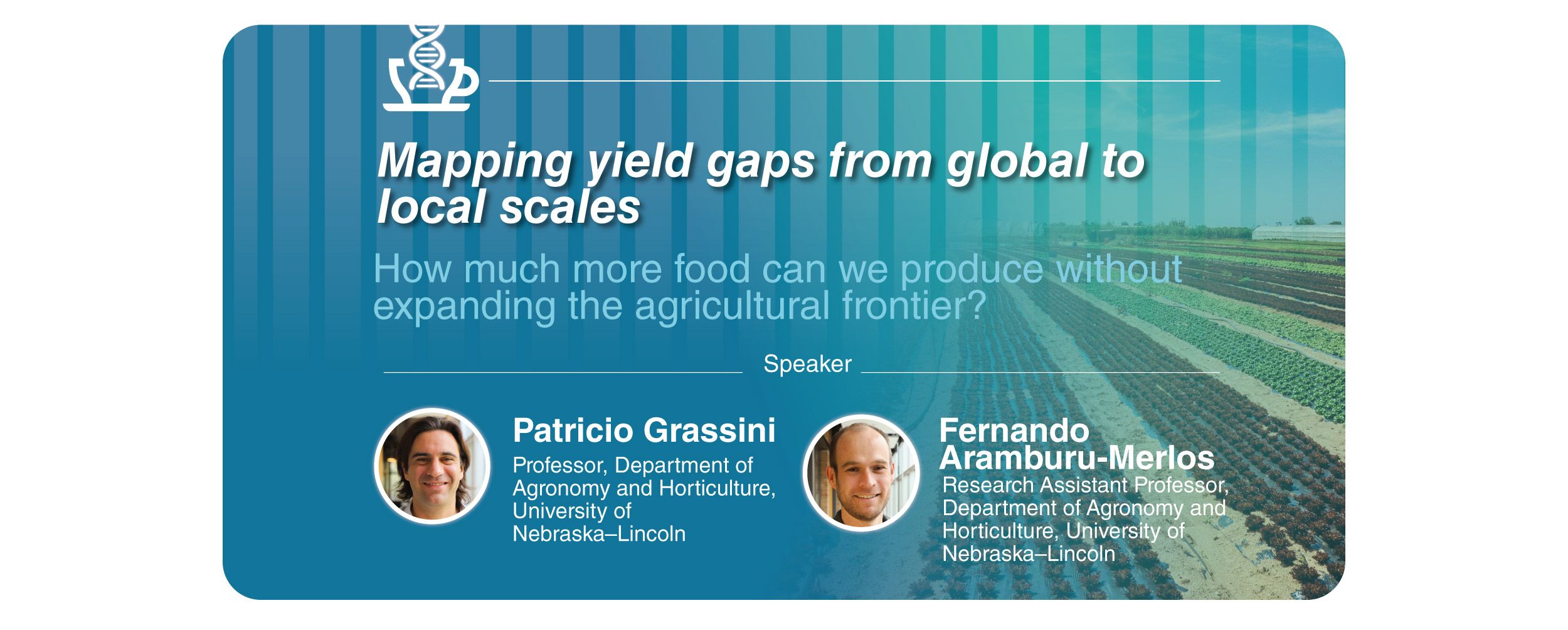
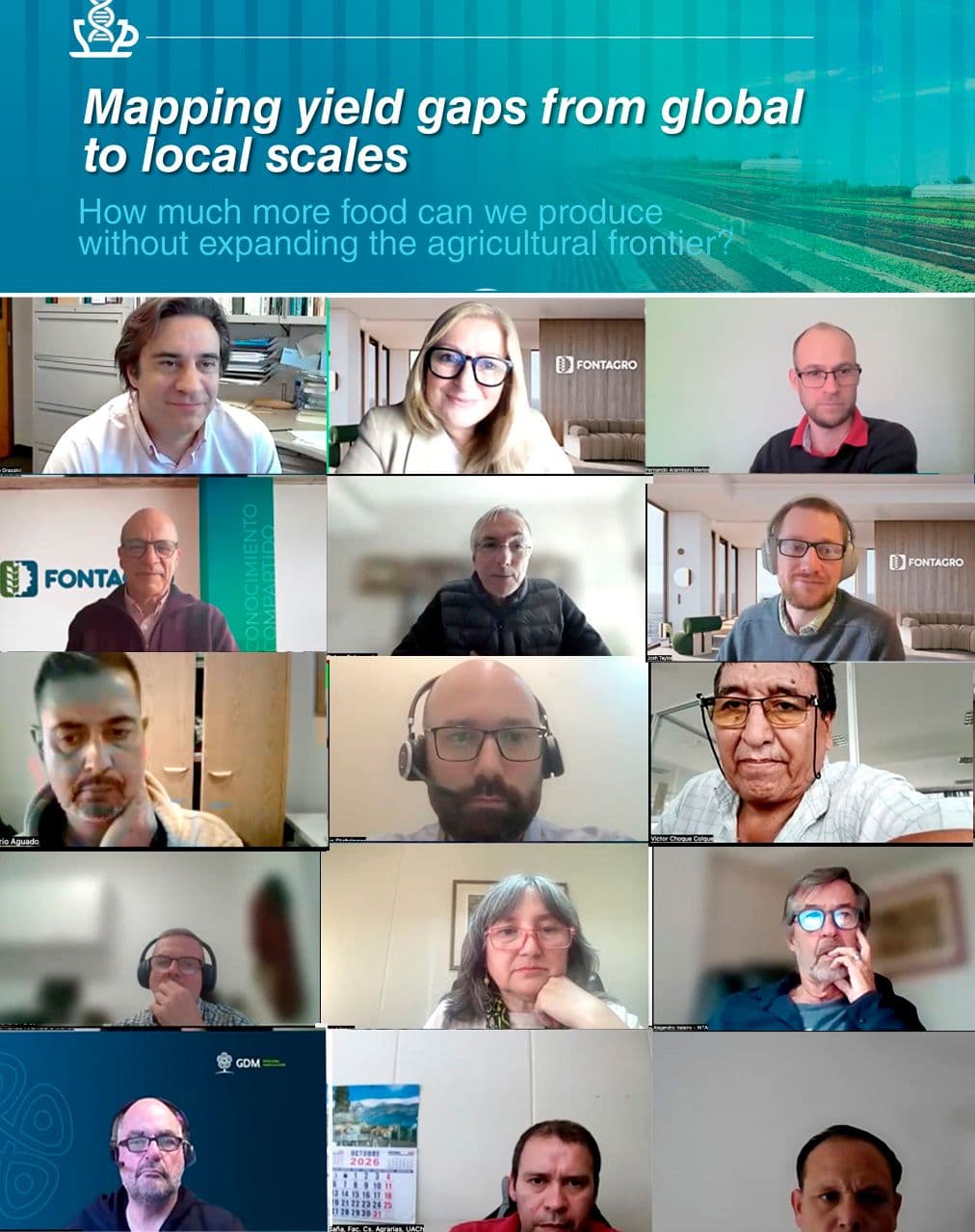
Last Thursday, October 8, we held another FONTAGRO Science Café: "Mapping yield gaps from global to local scales."
We were joined by Patricio Grassini and Fernando Aramburu Merlos from the University of Nebraska-Lincoln. Dr. Grassini leads the Global Yield Gap Atlas, the world's leading platform for estimating the gap between current and potential yields of major crops. Dr. Aramburu Merlos led the development of the Atlas's high-resolution global yield potential maps and a new application for maize in Latin America and the Caribbean (LAC).
Aramburu Merlos also leads the FONTAGRO project "AI to estimate and forecast rainfed yield potential". The initiative is building a free, open regional platform that combines agronomic models and machine learning. It makes it possible to estimate the attainable yield of maize, wheat, and soybean for each field before planting and to update the forecast during the season. Its maps, data, and models are digital public goods.
During the session, they showed how crop models, field-level data, and machine learning make it possible to build these estimates, from the field to the planet, and to identify where the greatest opportunities for sustainable intensification lie.
For FONTAGRO, bringing leading scientists into direct dialogue with researchers, national agricultural research institutes, and universities across LAC is key to strengthening regional scientific capacity and connecting global knowledge with the challenges and opportunities of our region.
Through the Science Café, we aim to ensure that knowledge reaches beyond the teams that generate it and can be used across the entire network, building an active, collaborative scientific community committed to continuous learning.
Thank you to the speakers and to everyone who joined us!
▶️ Watch the full recording of the Science Café here.
👉🏻 Learn more about the Global Yield Gap Atlas here.
👉🏻 Learn more about the project here.