



 Impact
 Initiatives
 Dashboard
 Alliances

 Impact
 Initiatives
 Dashboard
 Alliances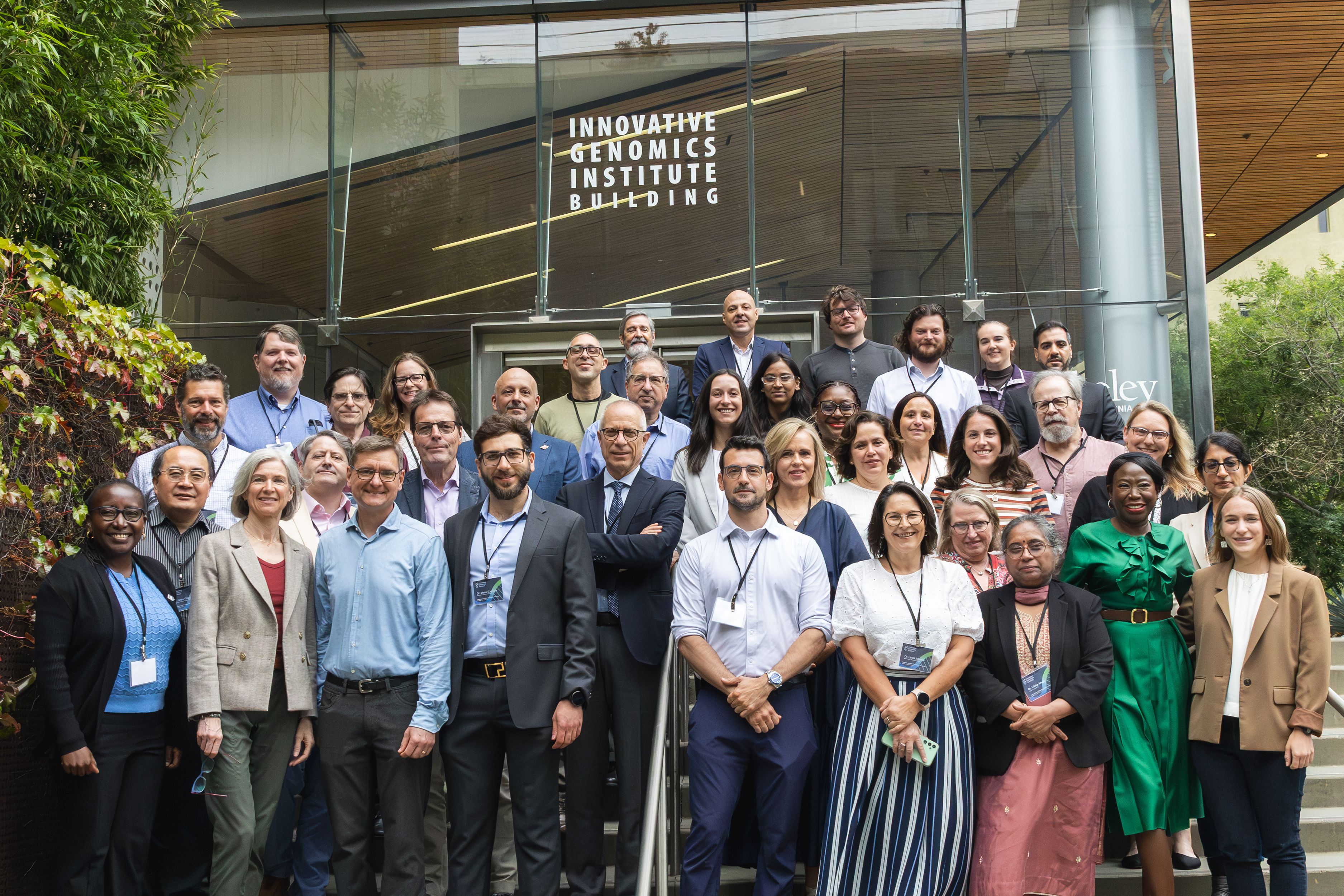
Researcher Nicolás Ayub, from CONICET and INTA (Argentina) and leader of the FONTAGRO regional project "Higher Agricultural Production with Lower Nitrous Oxide Emissions," presented advances from this initiative during the international workshop *Navigating the Frontier: Regulatory Pathways for Agricultural and Environmental GEMs*, organized by the Innovative Genomics Institute (IGI) at the University of California, Berkeley.
The gathering brought together scientists, regulators, public policy officials, and representatives from biotechnology companies to analyze the potential of genetically modified microorganisms as tools to address some of the main challenges in agriculture and climate change.
Representing Latin America, Ayub presented advances from the FONTAGRO project, which develops bio-inputs based on genetically modified microorganisms aimed at increasing agricultural productivity while reducing nitrous oxide (N₂O) emissions, one of the greenhouse gases with the highest global warming potential. The initiative seeks to generate innovative solutions that simultaneously contribute to food security, productive system sustainability, and climate action in the region.
The scientific session also brought together prominent international specialists. Carlotta Ronda from the Innovative Genomics Institute (IGI) presented tools for the genetic engineering of microorganisms and microbiomes; Spencer Diamond (IGI) showcased strategies for modifying the ruminal microbiome to reduce methane emissions in livestock; and Florencia Ercoli from the University of California, Riverside, shared research focused on reducing methane emissions in rice systems through plant-microorganism interactions.
The presentations demonstrated how gene editing technologies, particularly CRISPR, are expanding possibilities for intervening in key biological processes related to agricultural productivity and greenhouse gas mitigation.
Following the presentations, Jennifer Doudna, 2020 Nobel Prize in Chemistry and founder of IGI, highlighted the potential of environmental and agricultural applications of gene editing to generate globally impactful results in the short term. She also noted that the works presented demonstrate how CRISPR can be used innovatively to develop solutions for highly relevant environmental and productive challenges.
Nicolás Ayub's participation positioned the FONTAGRO project as one of the leading regional initiatives in the development of next-generation bio-inputs. His presence at this international forum reflects Latin America's scientific capacity to contribute evidence-based technological solutions that enable producing more food with lower environmental impact.
The project "Greater agricultural production with lower nitrous oxide emission" is funded by FONTAGRO and brings together research institutions from the region to promote innovations that strengthen the competitiveness of the agricultural sector, reduce greenhouse gas emissions, and promote more resilient and sustainable agriculture.
