 Impact
 Initiatives
 Dashboard
 Alliances

 Impact
 Initiatives
 Dashboard
 Alliances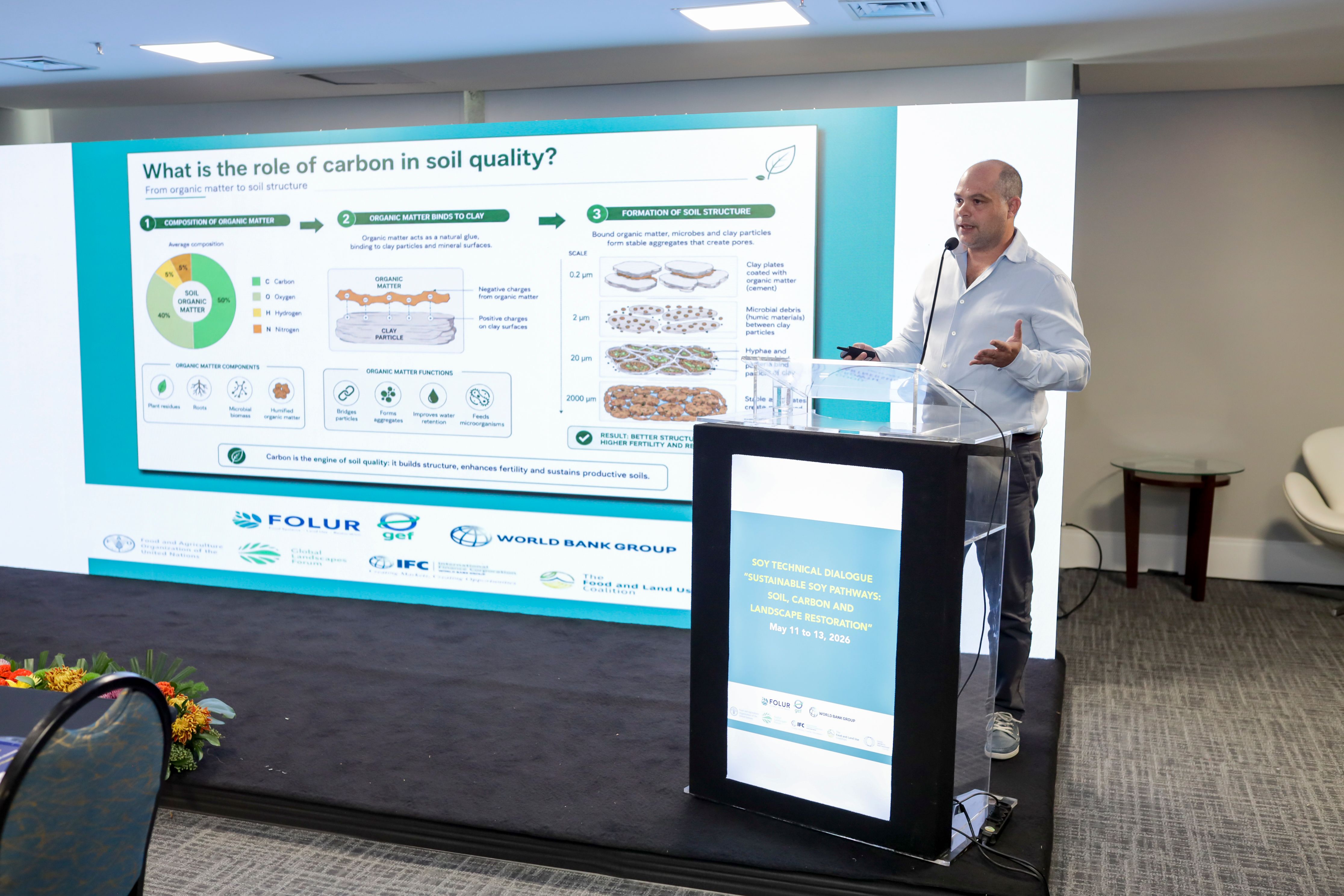
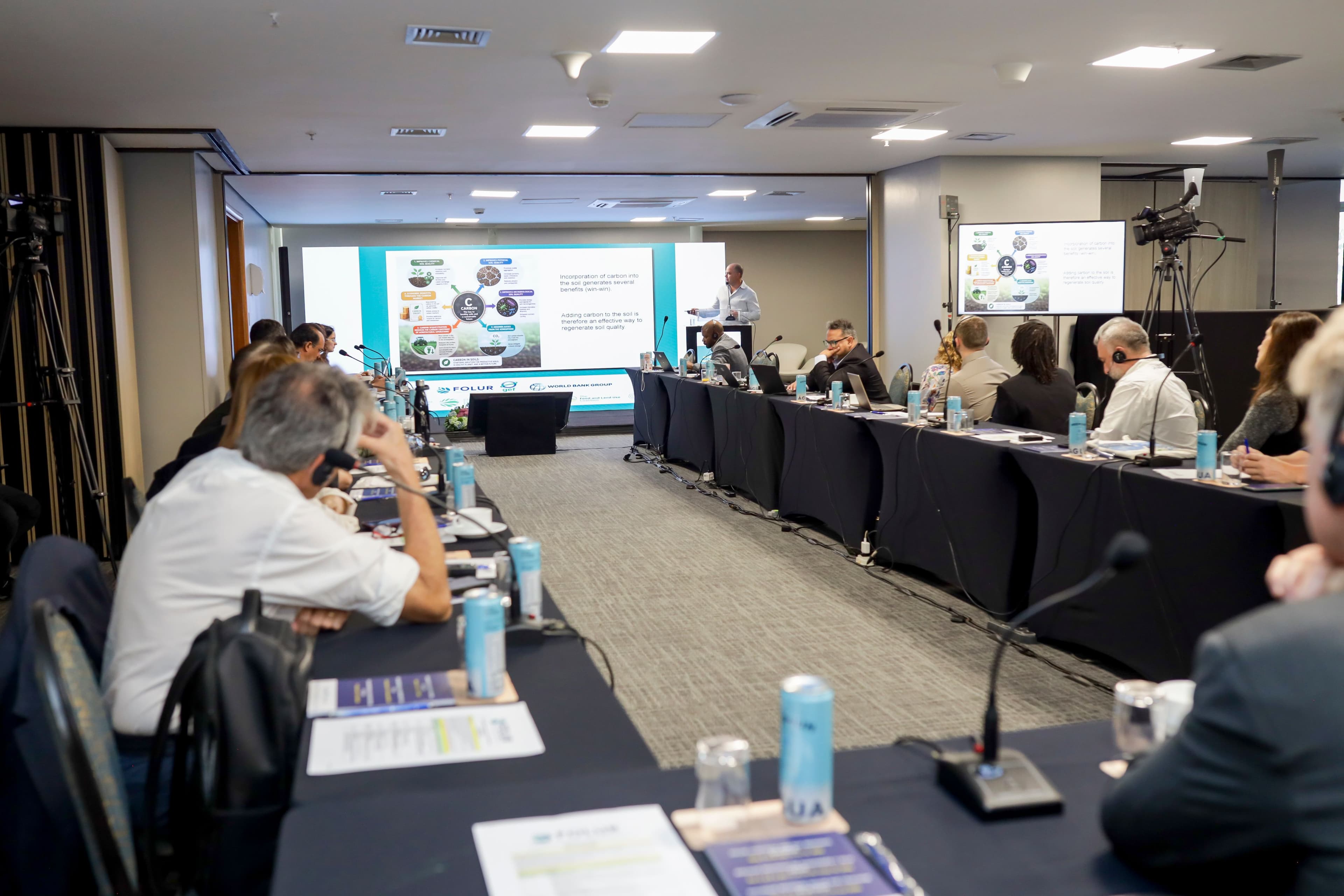
Dr. Marcelo Javier Beltrán, coordinator of the Soil Science Area at the Soil Institute of INTA – Castelar, Argentina, professor of Soil Science at the National University of San Antonio de Areco, and researcher of the FONTAGRO project: "Integration of production systems as a strategy for mitigation and adaptation to climate variability," participated as a speaker at the workshop “From Degradation to Regeneration: Advancing Sustainable Soy Agriculture and Restoration,” organized by the FOLUR Impact Program of the World Bank. This event, held from May 11 to 13 in Brasília, brought together experts, government representatives, and technical partners from various countries to address the challenges and opportunities in sustainable soy production.
During his presentation, Dr. Beltrán shared his experience and knowledge on the importance of regenerative agriculture in Argentina, emphasizing the need to adopt practices that enhance soil health and reduce environmental impact. He highlighted the use of innovative techniques, such as sustainable intensification of crop sequences, the use of cover crops, and efficient nutrient management, which allow for increased carbon sequestration and improved soil quality.
“It is essential to move towards agriculture that is not only productive but also sustainable. Soil regeneration is key to the future of agriculture in Argentina and around the world,” stated Beltrán during his talk.
Workshop participants discussed several relevant topics such as sustainable livestock management, low-carbon soy production systems, and integration of ecosystem services in agricultural landscapes. The discussions underscored the urgency of implementing strategies that benefit both farmers and the environment.
Dr. Beltrán also stood out in discussions on knowledge transfer and adoption of new technologies, highlighting the importance of promoting greater education in sustainable agricultural practices among Argentine farmers.
This event reaffirms the region's commitment to advancing the sustainability of its agricultural systems while simultaneously supporting the restoration of degraded lands and improving the quality of life for farmers.