



 Impact
 Initiatives
 Dashboard
 Partnerships

 Impact
 Initiatives
 Dashboard
 Partnerships
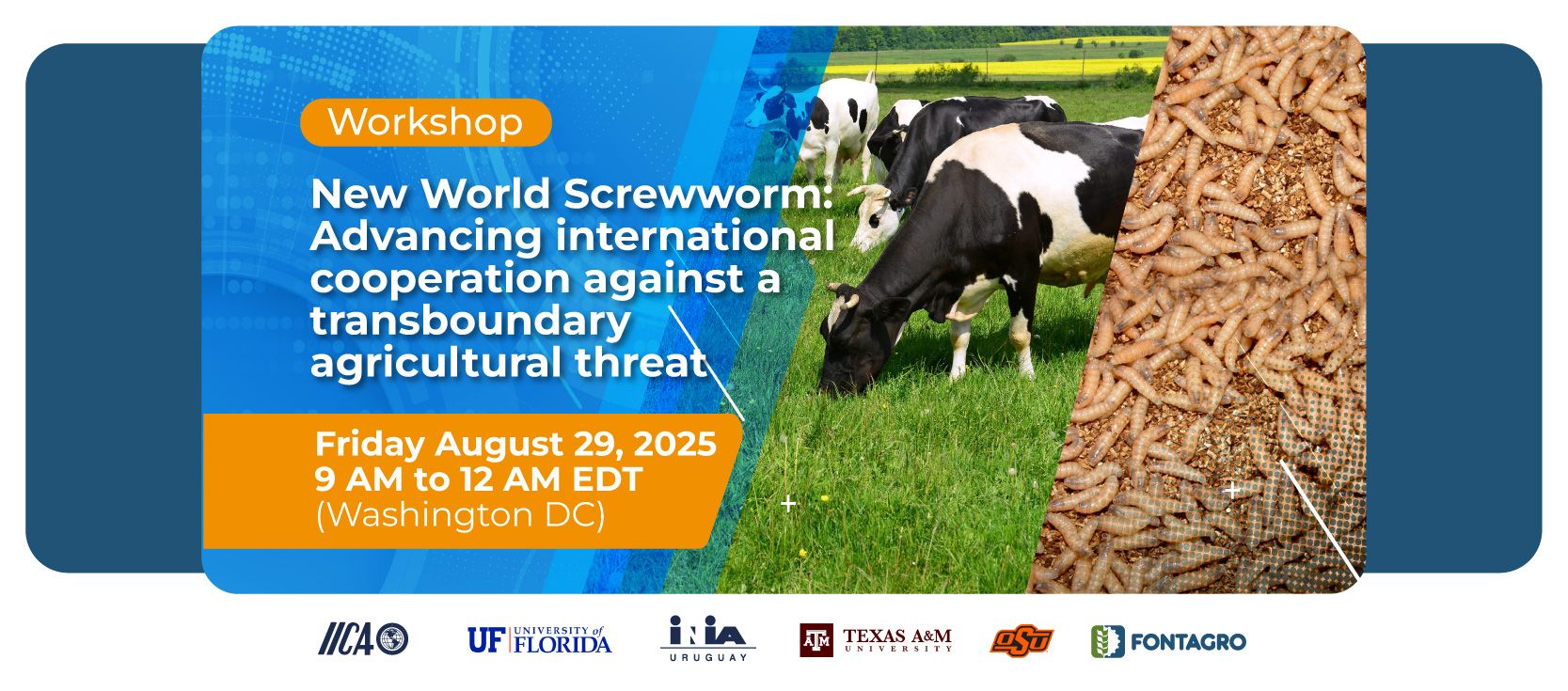
Washington D.C., August 29, 2025. – The New World Screwworm, Cochliomyia hominivorax, has re-emerged as one of the most serious threats to animal health and livestock production in the Americas. This pest, which affects all warm-blooded animals, destroys living tissue in open wounds, causing severe pain, production losses, and, in many cases, the death of animals.
The economic impacts are devastating: in past outbreaks, annual losses for producers and national economies reached hundreds of millions of dollars. What makes this problem particularly complex is its transboundary nature. The screwworm does not recognize geographical boundaries: an outbreak in one country puts the entire region at risk. For this reason, coordinated hemispheric action is not optional, but essential.
On August 29, FONTAGRO, together with the University of Florida, Texas A&M, INIA Uruguay, the Inter-American Institute for Cooperation on Agriculture (IICA), and the Foundation for Food and Agriculture Research (FFAR), organized a virtual workshop to strengthen scientific, technical, and policy cooperation against this threat. Experts discussed surveillance and outbreak response, advances in the Sterile Insect Technique (SIT) and emerging biotechnologies, as well as on-farm control measures and private sector participation.
The One Health perspective was central to the discussions: the screwworm not only affects cattle, sheep, and goats, but can also cause myiasis in humans. In 2025, the first travel-associated human case was confirmed in the United States, underscoring the urgency of strengthening surveillance systems.
Next steps: participants recommended advancing scientific validations (including new biotechnologies such as CRISPR), strengthening laboratory and rearing infrastructure, harmonizing regional regulatory frameworks, mobilizing public and private financial resources, and designing national control programs with strong producer participation.
“The screwworm is a hemispheric challenge. No country can face it alone. The only solution is cooperation between scientists and technicians to support on-the-ground action with producers and animal health services,” emphasized Eugenia Saini, Executive Secretary of FONTAGRO.
If you want to see the recording of this workshop, click here
