



 Impact
 Initiatives
 Dashboard
 Alliances

 Impact
 Initiatives
 Dashboard
 Alliances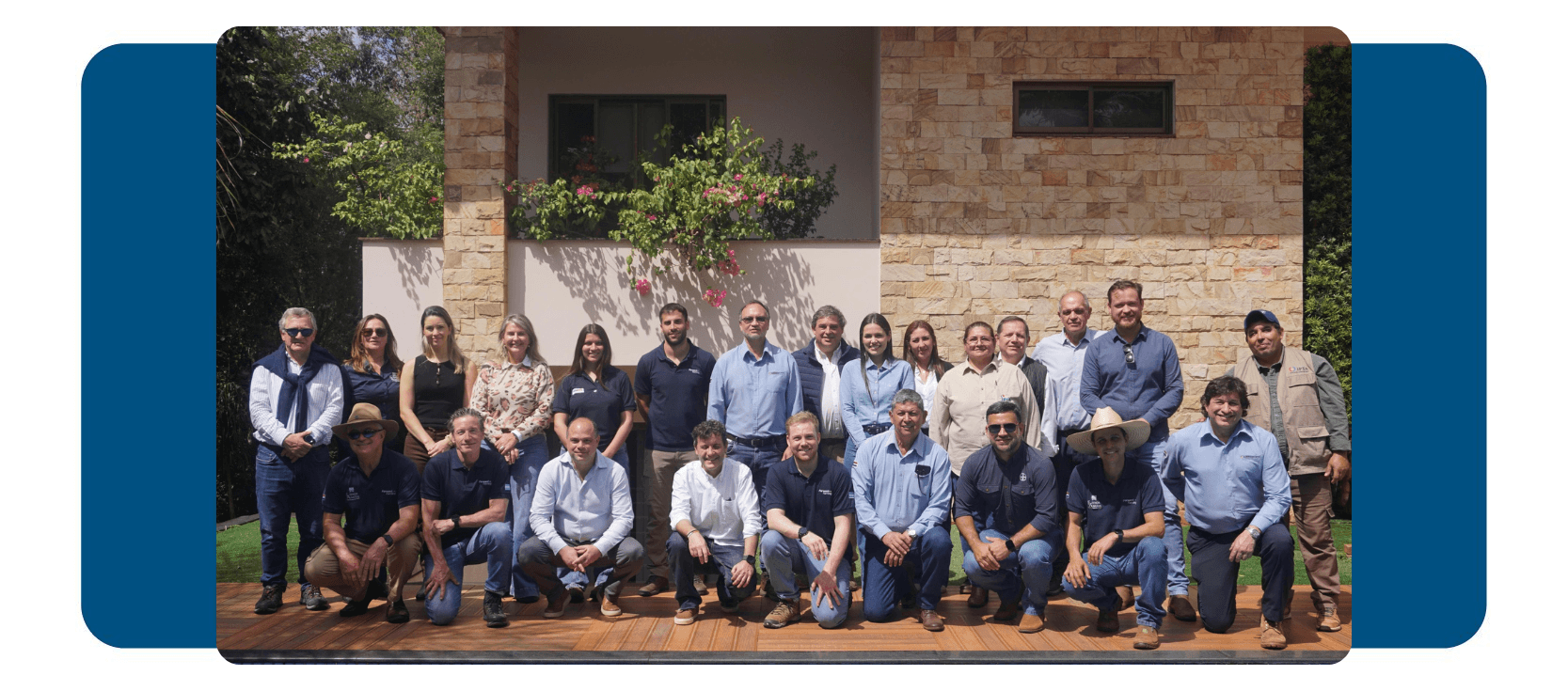
The project "Regional Cooperation on Regenerative Agriculture: Impact Measurement, Technological Innovation, and Knowledge Dissemination,” executed by the National Institute of Agricultural Technology (INTA Argentina), the Paraguayan Institute of Agricultural Technology (IPTA Paraguay), and the ArgenINTA Foundation, in partnership with the Agricultural Research Institute (INIA Chile), the National Institute of Agrarian Innovation (INIA Peru), and Bayer Crop Science, launched its activities with an initial meeting in Alto Paraná, Paraguay. The meeting aimed to lay the foundations for the implementation of regenerative practices and the generation of evidence to support their regional scaling-up.
On September 8, the first meeting of this international technical cooperation initiative was held at Fazenda Almeida, in Cedrales, Alto Paraná. The project seeks to contribute to the development of more sustainable, resilient, and profitable production systems in the region. To this end, the project draws on Bayer’s Forward Farming experience to develop and evaluate solutions adapted to the production conditions of Argentina and Paraguay.
During the meeting, the project’s objectives and scope were presented, along with the regenerative management protocol that will guide field activities. The event also provided an opportunity for researchers, producers, and professionals to exchange experiences, followed by a tour of the farm that offered participants a first-hand look at practices and technologies associated with the regenerative approach.
The meeting was attended by authorities and representatives of the participating institutions, including Nicolás Bronzovich, President of INTA Argentina; Edgar Esteche, President of IPTA Paraguay; Eugenia Saini, Executive Secretary of FONTAGRO; Hernán Passini, CEO of Bayer; Santiago Alberto Derqui, Executive Director of the ArgenINTA Foundation; Marcelo Beltrán, project leader; and representatives of the participating production farms.
The project includes the implementation of pilot trials on farmers’ fields, where practices such as diversified crop rotations, cover crops, digital precision agriculture, and the incorporation of new crops will be evaluated. These experiences will make it possible to measure productivity, environmental, and sustainability indicators, generating scientific evidence to help identify the most effective alternatives for different agroecological contexts.
In addition to field experimentation, the initiative seeks to strengthen dialogue between the public and private sectors, build capacities through training and extension, and consolidate networks of producers and professionals.
In this way, cooperation between Argentina and Paraguay aims not only to assess the benefits of regenerative agriculture, but also to generate methodologies and knowledge that can be replicated and scaled up in other territories across Latin America and the Caribbean.
Learn more about this project, which seeks to contribute to greater agricultural productivity and profitability while promoting soil health, reducing environmental footprints, and conserving biodiversity, here.