



 Impact
 Initiatives
 Dashboard
 Alliances

 Impact
 Initiatives
 Dashboard
 Alliances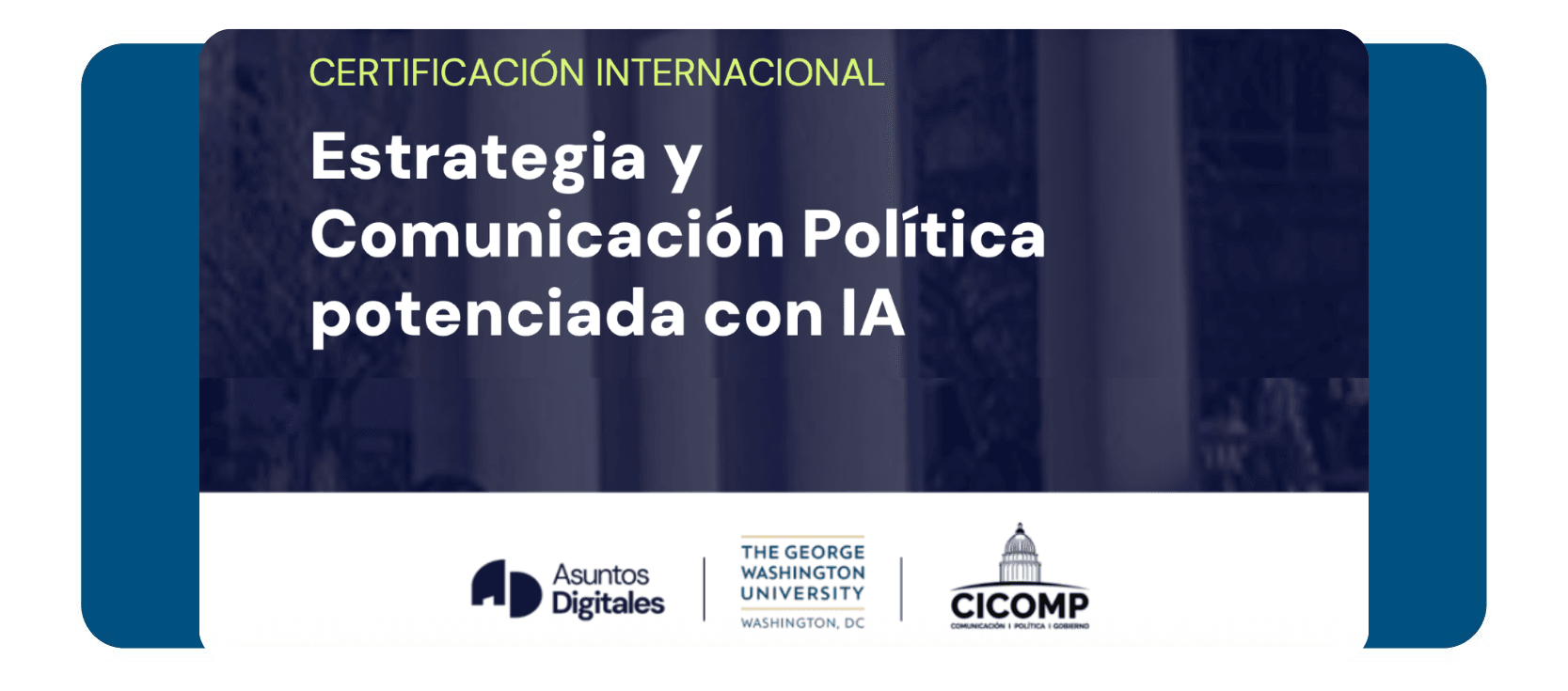
Amidst the rapid transformation of communication driven by the development of artificial intelligence (AI), FONTAGRO is strengthening the capabilities of its member institutions through the "International Certification in AI-Powered Political Strategy and Communication." This program is managed by the Technical Administrative Secretariat (STA) and developed by the online business school Asuntos Digitales, in partnership with and certified by The George Washington University, with the participation of the International Center for Political Communication and Government (CICOMP) in Spain.
Running from September 9 to November 11, 2026, the program brings together 11 representatives from FONTAGRO member institutions, including directors of National Agricultural Research Institutes (INIAs) and managers of Knowledge Management and Communication (GCyC). The training combines the fundamentals of strategy and communication with practical AI applications in areas such as research, content generation, audience analysis, digital communication, public speaking, and public decision-making. The program consists of ten 90-minute virtual sessions led by international specialists in political strategy, communication, government, and artificial intelligence.
The sessions cover topics such as strategy and communication, content generation and analysis, digital campaigns, public speaking, decision-making, and the analysis of trends and public opinion. They also address the challenges associated with AI use—such as bias, misinformation, and reputational risks—while promoting ethical standards, verification mechanisms, and clear responsibilities for institutional implementation.
This initiative aligns with decisions made by FONTAGRO’s Board of Directors to deepen capacity-building in communication applied to strategic and political spheres, complementing the organization's ongoing work in scientific communication, knowledge management, exchange, and coordination.
Through this certification, FONTAGRO continues to expand its member institutions' capabilities to strategically communicate agricultural knowledge and innovation, strengthen relationships with decision-makers, and adapt to changes in the communication landscape.