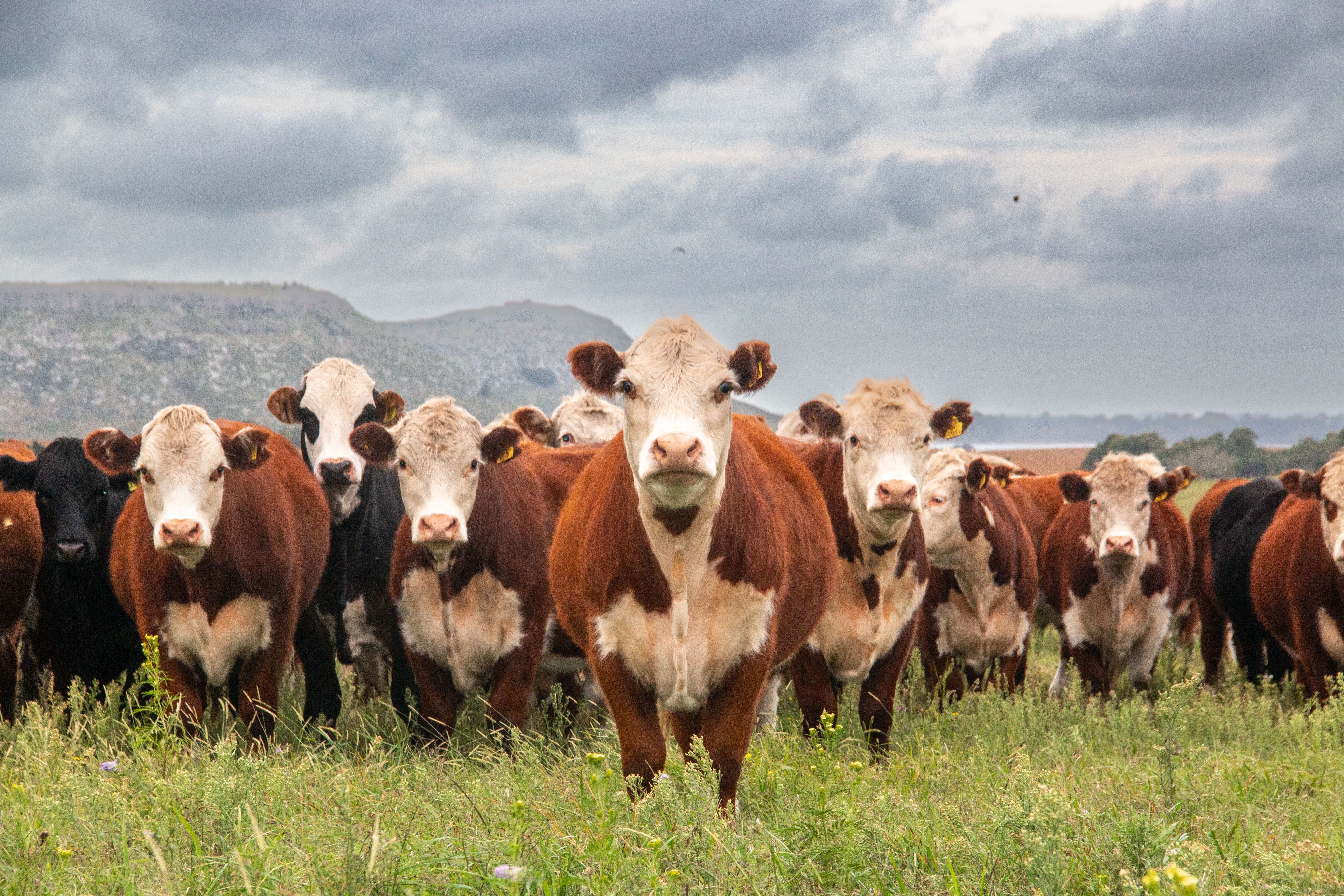
In the Colombian Orinoquía, the Flooding Pampa, and the Dry Chaco, cattle production falls short of its potential and emits more than it needs to per kilo. The project validates a different technology package for each territory.

In the Flooding Pampa, soils with poor drainage, salinity, and low fertility support systems built on native grassland with little intensification: they produce little and emit a great deal per kilo of beef. In the Dry Chaco, the advancing agricultural frontier left deforestation and soil degradation behind it, and raised the question of how to keep producing without pushing further into what remains. In the Colombian Orinoquía, the conversion of cropland to pasture reshaped the landscape, and the soils leave little room to intensify without degrading. Three different territories, one shared problem: high input costs, limited access to credit, and technologies poorly suited to local conditions keep open the gap between what these systems produce and what they could.
A package per territory, measured against conventional management
The project does not offer a single recipe. In each of the three environments it validates a package of its own, built from practices that are for the most part already familiar: what is new is combining them, adapting them to the territory, and measuring their joint effect. Each package is compared against a reference management representative of the region's conventional system, run at the same time and on the same site. The baseline is not taken from regional averages or earlier publications: it is measured in the field itself during the first year, using the same protocols applied thereafter, so that observed changes can be attributed to the package. Once validated experimentally, the packages move to commercial farms.

In the Flooding Pampa, the package divides the field into zones by potential and constraints, tailors fertilization and forage species to each, decides grazing from real-time forage stock monitoring, lifts stocking to 2.0 cow equivalents per hectare, replaces natural service with fixed-time artificial insemination, and brings first breeding forward to 15 to 18 months. In the Dry Chaco it compares backgrounding systems on warm-season Chloris gayana pastures, with and without nitrogen fertilization, and on a silvopastoral system with white carob planted into the existing pasture, all under rotational grazing and energy-protein supplementation. In the Orinoquía it combines the agrosilvopastoral arrangement or improved pasture with adapted grass and legume mixtures, stocking matched to forage supply, strategic supplementation, and health and reproductive management, including parasite monitoring. In each environment, beef output, enteric methane, nitrous oxide, and soil carbon are measured together, on the same paddock and the same herd.
 Agronomic PracticesLivestock and Protein of the Future (“PI-2”)AppliedTechnologicalCattle raisingGas emissionClimate smart agriculture
At least 2,500 commercial hectares in the Flooding Pampa, 500 in the Dry Chaco, and 50 model hectares in the Orinoquía will come under the package validated for each environment, with gross margin improving by at least 10%. Across that area, and in the trials that precede it, beef production per hectare, carrying capacity, and forage biomass will be recorded, alongside enteric methane, nitrous oxide from soil and excreta, and soil organic carbon stocks, with emissions intensity and absolute emissions reported separately. Each package will be measured against a reference management run in parallel on the same site, over a baseline taken in the field itself during the first year, and will raise its technology readiness level on the strength of that commercial performance. At least eight field days, 2,000 people trained, three scientific articles, and a regional monitoring, reporting, and verification protocol are also anticipated.




Colombia

Argentina

Argentina

Argentina

Sede Central


 Impact
 Initiatives
 Dashboard
 Alliances
 Impact
 Initiatives
 Dashboard
 Alliances