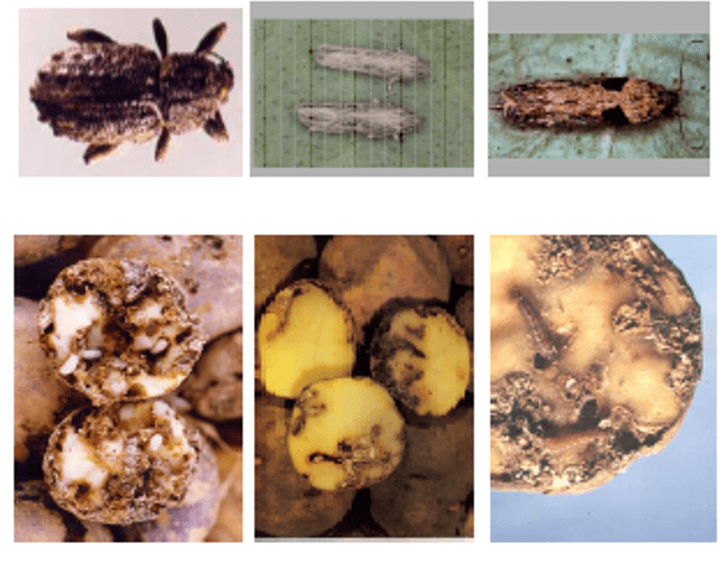
Potatoes constitute the staple diet of most Andean populations, as well as a cash crop for farmers in the region. The potato is nutritious and highly productive, although the losses caused by pests during the growing and storage periods are high. The potato moth complex (Phthorimaea operculella, Symmetrischema tangolias, Tecia solanivora), which includes 3 species, as well as several Andean Potato Weevils (Premnotrypes spp.), comprise the most severe pests that affect potato crops in Bolivia, Ecuador and Peru. Without control, the losses from these pests can reach more than 50% during the field phase, and up to 80% during the storage phase.
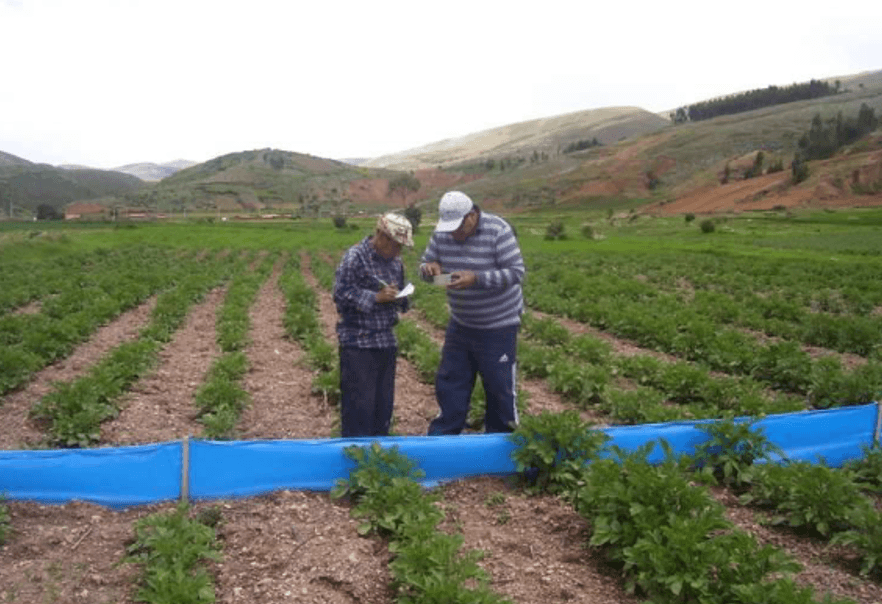
An Integrated Management strategy was developed with new ecological tools to reduce the use of insecticides. Phenological models were developed for the two species of moths (S. tangolias) and (T. solanivora), with which the "Insect Life Cycle Modeling" (ILCYM) software was developed, which is a tool to predict the potential growth of pest populations in different potato agroecosystems. The introduction of parasitoids (Apanteles subandinus) and (Orgilus lepidus) from CIP-Peru to Ecuador was carried out, which have good potential to carry out classical biological control. The beneficial fauna was increased by maintaining aromatic and floricultural plants near the crops. In the case of the Andes weevil, the use of entomopathogenic nematodes is a potential biological tool for the control of larvae, while the adults were controlled with the use of plastic barriers.
With these ecological tools, a new Potato Integrated Pest Management (IPM) program has been developed for the Andean zone, which includes the use of plastic barriers, attracides, increased functional diversity and the use of Bt talc for control. of moths in storage, which proved to be as efficient as chemical control, with the added benefits of protecting natural enemies and the environment. The knowledge obtained with the development of the project allowed training and dissemination of the new technologies developed in Peru, Ecuador and Bolivia.





 Integrated Pest Management



 Impact
 Initiatives
 Dashboard
 Alliances
 Impact
 Initiatives
 Dashboard
 Alliances