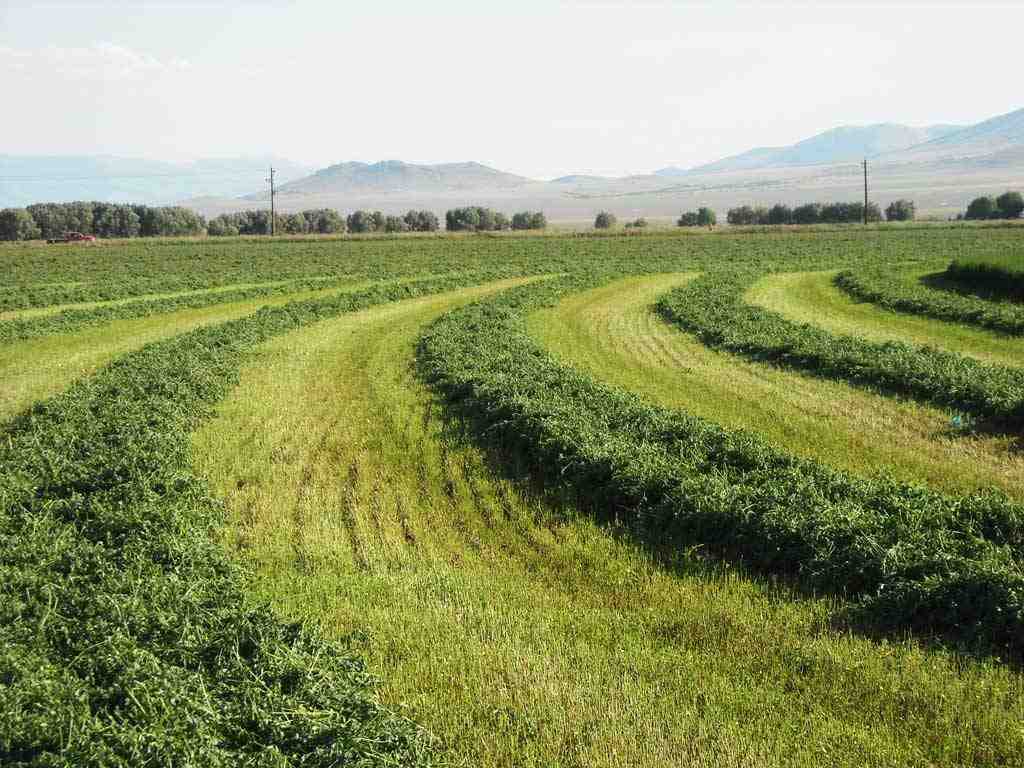
In Argentina, 6 million hectares of alfalfa are cultivated, placing this country as the world’s second-largest producer, after the US. In Chile and Uruguay, the cultivated areas are 250,000 and 100,000 ha respectively, which represents approximately 30% of the potential arable area of these countries. The improper handling of alfalfa can cause a rapid and constant loss of the nitrogen fertility of the soil, if there is no partial nitrogen recycling system coupled with an efficient system of biological nitrogen fixation by association with specific rhizobia. Therefore, the property of alfalfa to maintain soil fertility largely depends on its ability to incorporate nitrogen from the atmosphere.
For the evaluation of the relative efficiency of the strains introduced into inoculants, two tests called "Core Assays" (CA) were implemented in each of the participating countries according to the previously established protocol. The CA involved plots of inoculated and non-inoculated alfalfa and plots of a non-fixative reference culture for the determination of BNF by the 15N technique. Complementary to the CA, a collection of native rhizobia strains was made through regional samplings to determine biodiversity. The analysis of the PGPR / NPR capacity was carried out through morphological characterization, biochemical response and co-inoculation tests on alfalfa plants. The exchange of experiences between the participating professionals was carried out permanently through coordination and annual monitoring meetings in which all the researchers responsible for each action participated.
It was concluded that the differences in forage production between the inoculated and non-inoculated crop are evidenced only when: 1) the pre-existing population of rhizobia in the soil is low, 2) there is low availability of organic matter in the soil or 3) there is no other limiting factor. Regarding the goal of collection of strains, it was observed that of 100 isolates from Argentina, 74 from Chile and 23 from Uruguay, and after the infectivity and efficiency tests, 8 of those from Argentina were more efficient than the control strain; 10 of those from Chile also outperformed their respective control, while two were shown to be inefficient or parasitic. Regarding the PGPR strains, it was observed that in Uruguay and Chile the solubilizers of P prevail, while the predominant ones in Argentina are those of biocontroller action.




 Agronomic Practices







 Impact
 Initiatives
 Dashboard
 Alliances
 Impact
 Initiatives
 Dashboard
 Alliances