Develop strategies for the integral use of mango fruit in order to strengthen the competitiveness of producers in Colombia and Peru.

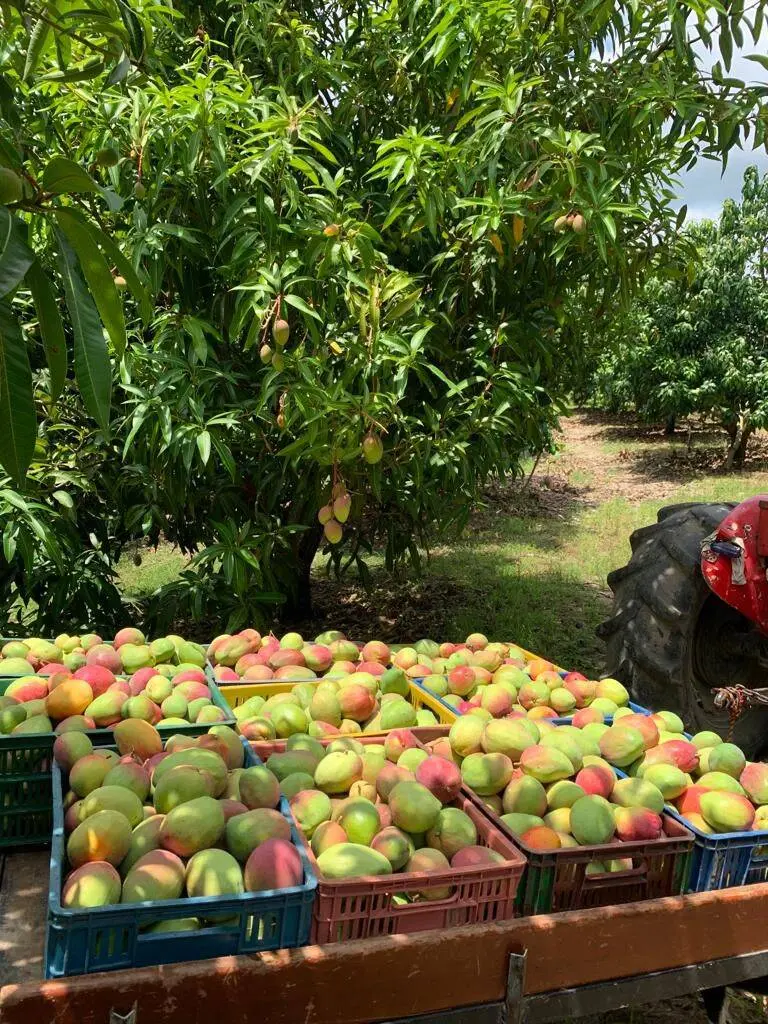
Mango is the most widely produced tropical fruit in the world. According to the Food and Agriculture Organization of the United Nations, its global production accounts for approximately 52% of the volume of major tropical fruits. Its high demand stems from its distinctive flavor, appearance, and nutritional value. However, the export of fresh mangoes and the processing of pulp generate a very high amount of waste, such as discarded fruit, peels, and seeds. Updated studies are needed to enable the development of innovative products for various industries, creating new markets and promoting sustainability.
Biorefineries in mango processing

This project aims to develop new products from mango fruit to strengthen the competitiveness of producers in Colombia and Peru. The project is divided into four components: (I) promoting the use of mango peel by studying its chemical composition and bioactive compounds in Colombia and Peru; (II) designing innovative products from mango pulp and seeds to expand the target market for producers; (III) conducting technical, economic, and environmental feasibility studies for the comprehensive utilization of mango fruit; and (IV) transferring the developed knowledge to producers, entrepreneurs, and the academic community.
"Technology has the potential to significantly transform agriculture and increase productivity, as long as it is aligned with local needs and contexts."— Jeffrey Sachs
 Postharvest ManagementAppliedTechnological
Mango peels from six varieties grown in the Piura region of Peru were characterized. The Criollo and Kent varieties showed the highest peel yield. The mango peels had a high potassium content, followed by calcium. Similarly, the determination of phenols revealed the presence of catechin, quercetin, and mangiferin, confirming that this byproduct is a source of bioactive compounds.
The functional properties of the starch present in the seeds of four mango varieties in Colombia were determined to analyze its behavior during processing. The flour showed a high protein content (greater than 9%), making it suitable for use in baked goods.
The pulp was utilized to create innovative, easy-to-produce jam-like products. Consumer testing showed a high acceptance rate of over 90%.






.jpg&w=828&q=75)


Colombia

Perú
Colombia
Perú

The Tangible Impact of Science and Technology in the Field

 Impact
 Initiatives
 Dashboard
 Alliances
 Impact
 Initiatives
 Dashboard
 Alliances


.jpg&w=828&q=75)
_DESHIDRATADO_mango_DESCARTE.jpg&w=828&q=75)
.jpg&w=828&q=75)
.jpeg&w=828&q=75)
.jpeg&w=828&q=75)
.jpeg&w=828&q=75)

.jpeg&w=828&q=75)
.jpeg&w=828&q=75)

.jpeg&w=828&q=75)


.jpeg&w=828&q=75)